NASA’s Ambitious Lunar Plans
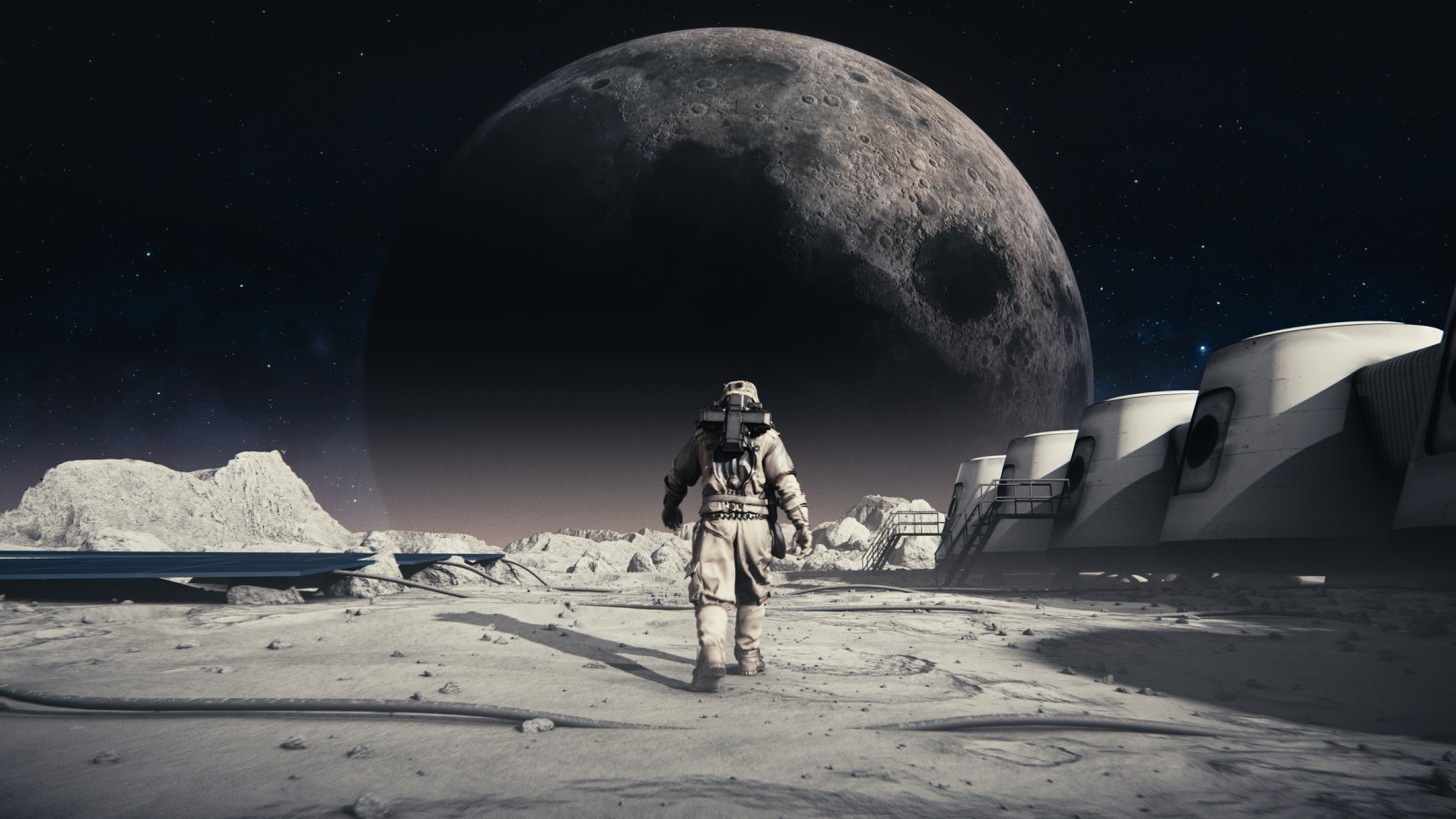
NASA is working hard to make a long-term human presence on the moon a reality. In May, they unveiled plans for a Moon Base near the lunar South Pole. This project aims to establish a lasting human presence on the lunar surface. NASA also announced collaborations for lunar exploration, including contracts for terrain vehicles and delivery systems. By the end of June, NASA chose three companies to land four new missions on the moon by late 2028.
Reimagining Lunar Settlements
As plans advance, experts explain that lunar cities may differ from Earth’s skyscraper-filled landscapes. George Sowers, a professor at the Colorado School of Mines, believes that constructing tall structures with lunar materials is feasible. The engineering challenges Earth faces, such as hurricanes and earthquakes, don’t exist on the moon due to its calm environment and lack of atmosphere.
Hao Chen, a professor at Stevens Institute of Technology, states that a lunar skyscraper will likely focus on functionality rather than architectural design. He described it as a vertically organized, modular system built primarily from lunar materials like processed regolith. Despite the moon’s gravity being only about one-sixth of Earth’s, life-supporting functions will still take priority, including pressure containment, thermal regulation, and radiation protection.
Going Underground for Safety
Despite potential advantages for tall structures, experts argue that lunar cities will likely be underground. Sowers suggests using giant lava tubes for settlements due to the harsh radiation environment on the moon. These underground tunnels, formed by ancient volcanic activity, provide natural protection from radiation.
Architect Scott Specht agrees with this underground approach, highlighting the stability of these spaces. These tunnels maintain stable temperatures, unlike the lunar surface which experiences extreme temperature swings. Nathan Silvernail, co-founder of Plantd, predicts that future lunar habitats will likely rely on processed regolith construction materials and nuclear power systems for support.
An efficient approach for developing lunar habitats involves creating building materials from regolith and using machinery to construct walls and doors. Architect Specht noted that making lava tubes livable requires minimal effort compared to aerospace standards.
Implications for Earth Architecture
Lunar construction innovations could reshape Earth’s architecture. Chen believes that treating buildings as closed-loop ecosystems may revolutionize sustainable architecture. Technologies such as autonomous robotics and zero-waste systems could benefit resource-scarce regions on Earth.
Specht suggests that the moon could offer lessons in design. In a buried lunar habitat, the focus shifts to the interior as there is no exterior view. Creating an experiential world within the enclosure is a discipline that could be valuable on Earth.
Leave a Reply