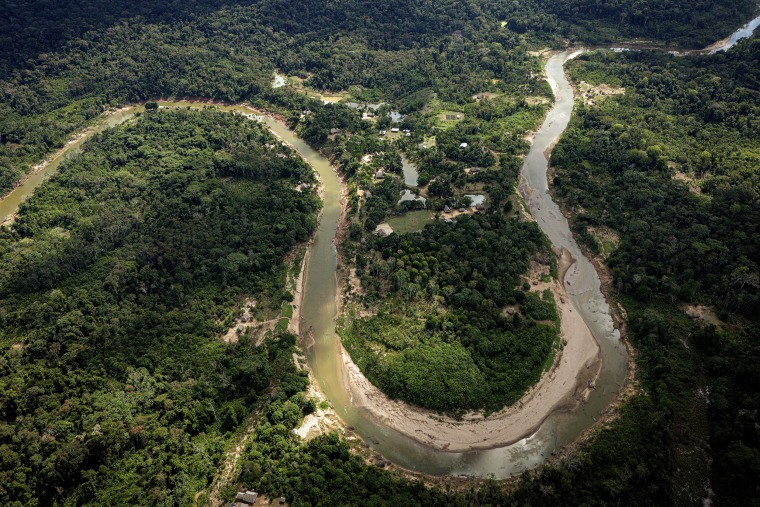
The Ashaninka Indigenous group, residing at the Brazilian border with Peru, has faced increasing threats from gangs and drug traffickers. For decades, they have successfully maintained their governance, protected the forest, and cultivated crops. However, recent developments have jeopardized their way of life.
Escalating Threats
Criminal organizations are using Ashaninka land and adjacent rivers for drug trafficking. The Ashaninka leaders have reported recent violent incidents and have sought government protection. A meeting with Brazilian authorities in the capital took place, but local security forces’ presence tends to be short-lived. Meanwhile, the risks linger.
“There is an institutional and intercultural blind spot in the public security services provided to Indigenous peoples,” said Maj. Jonatas Soares, a police officer in Tabatinga.
The expansion of criminal routes, notably through the Solimoes River, has transformed the Amazon border. Indigenous territories play a crucial role in these routes due to the forest’s dense cover, which provides concealment for traffickers.
Inadequate Government Response
Despite pleas to authorities, aid from the Brazilian government has been insufficient. Col. César Mello, a retired police officer and academic, noted that Indigenous communities are vulnerable due to their remote locations, cultural differences, and lack of oversight. Criminal groups entice Indigenous youth by offering financial incentives, and resort to violence when persuasion fails.
Resistance and Preservation
The Ashaninka have consistently resisted illegal activities on their land. Previously, they denied traffickers’ proposals to construct an airstrip there. According to Francisco Piyãko of the Organization of Indigenous Peoples of the Jurua River, their community has a history of opposition to such activities.
Tensions rose when armed men reportedly entered the Kampa Indigenous territory along the Amonia River, threatening families and seeking leaders. Piyãko filed complaints, leading to a security deployment. However, threats of violence continue to concern the community.
Although shaken by recent events, the Ashaninka remain resolute in their resistance. Piyãko emphasized that confronting criminal groups is the responsibility of the state.
“They allowed this to happen through their absence, so they bear that responsibility,” he asserted.
Leave a Reply