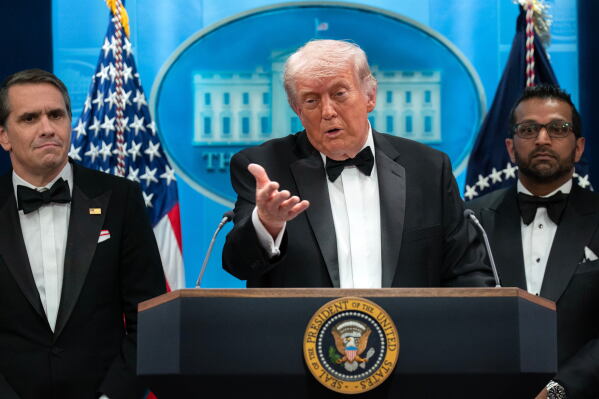
Recent tariff hikes announced by U.S. President Donald Trump have led to significant objections from global trade partners, including China, Japan, and Australia. The U.S. administration declared new tariffs ranging from 10% to 12.5% on 60 economies, citing inadequate enforcement of bans on goods produced with forced labor. These tariffs were activated as temporary measures imposed after a Supreme Court decision lapsed.
Global Objections
Numerous countries have expressed their disapproval of the new tariffs, criticizing the lack of substantial evidence supporting the U.S. claims of forced labor. Australian Trade Minister Don Farrell dismissed the connection between Australia, a key exporter, and modern slavery, labeling the tariffs as “completely unjustified.” He urged continued lobbying to remove these tariffs.
New Zealand’s Prime Minister Christopher Luxon described the tariffs on his country as “extremely disappointing” and harmful to trade relations. He stressed that tariffs increase costs and uncertainty for businesses. European Union foreign policy chief Kaja Kallas challenged the U.S. stance by emphasizing the strong labor laws in the EU compared to the U.S.
Asian Countries’ Responses
Japan also protested the increased tariffs, noting past assurances from the Trump administration that no further tariffs would follow an earlier agreement on a 10% import duty. Chief Cabinet Secretary Minoru Kihara emphasized ongoing commitments between both countries.
South Korea and Thailand are likewise facing increased tariffs. While South Korea remains engaged to balance benefits, Thailand is monitoring additional potential tariffs due to ongoing U.S. investigations into structural overcapacity.
China’s Position
China reiterated its opposition to unilateral tariffs. Beijing views trade tensions unfavorably and is aware that such measures do not benefit involved parties. Despite the new tariffs, which remain lower than previous rates, Chinese exporters like Richard Chan from Golden Arts Gifts & Decor have already shifted a significant portion of their exports to Europe.
Implications and Future Prospects
Wendy Cutler, a former senior U.S. trade official, noted that the latest tariffs were expected due to a thorough investigation process. Although these duties might persist longer legally, more tariffs related to structural excess capacity might follow.
Experts argue these tariffs might cause less disruption than previous ones, potentially mitigating impacts through product exclusions where the U.S. lacks production capacity. However, they are anticipated to increase costs for consumers and businesses, affecting various sectors.
Global responses indicate ongoing diplomatic efforts and discussions to address and possibly reverse these trade measures.
Leave a Reply