Origins of the Gen Z ‘Cockroach’ Movement
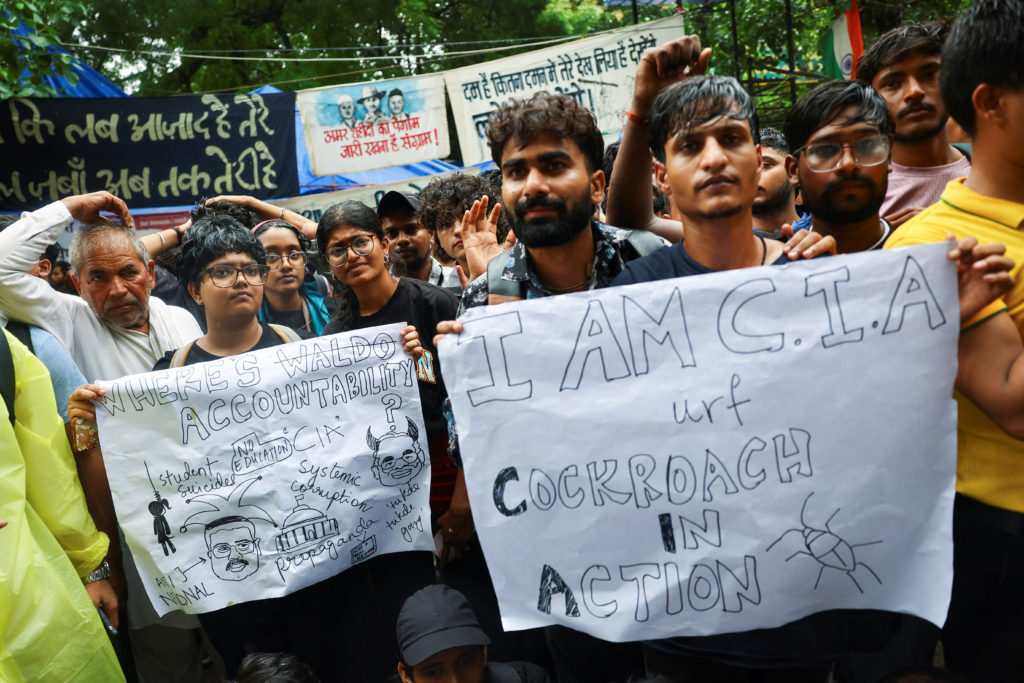
In recent weeks, a unique protest movement led by India’s youth has emerged. Tens of thousands of young Indians have begun identifying themselves with an unusual label: cockroaches. This began as a reaction to a comment made by India’s chief justice, who compared unemployed youth to cockroaches during a court hearing.
Abhijeet Dipke, a Boston University graduate student, took the insult and turned it into a movement. He posted on the social media platform X, proposing an alliance among those labeled cockroaches. Soon after, Dipke launched the Cockroach Janata Party (CJP), a satirical counterpart to Prime Minister Narendra Modi’s ruling Bharatiya Janata Party (BJP). The CJP gained traction swiftly, especially on Instagram, where it now boasts over 25 million followers, significantly surpassing the BJP’s following.
Protesters’ Demands
The protest movement was sparked by the Ministry of Education’s decision to annul results from an entrance exam meant for undergraduate medical programs. Leaked questions had compromised the integrity of the test taken by nearly two million students. The cancellation resulted in widespread discontent, given the exams’ role in determining educational and career pathways for many students.
Disappointment turned to fury amid allegations of leaks and corruption, which activists linked to numerous student suicides. Protesters demand several reforms, including the removal of India’s education minister, stricter penalties for exam leaks, and compensation for students when tests are voided. Broader demands on the CJP’s website include calls for greater representation of women in government, a freer media system, and penalties for election tampering. These reflect students’ desire for accountability across India’s political system.
Government and Police Response
In response to the protests, tensions have flared between demonstrators and authorities. Recent clashes involved police using tear gas, batons, and potentially pellet guns against unarmed students. These aggressive tactics have only strengthened the resolve of Gen Z protesters.
Despite the government’s efforts to suppress the movement, it’s growing. Student activists, including Sona Bisht, 20, emphasize their commitment to demanding secure futures and educational reform. In solidarity, people across India are supporting protesters by sending food and supplies through delivery apps.
Political Backing and Opposition
Key opposition figures, including Rahul Gandhi, have expressed support for the movement, blaming the government for failing its youth. Government supporters and some media outlets have criticized the protesters, labeling them anarchists influenced by foreign forces.
Rohit Chopra, a professor at Santa Clara University, noted public frustration with the government’s narrative that links criticism to anti-national sentiments. This movement challenges such discourse, seeking to redefine legitimate criticism beyond accusations of being anti-Indian.
Protests’ Uniqueness and Impact
India is familiar with major protests, yet observers note a distinctiveness to the current movement. What sets it apart is the direct challenge to Prime Minister Modi’s authority, with cultural expressions such as posters and songs mocking him. Chopra argues that this protest has directly implicated Modi in its demands for accountability.
Though the impact remains unfolding, the movement has undoubtedly tarnished Modi’s reputation. It reflects a persistent call for reform and accountability within India’s examination system and broader political structures.
Leave a Reply