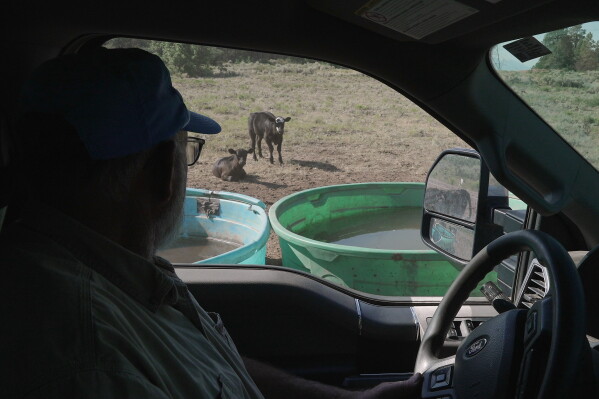
In Montrose, Colorado, Scott Snyder faces the daunting task of providing water for his cattle. The intense summer heat and scarce water resources challenge ranchers like Snyder who manage the Mex and Sons Ranch. It takes multiple trips to supply enough water for their livestock, highlighting a growing issue among ranchers in the U.S. Rockies.
The lack of adequate snowmelt has become a pressing problem in the Upper Colorado River Basin, impacting ranchers across Wyoming, Colorado, Utah, and New Mexico. According to a new study, climate change has increased the likelihood of snow droughts significantly.
Ranchers Adapting to New Challenges
Snyder and his brother Monte have adapted by reducing their herd size and buying hay to make up for the shortfall in forage. They regularly check for wildfires and now transport drinking water, a task that consumes time and resources.
Other ranchers face similar challenges. Mark Ragsdale, who also works as a state water commissioner, spends his spare time hauling water to his herd. His situation is slightly better due to his solar-powered well, which still produces water.
Hope and Continued Hardship
Despite the severity of this year’s drought, experts suggest the chances of another year as bad in the near future are low. However, continued greenhouse gas emissions increase the risk of drought.
Ranchers like the Brays have invested in additional equipment to cope. They expanded their fleet with a new water truck after poor snow conditions made it necessary. The U.S. Department of Agriculture offers some financial relief, though ranchers find it challenging to recover their time spent on these tasks.
“I’m gonna fight like hell this year so I can turn around and fight like hell next year,” said Zandon Bray, reflecting the determination among ranchers.
Ongoing Struggles
Over the years, Stanford Salazar has also faced setbacks. A blown tire amid water transport highlights the physical and logistical challenges ranchers encounter.
In central Utah, Jeff Christensen is drilling deep wells, hoping to secure a more reliable water source. He, like many others, dedicates significant time to managing water needs, supported partially by Utah’s Grazing Improvement Program.
The Associated Press acknowledges the support of the Walton Family Foundation for its reporting on water and environmental policy. For further information on similar topics, visit the AP’s climate and environment hub.
Leave a Reply