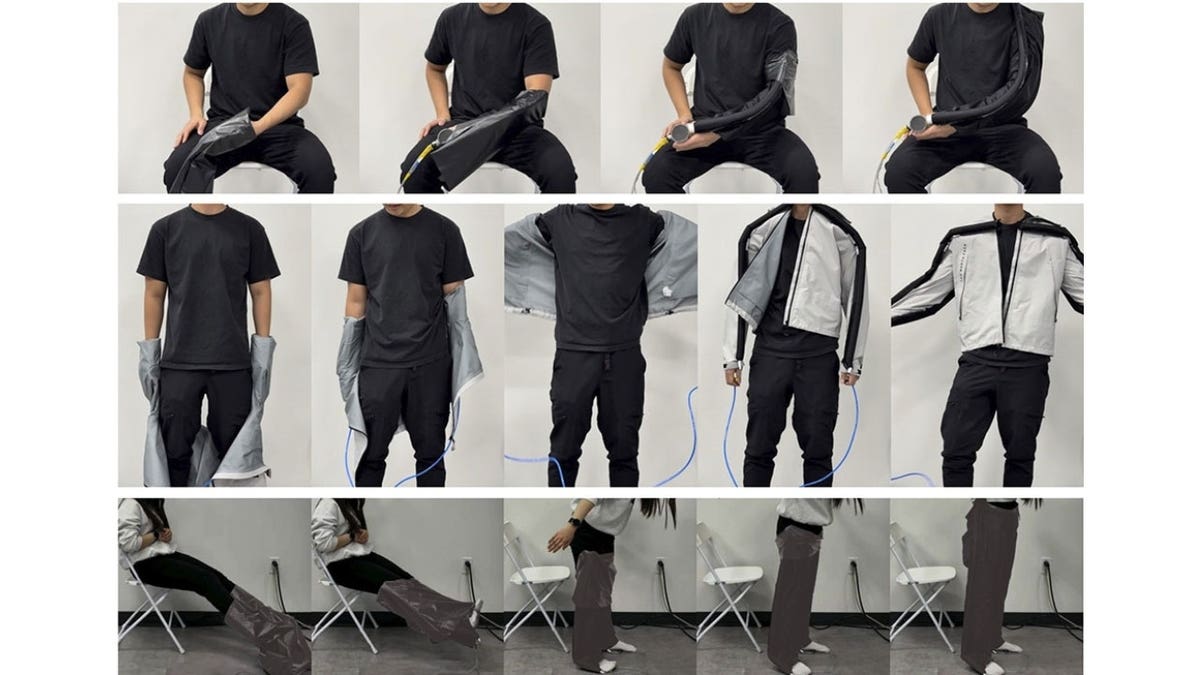
Getting dressed is a routine task many of us do daily without much thought, but it can pose significant challenges for those with limited mobility. Simple tasks like pulling on a shirt or trousers become daunting when faced with physical difficulties. Researchers from South Korea’s KAIST and Stanford University have introduced an innovation that could transform this experience: self-dressing clothes embedded with soft, air-powered robotic technology.
Innovation in Clothing Technology
This novel invention integrates tiny air-powered robots into the fabric, enabling the garment to move and position itself on the body. As the garment aligns itself while the wearer’s body moves, it offers a glimpse into future clothing solutions for older adults struggling with dressing and striving for greater independence.
How Self-Dressing Works
The self-dressing clothes operate using soft robotic technology, cleverly named SWAG, or Self-Wearing Adaptive Garment. Flexible robotic tubes are woven into the clothing, and these inflate with air to push the garment into position around the user’s body. The design mimics nature, with a soft approach that smoothly adjusts to body curves, avoiding friction and discomfort.
Key Benefits and Potential
“Dressing challenges significantly impact autonomy, increasing reliance on caregivers,” researchers say.
These clothes present a significant potential advantage by potentially reducing the physical effort associated with dressing. Users may find that tasks requiring bending, reaching or balancing become less cumbersome. This technology, once clinically tested, could be crucial for older adults and individuals recovering from surgeries.
Future Outlook and Developments
Currently in the research phase, the system is tethered to a pneumatic station, raising questions about portability, fitting diverse body types and practical daily use. The next steps include improving design flexibility and addressing essential consumer concerns such as washing, storage and personal comfort during use.
Researchers plan to conduct clinical trials to evaluate the system’s real-world efficiency and comfort, beginning the shift from lab prototype to a usable, safe home assistant. Automating the dressing and undressing process remains a priority, promising a future where individuals maintain daily routines with reduced external help.
Conclusion
While self-dressing clothes are not yet available on the market, they signal a promising future for assistive technology. Their potential to empower individuals to maintain autonomy and personal routines cannot be understated. This technology represents a crucial development in enhancing everyday independence for individuals facing mobility challenges.
Leave a Reply