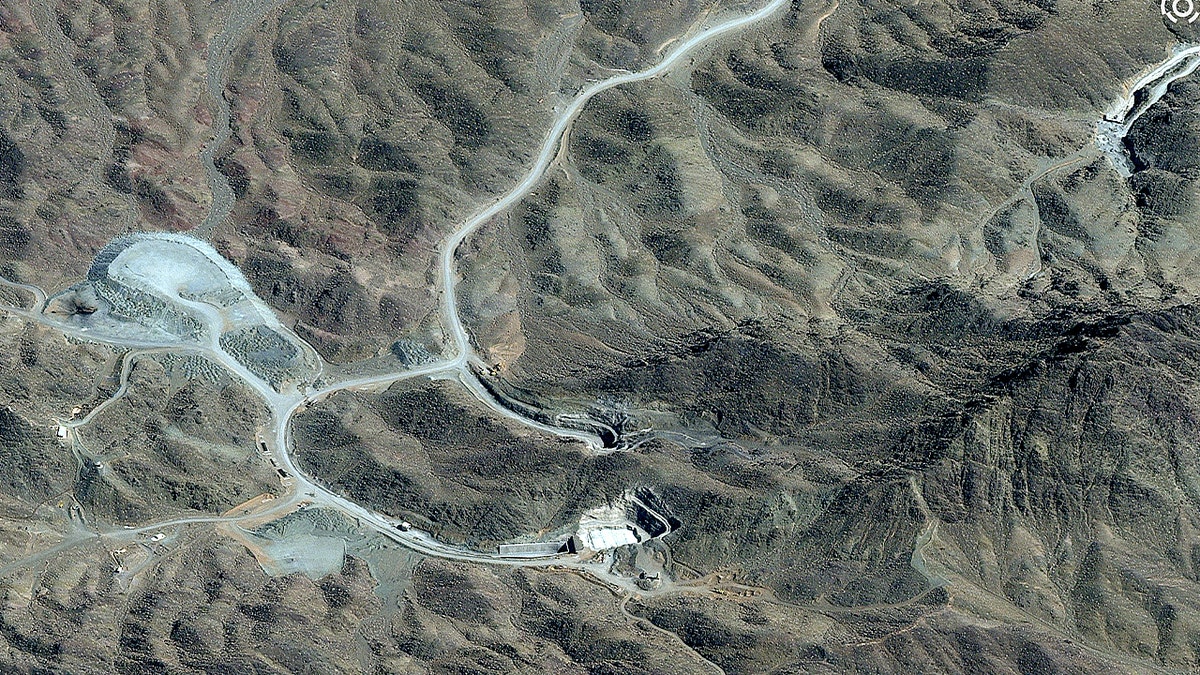
The White House is considering a plan to secure enriched uranium from Iran’s nuclear facilities, focusing on the Pickaxe Mountain site. This initiative follows satellite imagery showing ongoing construction and growing concerns about Iran’s leader, Mojtaba Khamenei, who may pursue advanced nuclear capabilities. Former CIA Station Chief Dan Hoffman explores intelligence and military strategies.
The Pentagon has revived a proposal for President Donald Trump, involving a sizeable American troop deployment to Iran to seize enriched uranium. This endeavor, described as a temporary invasion of hostile territory, requires navigating uncertain defenses and contents. The mission involves risks, with no clear timetable or exit strategy.
A modern Desert One
Historical context includes Operation Eagle Claw, the 1980 rescue attempt for American hostages in Tehran, where mechanical failures resulted in the loss of eight servicemen. The current military possesses advanced operations experience, yet faces challenges with geography, logistics, and enemy actions.
President Trump expressed concerns about repeating past failures. He previously rejected a uranium-seizure mission, saying he did not want to emulate President Jimmy Carter’s situation.
Challenges Beyond 1980
The mission complexity surpasses Eagle Claw. In 1980, hostages’ locations were roughly known, but today there is uncertainty about the uranium’s exact sites. Some believe international inspections have not occurred for months. The plan involves securing facilities at Fordow, Isfahan, and Pickaxe Mountain, necessitating thousands of troops, possibly including Army Rangers and special forces.
Pickaxe Mountain poses significant challenges. Analysts suggest it is over 300 feet underground. Evidence indicates centrifuges rather than uranium may be present there. Iran’s defensive preparations at key sites could hinder operations.
No Element of Surprise
Iran anticipates likely targets, spending months fortifying entrances, roads, and defenses. At Isfahan, tunnel entrances have been backfilled to impede approaches. American forces would need to manage enemy defenses, control strategic locations, and bring excavation equipment for uranium retrieval.
The Islamic Revolutionary Guard Corps might retaliate by targeting American interests across the region and using proxies in neighboring countries. The lengthy mission duration increases risks, potentially transitioning from a raid to a long-term occupation.
Alternative Strategies
Washington should question the necessity of occupying facilities directly. Sealing entrances and monitoring efforts to reopen may prove more sustainable. Denying access and maintaining surveillance could effectively contain the threat.
Demanding International Atomic Energy Agency access and verified accounting of nuclear materials remains crucial, coupled with sanctions and international oversight.
Critical Considerations
While Trump and Carter’s situations differ, both faced adversaries resistant to diplomatic solutions. Tactical success in operations must translate into lasting political outcomes. The administration must weigh the mission’s costs against potential benefits, considering alternative measures with potentially less risk.
The country deserves clarity on critical questions: Are uranium locations confirmed? Can troops secure the perimeter and handle counterattacks? Is there legal and public backing for ground operations? Most crucially, how will troops safely return home?
Leave a Reply