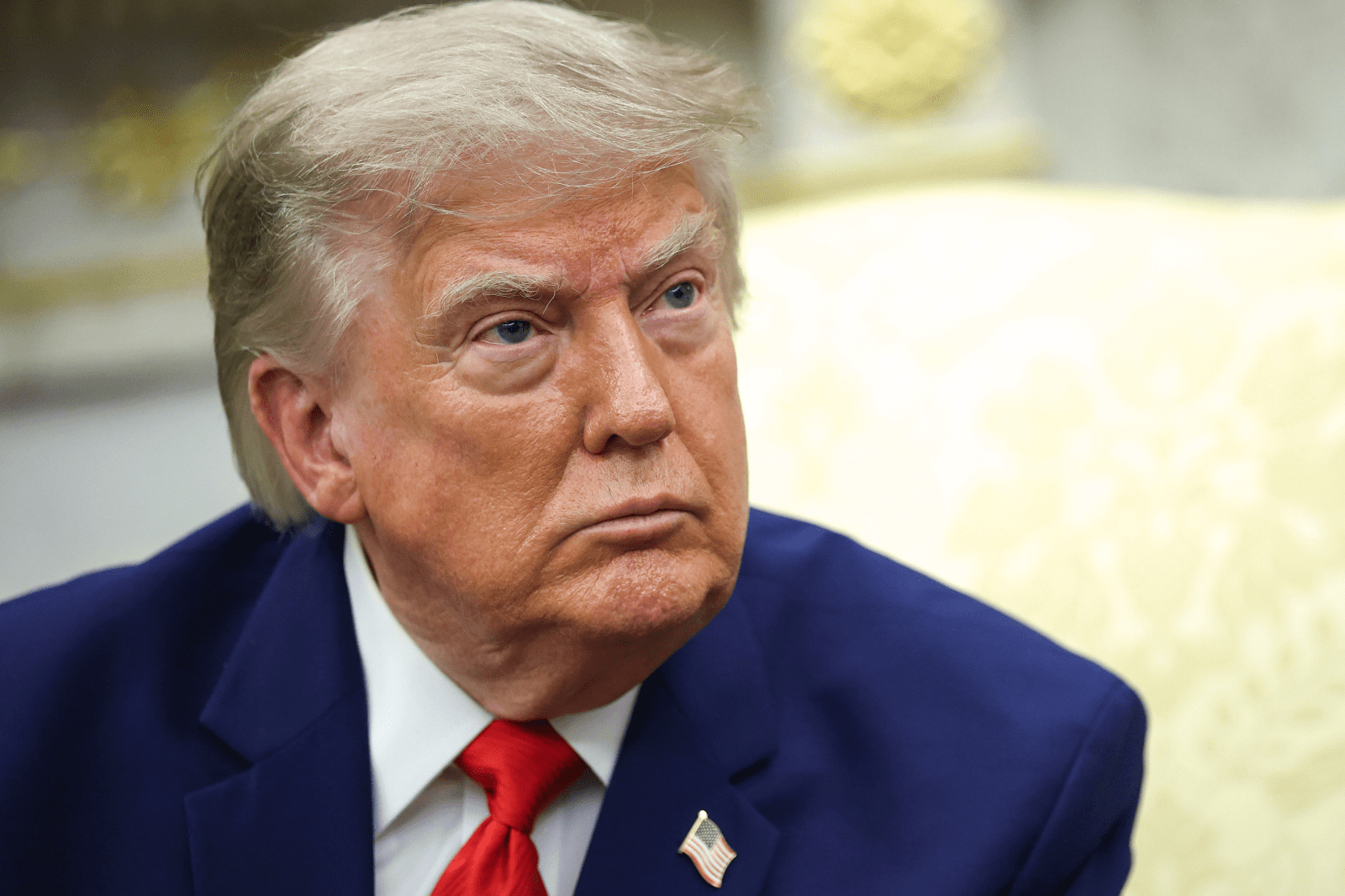
There are 100 days until the 2026 midterm elections, and new polling data shows President Donald Trump facing a challenging political landscape. The Civiqs’ rolling online tracking poll, surveying 118,886 registered voters, highlights his current national standing. A Newsweek analysis compares Trump’s approval rating on July 22, 2026, with January 20, 2025, the start of his second term. The net approval is calculated as ‘approve’ minus ‘disapprove.’
National and State Figures
Nationally, Trump holds 38% approval and 57% disapproval, leaving him 19 points underwater. The state-by-state analysis mirrors this trend, with Trump performing best in Republican strongholds but remaining negative in key states likely to influence the political balance post-midterms.
Key Points
- Trump is underwater in every major battleground state 100 days before the midterms.
- States that opened Trump’s term with positive net approval now show negative ratings.
- The largest declines since January 2025 occurred in states where Trump initially had strong support.
- Younger voters, independents, and postgraduates show high disapproval rates toward Trump.
Impact of Swing State Trends
Trump’s negative ratings in swing states suggest that shifts in voter sentiment could decide party control of Congress after the elections. His strongest support resides in Republican heartland states.
Strong Performance in Red States
Trump maintains substantial backing in several deeply Republican states, including:
- Wyoming: +26 net approval
- North Dakota: +18 net approval
- West Virginia: +18 net approval
- Alabama: +15 net approval
- Idaho: +14 net approval
Nevertheless, many of these states have seen notable approval declines since January 2025.
Challenges in Battleground States
Trump faces challenges in every major battleground state:
- Arizona: -11
- Georgia: -21
- Nevada: -16
- North Carolina: -13
- Pennsylvania: -12
- Wisconsin: -14
- Florida: -9
- Ohio: -8
Several of these states have crossed significant thresholds since Trump took office, with consistent negative patterns leading into the midterms.
Demographic Insights
Younger voters are notably against Trump. Among those aged 18 to 34, approval is at 25%, with 69% disapproval. Voters aged 35 to 49 show 31% approving and 61% disapproving. Independents and women also demonstrate high disapproval rates.
Educational divides are apparent. Postgraduates show 27% approval versus 69% disapproval, whereas non-college graduates present a narrower gap.
State Shifts in Approval
Net approval ratings have declined across all states tracked. The most significant drops have occurred where Trump once had robust support:
- Kentucky: From +23 to -1 (down 24 points)
- Wyoming: +47 to +26 (down 21 points)
- Florida: +9 to -9 (down 18 points)
- Idaho: +34 to +14 (down 20 points)
- West Virginia: +35 to +18 (down 17 points)
Blue States Hold Negative Ground
Trump’s approval remains weakest in Democratic-leaning states. Notably:
- Hawaii: -59
- Vermont: -54
- Maryland: -49
- California: -41
The opposition in these states has been consistent since the beginning of his term.
Middle America’s Variable Landscape
Some states, like Indiana (+5) and Utah (+6), show close to neutral ratings. This variance indicates potential shifts around the positive and negative baseline.
Overall Map Analysis
Despite resembling the map he entered office with, Trump’s electoral map shows narrower margins. States that supported him positively now show split or negative sentiment.
White House’s Perspective
The White House continues to downplay polling fluctuations, citing Trump’s 2024 election victory as evidence of public support. Spokesman Davis Ingle highlights achievements in key areas such as jobs and housing affordability, asserting strong accomplishments for the American people.
Contact Newsweek editor on this story: Edward Pearcey.
Leave a Reply