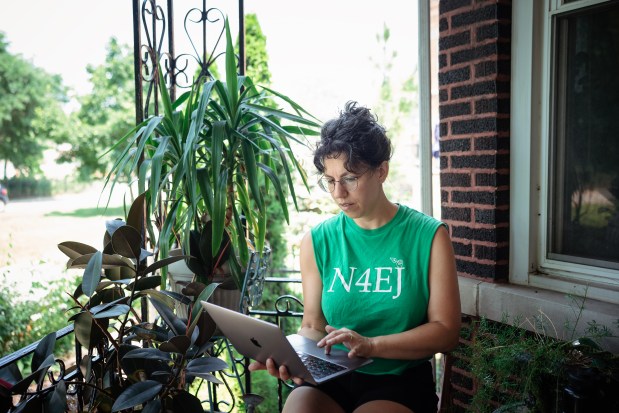
Sonia Monet Saxon often experiences the smell of burning asphalt from her home in McKinley Park, Chicago. The scent originates from a nearby asphalt plant. This problem existed long before wildfire smoke brought record PM2.5 levels to the region. Saxon, dedicated to monitoring pollution, installed an air quality sensor at a house in McKinley Park.
Pollutants remain a persistent issue in numerous neighborhoods. This is why Saxon, a community science organizer at Neighbors for Environmental Justice, has been installing air quality monitors. These devices help track emissions from the asphalt plant, which is located near schools and homes. Methods to measure air quality include affordable sensors installed by residents and advanced networks by the city of Chicago and the University of Illinois Chicago (UIC).
UIC professor Serap Erdal leads the Open Air Chicago project, which is the second-largest air monitoring network globally. Current monitoring involves static points, but future satellites may fill gaps in coverage, especially where monitoring is absent.
Community Involvement
Saxon has installed sensors, like the ones made by PurpleAir, in areas with high pollution levels. These sensors are publicly accessible online, providing vital data on PM2.5—fine particles harmful to health, which come from various sources such as factories, vehicles, and wildfires.
During a period of intense pollution from wildfires, Saxon’s sensor registered alarmingly high PM2.5 levels, highlighting health risks. Chicago endured hazardous conditions that exceed safety limits for general health. While Open Air Chicago’s network aims to offer insights, Neighbors for Environmental Justice continues to expand sensor installations due to existing gaps.
Understanding Air Quality Data
Angela Tovar, the city’s chief sustainability officer, emphasizes the importance of providing real-time air quality data to residents. The data from sensors aids in understanding pollution patterns, potentially affecting future enforcement strategies.
Open Air Chicago’s data aim to educate the community. Erdal mentioned that a new website will soon provide accessible information. Residents can utilize the Open Air Chicago map to check air quality nearby.
Regulatory Monitoring and its Challenges
Regulatory monitors, which require expertise, ensure compliance with air quality standards. Although fewer in number due to cost, these monitors offer precise data, unlike community sensors that provide only general measurements.
The city of Chicago’s regulatory sites play a crucial role, but community sensors fill the gaps by offering immediate data to residents. Moser of Neighbors for Environmental Justice stressed that community-engaged monitoring raises awareness about air pollution’s tangible impact.
“The goal is to breathe clean air,” said Anthony Moser, board president of Neighbors for Environmental Justice.
Satellite Monitoring and Future Prospects
Satellites offer a potential solution for areas with insufficient monitoring. They capture broad data but face challenges like weather interference. Kevin Stewart and Tracey Holloway, environmental experts, noted that most U.S. counties lack regulatory monitors, underscoring satellites’ potential utility.
Adelman, executive director at the Lake Michigan Air Directors Consortium, acknowledged the promise of satellite data but pointed out limitations. Satellite technology remains complex and should complement, not replace, ground-based monitoring efforts.
Despite efforts to address pollution, Saxon and others continue advocating for change. “What needs to change is the city taking this seriously,” Moser emphasized.
Leave a Reply