During World War II, it would have been unthinkable for protesters to gather outside factories making tanks and planes, trying to shut them down. Such actions would have only benefited enemies. Today’s challenge is different but significant, involving an artificial intelligence (AI) conflict with China. Both nations aim to lead future technology, but their goals diverge. U.S. companies and leadership view AI as a means for prosperity and freedom, while China uses it to control its population and expand global influence.
China and the U.S. are the main players in AI, controlling 90% of compute capacity. America’s share is 75%, leaving China with 15%. China focuses on industrial AI applications and strategic military uses. The U.S. leads in generative AI and innovation, advancing to strengthen its position in industrial and military sectors.
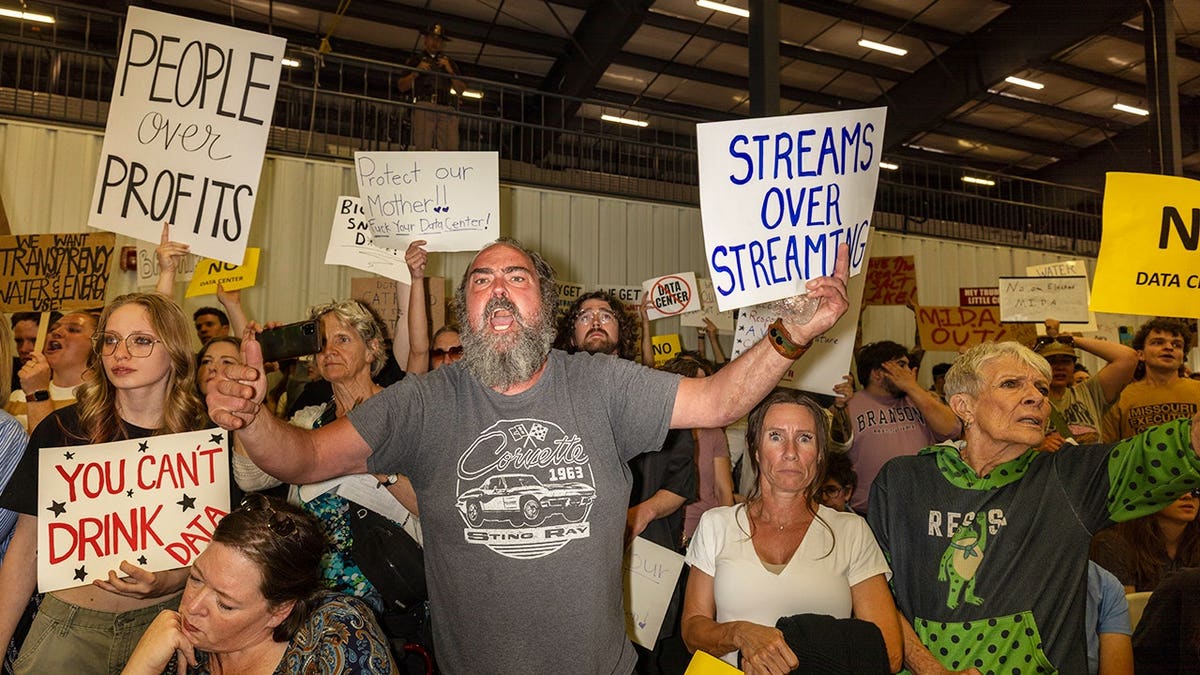
An example of domestic challenges is seen in a protest against a large AI data center project in Tremonton, Utah. Activists raised concerns about water, energy, and environmental impacts. Currently, 78 local jurisdictions have temporary bans or moratoriums on new data centers, with New York imposing a new construction moratorium. Fourteen other states are considering similar actions.
If data center bans expand and gain major political backing, China stands to gain, much as Axis powers would have if U.S. defense plants were banned in World War II. In Georgia alone, a ban might cost 552,000 jobs and $850 million in tax revenue, impacting the economy and national security.
The opposition to data centers stems from myths. Critics claim centers raise electricity costs, but they often lower them due to larger sales volumes. Concerns about water usage are exaggerated, as most data centers use no water 96% of the time. Golf courses consume more water, exceeding 500 billion gallons annually, compared to 230 billion for data centers.
Data centers spur economic growth. A Brookings Institution study shows their construction boosts local employment by 11%, with IT services and telecommunications growing by 22%. Wages increase 3%-4% for existing and new workers. If bans become permanent, the primary beneficiary will be China.
Far from affecting only billionaires and tech giants, AI supports economic growth, allowing startups and small businesses to compete. It’s projected that AI and its data centers can add trillions to the U.S. GDP, raising it by 1.5%-3.7% annually.
Beyond economic gains, AI and data centers are crucial for national security. AI’s military applications include tools like “killer drones,” highlighted in Ukraine. It also aids in detecting cyber threats and organizing defense logistics, all critical for facing China.
The choices made regarding data centers will shape the future of freedom. It’s crucial for Americans to choose paths that benefit the nation and its future, rather than supporting foreign adversaries.
Leave a Reply