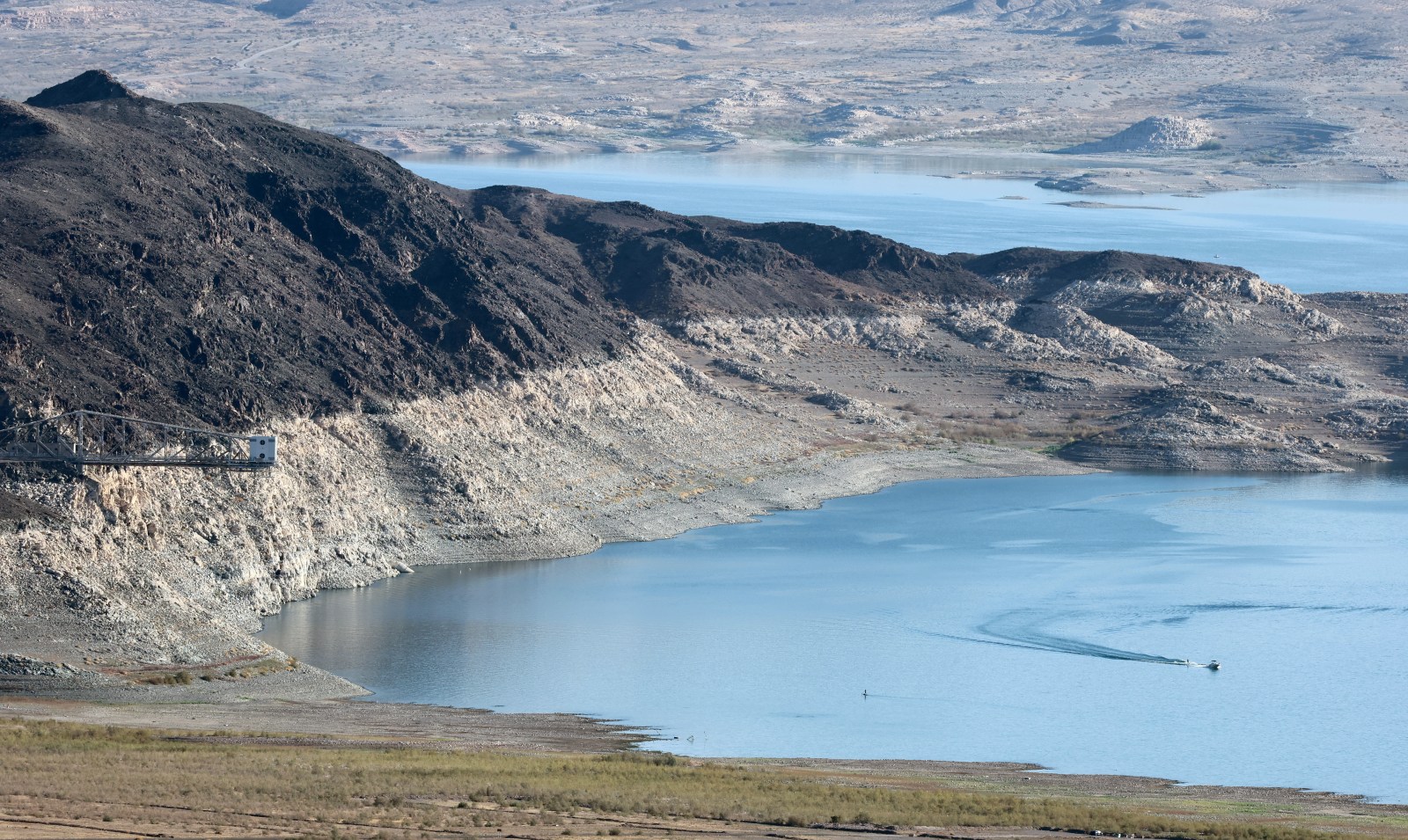
A bipartisan group of House lawmakers is advocating for the inclusion of emergency funding for the Colorado River in a forthcoming supplemental appropriations package. They warn that worsening droughts and decreasing reservoir levels pose significant threats to water, agriculture, and power supplies in the region.
In a letter dated July 17, addressed to GOP Speaker Mike Johnson, House Minority Leader Hakeem Jeffries, Appropriations Chair Tom Cole, and ranking member Rosa DeLauro, Representatives Andy Biggs, an Arizona Republican, and Dina Titus, a Nevada Democrat, emphasized the urgency of the matter. They highlighted the risks to the Colorado River Basin as lawmakers consider a supplemental funding measure introduced on June 24.
Lawmakers Warn of a Worsening Water Crisis
The letter insists on the need for federal investments to enhance water supply resilience and reduce water consumption in the basin. It points out that one in ten Americans depends on the river for drinking water and that 90% of the U.S. winter produce relies on this water source.
Moreover, the Hoover and Glen Canyon dams provide electricity to 2.5 million people. The river system and its associated parks and recreation areas contribute over $26 billion annually to the outdoor economy. The health of the river is also linked to national security, supporting industries such as advanced manufacturing, aerospace, and defense across the western United States.
Natural flow measurements of the river’s main stem and tributaries have decreased by 20% compared to 20th-century levels. Biggs stressed that this crisis affects the entire country due to the national industries relying on this water source.
Previously, Congress allocated $4 billion for drought mitigation in Western states under a 2022 law, with a focus on the Colorado River Basin. However, less than $100 million of that amount remains. Projections in the letter warn of high spring temperatures and record-low snowpacks, which could lower Lake Powell to 3,504.32 feet and Lake Mead to 1,037.03 feet by December 31, 2026.
Plan Expected Soon as States Negotiate New Agreements
The push for funding comes as plans for Lake Mead and the broader Colorado River system seem imminent. Interior Secretary Doug Burgum recently held a virtual meeting with the governors of the seven states served by the Colorado River. These states—Wyoming, Utah, Colorado, and New Mexico in the Upper Basin; Arizona, California, and Nevada in the Lower Basin—discussed strategies for water management and operations.
As current guidelines will expire this year, these negotiations aim to establish new water-sharing agreements. Titus noted that Bureau of Reclamation projections indicate Lake Mead could drop below its 2022 record low by next month’s end. By mid-2028, it might fall 31 feet below that level.
Titus stated the urgency in addressing the crisis and protecting the millions depending on the Colorado River. The letter was signed by representatives including Biggs, Titus, Melanie Stansbury, Elijah Crane, Gabe Vasquez, Greg Stanton, J. Luis Correa, Yassamin Ansari, Jim Costa, Adelita Grijalva, Abraham Hamadeh, and Paul Gosar.
Leave a Reply