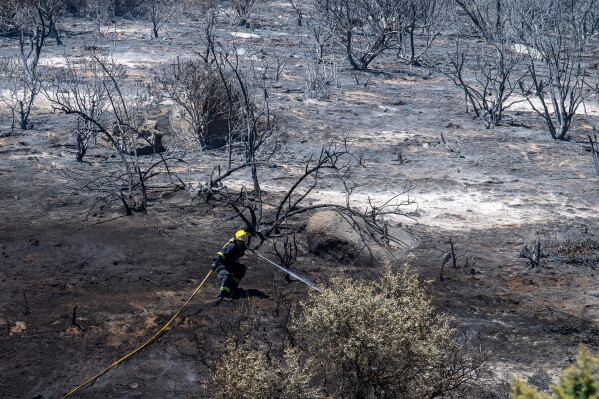
The current summer is witnessing severe wildfires in both Europe and North America. However, despite this, global burning statistics have reached record lows. This decrease is due to Africa and Asia managing fires effectively. Experts attribute these contrasting trends to human influence on the planet.
Mike Flannigan, a fire scientist at Thompson Rivers University in Canada, remarked that the paradox lies in the increase in fires, yet a global decrease in numbers. In Spain, a massive wildfire covers more than 193 square miles, marking it as the country’s largest recorded fire. Meanwhile, in Canada and the United States, wildfires this summer have burned land at least 25% more than the 10-year average.
Unhealthy air quality plagued entire regions as fires increasingly intensified in size, speed, and frequency. University of Colorado fire scientist Jennifer Balch notes a global rise in extreme wildfires, causing concern worldwide.
Reduction of Fires in Africa and Asia
Conversely, July recorded a global low in fire emissions, as reported by the European climate center Copernicus. This was achieved by decreased fire incidents in Africa and Asia due to shifting agricultural practices and fire management strategies. Mark Parrington from Copernicus highlights a decline in Africa’s fire activity, significantly impacting global trends.
Africa and Asia contribute to more than three-quarters of global emissions from burning plant material. More housing and agriculture have limited savanna fires, building barriers to prevent their spread. In Asia and the Amazon, land clearance for agriculture results in controlled burns, focused more on demographic changes.
Human Influence in North American and European Fire Trends
In contrast, climate change exacerbates extreme fires in North America and Europe. With climate change making conditions hotter and drier, ideal fire weather prevails. This intensifies fires and leads to longer burning seasons, especially in northern regions.
With climate change resulting in more extreme fires, North America’s fire suppression efforts face new challenges. While traditionally effective, these measures struggle with increased intensity and frequency.
The Impact of El Nino
The developing strong El Nino is poised to worsen fire activity, particularly in tropical regions. South American governments anticipate more tropical fires, especially in areas like the Amazon and Southeast Asia. Although El Nino might bring more rain to the U.S. West, it also encourages grass growth in deserts, increasing potential fire fuel.
Devastating grass fires have happened in Los Angeles in 2025 and Hawaii in 2023. Regardless of El Nino, North America and Europe need to improve wildfire planning and adaptation efforts. Prescribed burns can reduce excess vegetation that serves as fire fuel. Balch emphasizes the inevitability of landscapes burning, urging proactive measures.
The Associated Press provides this climate and environmental coverage with support from several private foundations, maintaining full responsibility for its content. Visit AP.org for details on their standards and funded coverage areas.
Leave a Reply