Concern Over AI-Generated Satellite Images
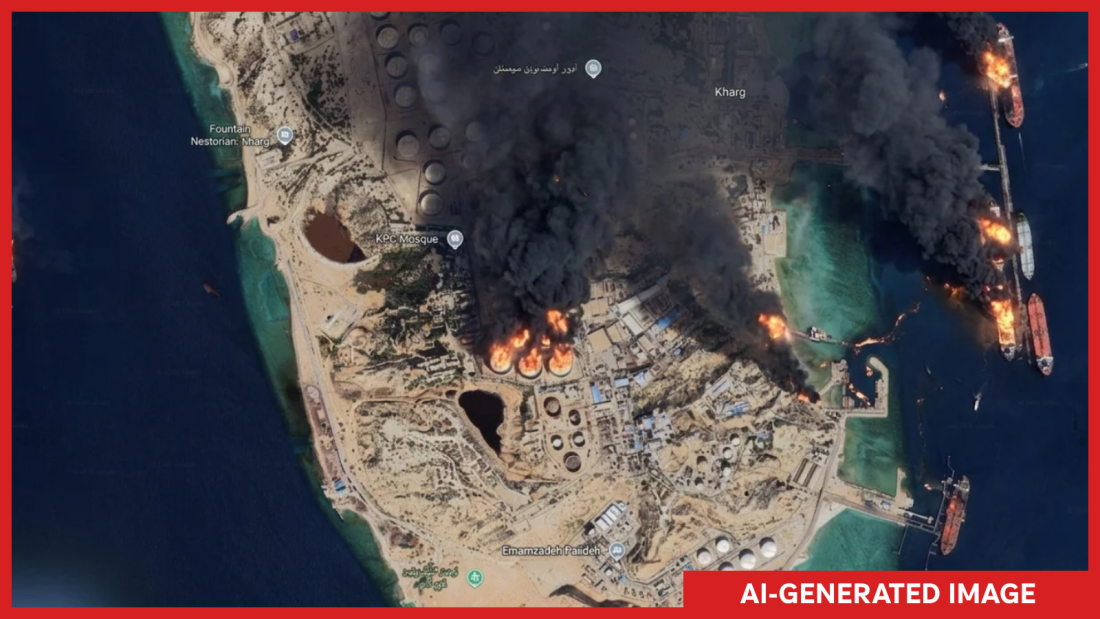
An AI-generated image showed fires on Kharg Island, Iran. It was produced after Google unveiled a feature for users to create AI-based satellite images in Google Earth. Shortly after, Google removed the feature.
We’ve seen geospatial professionals using this feature for a range of useful purposes. However, we’ve also seen people sharing screenshots of generated imagery that appear to violate our policies. So we’re rolling back this feature while we work on implementing stronger guardrails.
Google’s initial announcement encouraged users to create images by typing what they wanted to see. This caused alarm among experts who use satellite imagery to verify news and events around the world.
Potential for Misinformation
Concerns arose about the risk of creating deepfake satellite pictures with a click. An open-source researcher, Henk van Ess, pointed out the potential harm from such tools.
Journalists discussed Google’s decision to roll back the tool. Visual forensic investigator Evan Hill noted significant opportunities for abuse and misinformation.
Role of Satellite Imagery
Satellite imagery helps verify real events. It’s used by open-source investigators to confirm ground events, relying on Google’s widespread coverage. It plays a critical role in distinguishing real images from fakes.
Traditionally, satellite images were hard to imitate due to controlled sources and altitude. However, AI-generated satellite images could complicate this verification.
Emergence of Fake Satellite Images
Fake satellite images are already emerging. During the U.S.-Israel war with Iran, fake images of a U.S. base in Bahrain were shared in Iranian media. These images were created using Google Earth and AI.
Jake Godin noted the acceleration in creating AI fakes will increase confusion and spread misinformation.
Godin worries that governments might dismiss real satellite images as fake, further eroding public trust.
Google’s Response and Community Reaction
Google issued a statement about misinformation concerns and explained their solution for flagging AI images via a watermark in their tools. Despite these measures, the open-source community remains skeptical.
At the heart of concerns is Google Earth, a crucial tool for verifying social media posts. If Google’s AI tool continues development, it might undermine the reliability of verifying imagery.
Leave a Reply