Annette Hansen felt distraught upon learning about the federal government’s concerns with Indiana’s wetlands program. As the executive director of Porter County’s Izaak Walton League of America, Hansen has been deeply involved in local conservation efforts. “Especially when you’re somebody who was out here in the trenches trying to take care of just a small piece,” said Hansen. The organization successfully restored 150 acres, but Hansen views this as a meager contribution against the larger backdrop of wetland preservation needs.
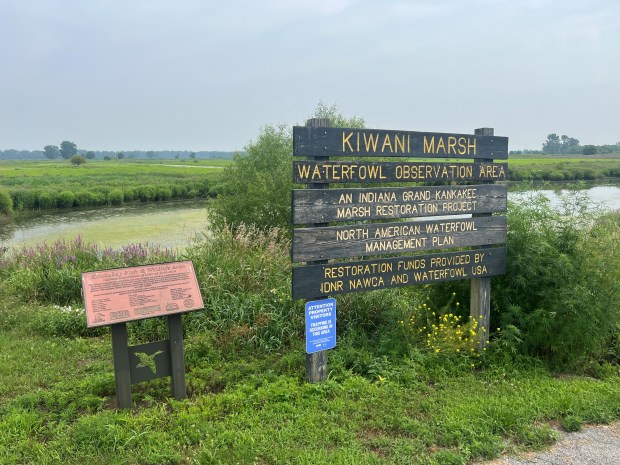
Spanning over 125 miles, the Kiwani Marsh in Starke County near San Pierre is managed as a waterfowl observation area by the Indiana Department of Natural Resources (IDNR). This site is part of a broader restoration project initiated in 2010 for the Indiana Grand Kankakee Marsh. The Indiana Capital Chronicle reported that the U.S. Army Corps of Engineers identified non-compliance issues with IDNR’s wetland program.
The IDNR’s program, known as the Indiana Stream and Wetland Mitigation Program, allows developers to buy stream and/or wetland mitigation credits to satisfy compensatory mitigation needs under various legal provisions. A spokesperson from the DNR assured that all sanctioned projects would be completed. There are three scheduled projects in Northwest Indiana, with planned construction dates between 2027 and 2028. These depend on approvals from the Army Corps.
Hansen stated that her organization’s recent wetland restoration project remains unaffected by these compliance issues. The Frame Family Little Calumet Conservation Area, which includes the rehabilitation of habitats and removal of invasive species, aids in local drainage. Hansen stressed the significance of such efforts, particularly in response to frequent flooding caused by climate change.
According to Hansen, the restored wetlands also benefit nearby farms by retaining stormwater. The property is subject to ongoing inspections by the IDNR to ensure proper conservation practices. Hansen highlighted the importance of wetlands for minimizing stormwater buildup and expressed concern over state development priorities. “People make choices for the almighty dollar, not thinking about what’s better for the land,” she remarked.
The Army Corps, through its Louisville District, oversees compliance and announced non-compliance findings following a review in 2025. The Corps has directed the IDNR’s wetland program to address deficiencies with a Corrective Action Plan. The statement highlighted a need for improved project reviews and credit delivery.
The impact of data center development on wetlands was also brought up by Hansen and Susie McGovern, a specialist from the Hoosier Environmental Council. Data centers might require Department of Army authorization if development affects waters of the U.S., including wetlands. Purchases of ILF mitigation credits are an option to meet mitigation obligations.
McGovern views data centers as a growing threat to wetlands, noting the expedited permitting process meant to encourage establishment. Concerns revolve around executive orders that relax regulations under the leadership of former President Donald Trump. As data centers expand, McGovern worries about the loss of wetland ecosystems.
Wetlands provide vital ecosystem services like flood impact reduction, water purification, and groundwater recharge. They serve as critical habitats for many endangered and rare species. McGovern hopes residents and activists in Indiana will rally for wetlands preservation, recognizing its economic and ecological value.
Email: [email protected]
Leave a Reply