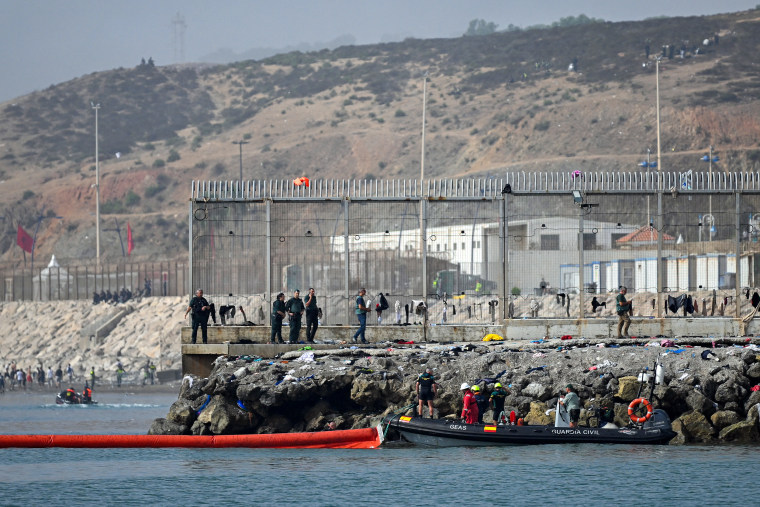
Spain has moved to strengthen its borders in response to a significant breach by migrants in its North African territory of Ceuta. A 500-meter containment barrier is being installed to prevent further crossings from Morocco, following an incident where approximately 50,000 to 60,000 migrants illegally entered the territory earlier in the week. The Spanish government reported that the death toll has reached 67, including individuals who drowned and others who died in a stampede at a breakwater barrier. Meanwhile, authorities in Ceuta indicated to Sky News that the total fatalities stand at 86.
Spanish Prime Minister Pedro Sánchez criticized certain reactions from European Union leaders who suggested Spain be temporarily removed from the Schengen zone due to these events. Sánchez argued that such calls were based on prejudice and misinformation, driven by political motivations. On Saturday, some migrants who reached Ceuta’s Tarajal beach were escorted back across the border by Spanish soldiers. Spain’s Interior Ministry stated that most migrants who entered have been returned to Morocco.
Fernando Grande-Marlaska, Spain’s Interior Minister, asserted that the country remains firm against illegal activity. When questioned about the border breach despite heavy security, Marlaska insisted on the reliability of Morocco as a partner, highlighting swift cooperation between the two nations to address the situation promptly.
A Spanish Guardia Civil boat has reinforced security post illegal crossings from Morocco into Ceuta by deploying a pneumatic barrier in water.
The situation has prompted leaders from 22 EU countries to demand an urgent, coordinated response. In a letter released by the Danish prime minister’s office, they urged the Irish presidency of the EU to convene a videoconference of interior ministers. The letter stressed the importance of preventing uncontrolled crossings and the instrumentalization of migration.
The plea emphasized that illegal entry must not be perceived as a pathway to legal residency in the EU, warning that such beliefs could lead to increased attempts and undermine the union’s migration policy. Sánchez called for a united EU ministerial response to reinforce border security and share responsibility.
A backlash ensued from some EU countries, including Italy, where Premier Giorgia Meloni threatened stricter border controls for arrivals from Spain. Sánchez condemned this approach, urging unity and warning against selfish, divisive actions.
The aftermath saw hundreds of migrants voluntarily returning to Morocco, citing poor treatment and challenging conditions in Ceuta. Moroccan police and soldiers observed as migrants crossed back at an informal border passing.
Migrants returning described experiencing hunger, hostility, and mistreatment, prompting their decision to leave Ceuta despite the initial goal of reaching Europe. Ouail Lamzeiz explained his voluntary return, unable to secure food or assistance in Ceuta. Meanwhile, Salah Eddine El Arrage alleged mistreatment by Spanish police as a factor in his return.
Desperate conditions led migrants like Othmane El Merzoug to seek financial aid from family for travel back to towns far from the border.
Ceuta’s President Juan Jesús Vivas acknowledged the challenge, noting disrupted life within the city due to the border issues. Although the return of migrants commenced successfully, he emphasized the need for completion of the process.
In nearby cities, such as Tangier, the influx and subsequent return of migrants was evident. Abdalah, a migrant hoping to enter Ceuta, recounted struggles near the border and acknowledged difficulty finding sustenance.
Nonetheless, some migrants, like Mohamed Hatri, expressed determination to remain in Ceuta despite obstacles, describing attempts by authorities to compel a return by restricting access to basic commodities.
Leave a Reply