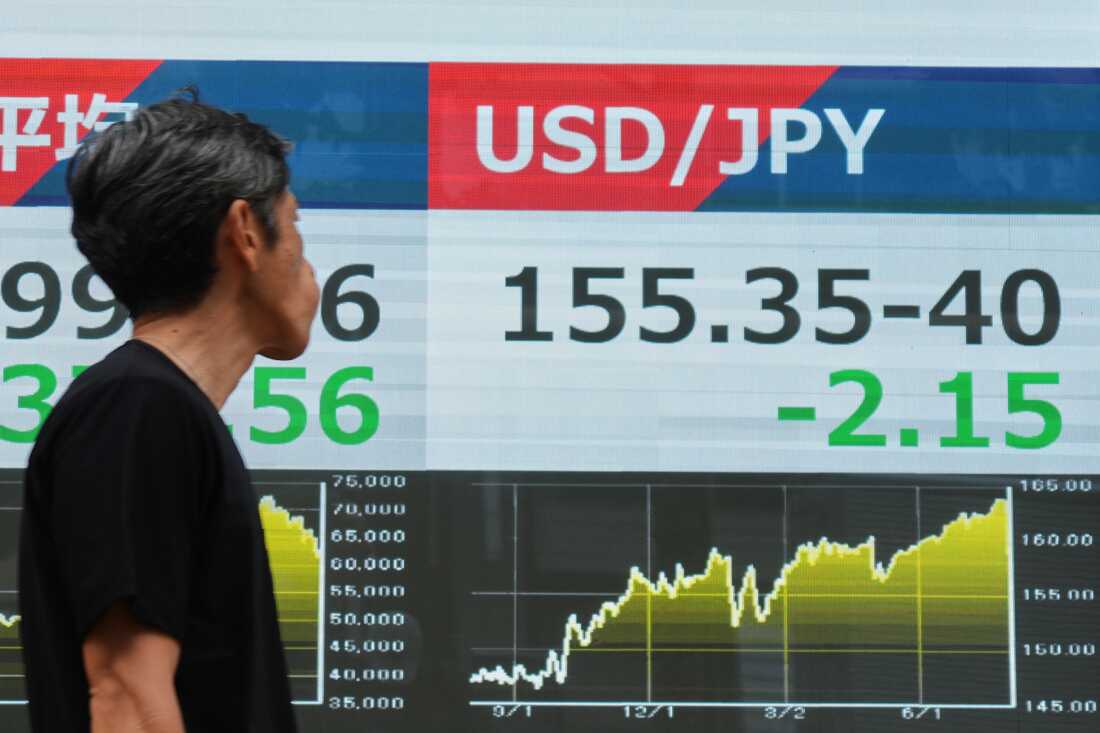
An electronic board in Tokyo displayed a sudden weakening of the U.S. dollar against the Japanese yen on Monday, August 3, 2026. This change followed an intervention by U.S. President Donald Trump and Japan’s finance minister in currency markets, highlighting their collaboration.
Prior to the intervention, the dollar was above 163 yen, marking a 40-year high. Speculation about market interference caused it to drop below 160 yen. After an official announcement, the dollar fell about 1%, reaching 156.34 yen. This shift was significant, illustrating the impact of the intervention.
The yen’s consistent weakness against the dollar has frustrated Tokyo, as Japan heavily relies on imports. A weaker yen raises prices and fuels inflation. Previous attempts to strengthen the yen showed minimal effects. Last week, signs pointed to U.S. assistance in this effort.
“We have a good relationship with Japan,” Trump remarked on Sunday. “We’re financially strong and ready to assist Japan with their weakening yen. This intervention is a signal of friendship that also benefits the global economy.”
In Tokyo, Finance Minister Satsuki Katayama confirmed the intervention, noting that Japan’s finance ministry purchased yen in cooperation with the U.S. Treasury Department. The move aimed to stabilize the yen amid recent volatility. Katayama emphasized readiness to act further if required.
Market intervention acknowledgment is uncommon. Neil Newman from Astris Advisory Japan recalled a similar instance following Japan’s 2011 natural disasters. A weaker dollar benefits U.S. exports to Japan by lowering costs in yen terms. Newman noted the rarity of U.S.-Japan cooperation on such interventions but highlighted mutual interests in this case.
Leave a Reply