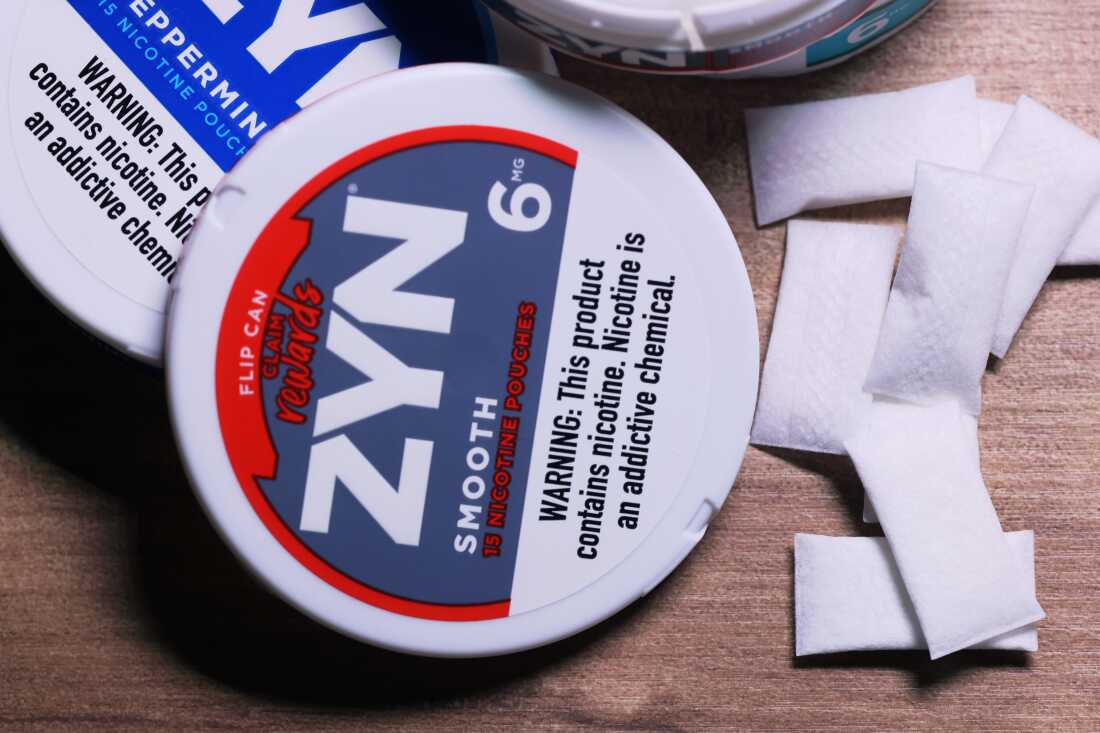
The Food and Drug Administration (FDA) has granted permission for Zyn nicotine pouches to be marketed as a ‘lower risk’ alternative to cigarettes. These pouches, resembling a small paperclip filled with nicotine crystals and bleach-white fibers, can be placed discreetly between the lip and gum. This design allows the user’s bloodstream to absorb nicotine and other chemicals.
Available in flavors like ‘Cool Mint,’ ‘Smooth,’ and ‘Chill,’ Zyn has recently acquired the right to assert its products as safer than traditional cigarettes. The FDA stated that this step aims to provide adult users with clear, science-based information about the relative harm of tobacco products.
FDA’s Decision and Public Health Perspectives
Bret Koplow, acting director of the FDA’s Center for Tobacco Products, explained that this decision is part of an effort to ensure consumers are informed about the risk differences between tobacco products. Some researchers support the notion that Zyn could be less harmful and potentially reduce the more than 480,000 annual U.S. deaths related to tobacco use. However, there is concern that it might also serve as an introduction to riskier nicotine habits such as smoking.
Nicotine Pouches vs. Cigarettes
Nicotine, a substance derived from the tobacco plant, can also be synthesized in labs for products like Zyn. Proponents of nicotine pouches highlight their reduced harm compared to traditional tobacco products that involve burning. Mitch Zeller of Dartmouth Geisel School of Medicine notes that nicotine pouches eliminate the harmful chemicals found in tobacco smoke, making them a preferable option for smokers attempting to quit.
Brian Erkkila from Philip Morris International, Zyn’s parent company, shares that Zyn helped him quit smoking and suggests it might have been beneficial for his late father as well. He acknowledges, though, that nicotine is addictive and not risk-free.
Potential Risks and Regulatory Concerns
Stanford University’s Bonnie Halpern-Felsher acknowledges the potential of nicotine pouches to reduce harm for current smokers. She points out that risks may include heart issues, neurological illnesses, and dental problems. The long-term effects of these products remain unknown, as Zyn has only been available in the U.S. for around a decade.
Dr. Robert Jackler, also from Stanford, emphasizes that nicotine pouches like Zyn are not approved smoking cessation tools, contrasting with nicotine gum or patches. He criticizes Zyn’s marketing strategies, which include promoting flavored options and using active lifestyle imagery.
Marketing and Youth Impact
Erkkila asserts that Philip Morris International targets its marketing efforts towards adults and maintains responsible advertising practices. He clarifies that the FDA’s authorization includes acknowledgment that flavors help adult smokers try and potentially switch to Zyn.
Despite intentions to focus on adults, concerns persist about adolescent use. Mary Hrywna from Rutgers School underscores the dangers for young users, cautioning that adolescent experimentation could negate any harm reduction benefits.
Concerns About Teen Use
The University of Michigan’s Monitoring the Future study highlights an increase in nicotine pouch use among 12th graders from 2024 to 2025, sparking worries among experts. Emily Hilliard from the Department of Health and Human Services affirmed the FDA’s commitment to preventing youth access to tobacco products.
Halpern-Felsher’s research highlights the ease of hiding nicotine pouches, posing a challenge for schools and parents. Her curriculum aims to educate adolescents on the risks of using these products.
Dr. Jackler advises against beginning nicotine pouch use, drawing on experiences with patients who have suffered complications from nicotine addiction. He stresses the severe personal consequences that can result.
Leave a Reply