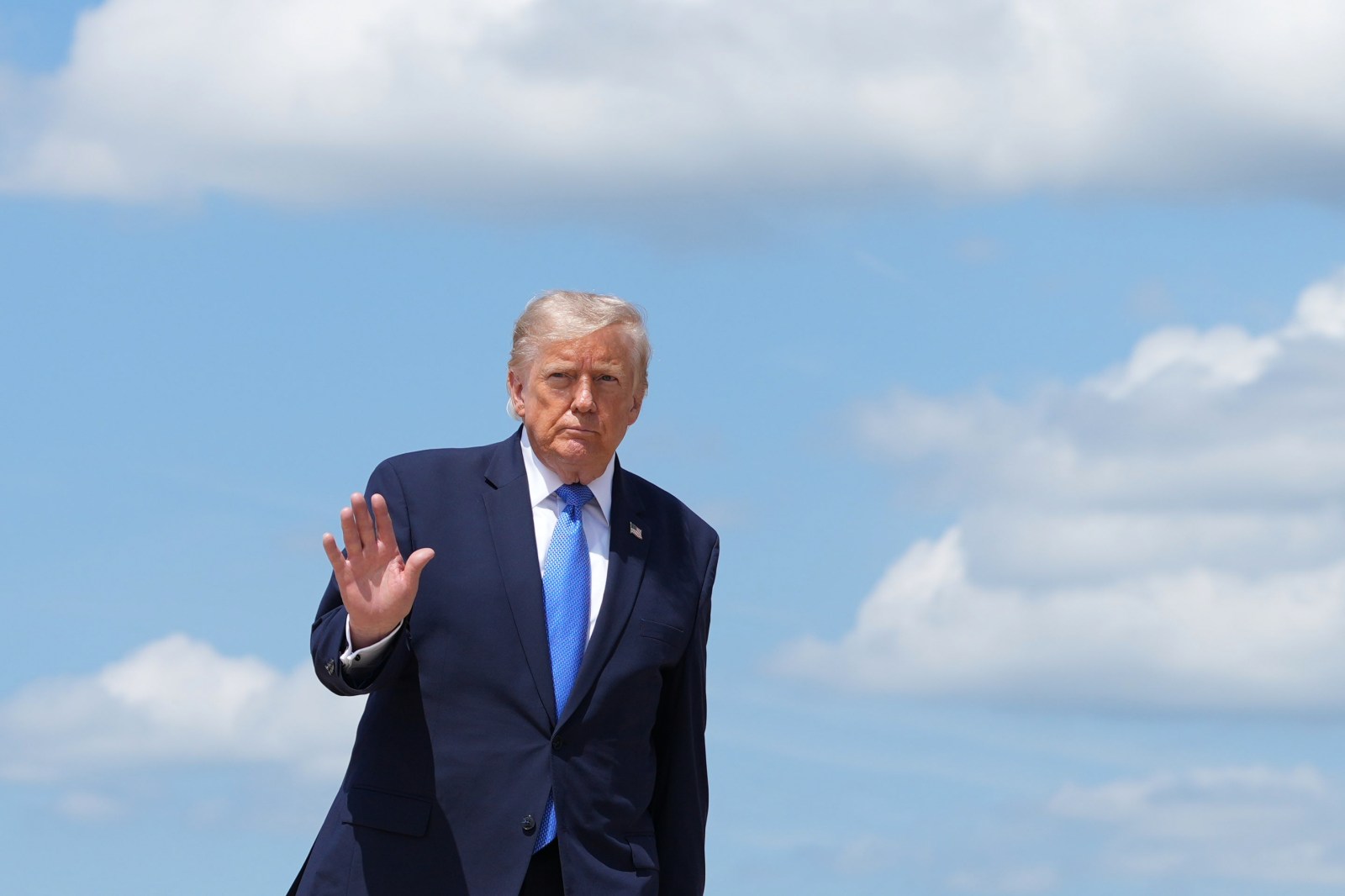
President Donald Trump embarked on a trip along the West Coast to highlight his economic achievements amid growing voter dissatisfaction. His journey began in Los Angeles, where he addressed a Republican National Committee fundraising event at his golf club in Rancho Palos Verdes, California. The trip is set to continue in Las Vegas, Nevada, where he is expected to discuss crime and the economy.
The White House has positioned these visits as a chance for Trump to showcase his record on economic growth and public safety. Olivia Wales, the White House Assistant Press Secretary, emphasized the President’s plans to contrast his policies with those of West Coast leaders like Gavin Newsom. Wales criticized Newsom’s policies, including tax increases and protections for certain illegal activities, in her posted remarks.
“The President will draw a sharp contrast between his commonsense agenda and the radical policies of Democrats like Gavin Newsom,” said Olivia Wales.
Recent Harris Poll data highlights the challenges Trump faces, with 95 percent of Americans believing the country is experiencing a crisis due to rising costs of daily necessities. The perception of an affordability crisis spans political affiliations, reflecting potential electoral vulnerabilities for Republicans.
Political consultant Matt Klink commented on the challenge, noting that voters experience the economy through personal interactions with costs at the grocery store, gas pump, and household expenses, rather than through economic statistics. Surveys reveal that a majority of Americans disapprove of Trump’s economic management. A YouGov/Economist poll indicates only 30 percent approval for his handling of the economy, compared to 65 percent disapproval.
Recent polling data from CNN/SSRS and Fox News echo these findings. Economic approval ratings are low, driven largely by concerns over inflation. Indeed, just 25 percent approve of Trump’s management of inflation.
The perception of a poor economic condition persists, with a late July AP-NORC poll reporting 69 percent of respondents viewing the economy as “poor.” Stress over costs related to groceries, housing, healthcare, and gasoline remains significant for many.
Meanwhile, Democrats are potentially gaining ground on economic issues. A Reuters/Ipsos poll shows more registered voters expressing confidence in the Democratic Party’s economic strategies over the Republicans’. This shift marks the first time since 2017 that Republicans have fallen behind in public trust regarding economic policies.
Nonetheless, Klink pointed out that Democrats must offer concrete solutions to the affordability crisis, as recollections of prior economic struggles during the Biden presidency linger. Without a solid plan, November’s results may remain contested.
Leave a Reply