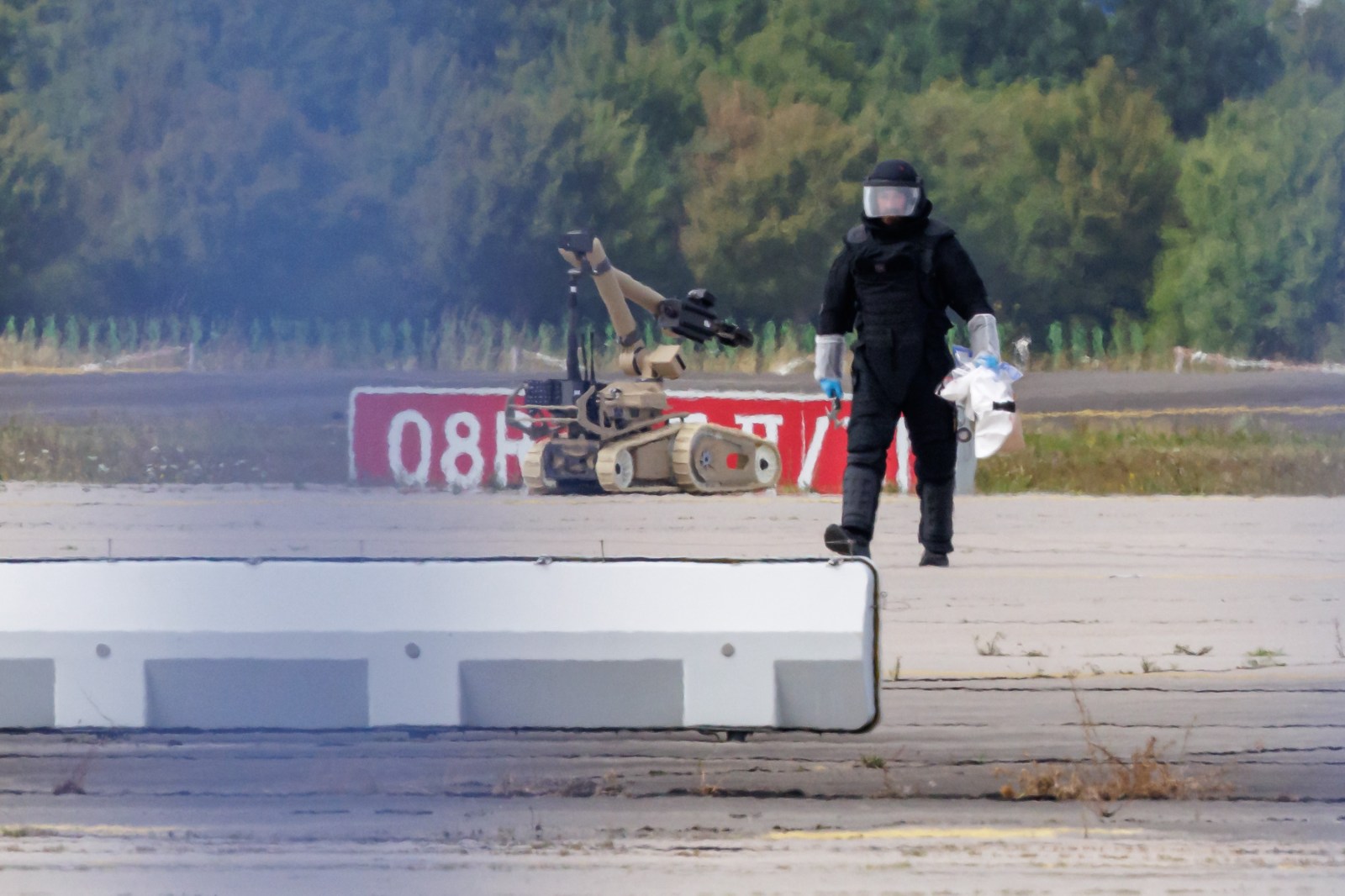
Germany is dealing with what its Interior Minister, Alexander Dobrindt, terms a ‘hybrid attack scenario’ after an explosive-laden drone was neutralized at Leipzig airport in Saxony. At a press briefing, Dobrindt underscored the gravity of the situation, noting it marks a new kind of threat on German soil.
The drone incident has prompted discussions about whether Germany is engaged in a form of hybrid warfare. Hybrid warfare involves tactics that are designed to be ambiguous, making it challenging for countries to respond effectively.
In 2025, Germany reported over 1,000 questionable drone activities according to Holger Muench, President of the Federal Criminal Police Office. However, the Leipzig event is considered the most severe among these incidents.
Security analysts have voiced suspicions that Russia could be behind this incident, though some suggest China may also play a role. The potential involvement of these nations contributes to an unsettling ‘new normal’ in international relations.
The drone was identified just before midnight on a Tuesday, situated between two planes belonging to Ukraine’s national carrier, Antonov. It infiltrated the airport zone around 7 p.m. that evening, carrying what appeared to be Semtex explosives.
An additional incident involved a DHL aircraft that encountered an object upon leaving Leipzig airport, causing damage to the aircraft’s nose. The airport closure subsequently led to its diversion to Hannover.
Leipzig’s strategic importance as a hub for DHL and military logistics for Ukraine attracts attention from both Russian and Chinese intelligence. In 2025, a Chinese national, Yaqi Xiao, was convicted of espionage for sharing sensitive logistics data with another Chinese agent, linked to a German politician from the AfD party.
Experts inclined towards a Russian threat highlight ties to the ongoing Russia-Ukraine conflict. Joachim Krause from Kiel University describes an upsurge in Russian hostilities towards European supporters of Ukraine.
“We are seeing unprecedented escalation tactics used by Russia in this conflict,” Krause remarks.
Germany faces significant challenges in addressing these threats. Krause notes that political reluctance and technical deficiencies in drone defense contribute to a perception of vulnerability.
Legal and procedural inefficiencies between Germany’s Federal Police, state authorities, and its military, the Bundeswehr, hamper comprehensive defense strategies. Krause stresses the need for decisive action from the German government to meet these security challenges.
Juergen Kremb, a China intelligence expert, warns of the severe implications if foreign powers attack German infrastructure with drones. He emphasizes that such actions are tantamount to acts of state terrorism, complicating Germany’s security landscape.
Leave a Reply