On Thursday, Hiroshima observed the 81st anniversary of the U.S. atomic bombing, with the city’s mayor, Kazumi Matsui, criticizing global powers for engaging in warfare and urging the cessation of justifying nuclear weapons as a deterrent. Matsui warned that diminishing the inhumanity of nuclear armament and utilizing force to achieve prosperity may lead to cycles of violent retaliation, risking another Hiroshima or Nagasaki.
In his peace declaration at Hiroshima Peace Memorial Park, Matsui expressed concern that many political leaders still consider nuclear deterrence a viable strategy, which legitimizes violence and complicates efforts to achieve a world without nuclear arms. He called on citizens to learn from history and take action for peace.
“Downplaying the inhumanity of nuclear weapons and accepting the use of force to pursue one’s own prosperity risk cycles of violent retaliation that could ultimately result in another Hiroshima or Nagasaki.” – Mayor Kazumi Matsui
Approximately 50,000 attendees, including representatives from nearly 120 countries and regions such as the United States and Iran, participated in the ceremony. A minute of silence was observed while the peace bell rang at 8:15 a.m., marking the exact moment in 1945 when the bomb fell on the city.
Prime Minister Sanae Takaichi attended the memorial for the first time as prime minister. She discussed taking a “realistic approach” to achieve a world free of nuclear weapon usage, within the framework of the United Nations’ treaty aimed at preventing nuclear proliferation.
This year’s ceremony occurred amidst speculation that Takaichi’s government, which supports nuclear deterrence, might reconsider Japan’s postwar three non-nuclear principles in upcoming security and defense documents. Takaichi has advocated a possible revision to allow nuclear weapons in the country. Despite maintaining the principles, she did not affirm a long-term commitment to this policy.
Survivors have voiced frustration and concern over the international community, including Japan, backing nuclear weapons for deterrence. Japan, under the U.S. nuclear umbrella, has relied on Washington’s commitment for nuclear protection, rejecting requests by survivors to join the Treaty on the Prohibition of Nuclear Weapons.
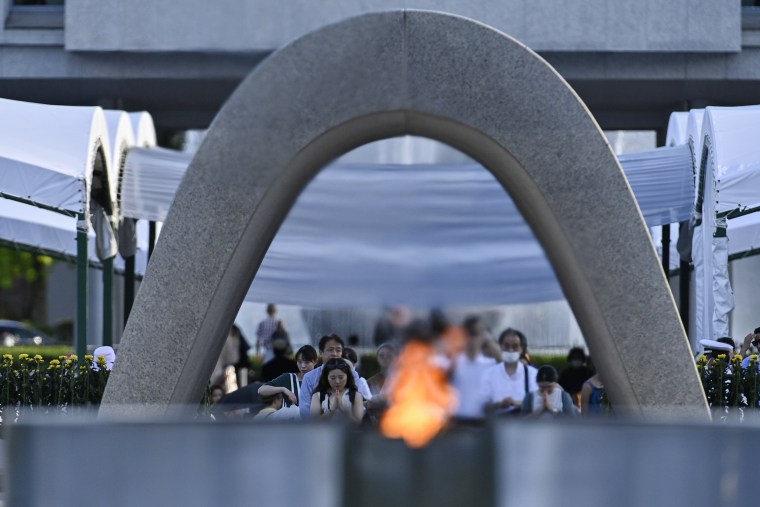
The Peace Flame was visible through the arch of the cenotaph at Hiroshima Peace Memorial Park, reflecting the 1945 bombing’s devastation, which killed 140,000 people. Three days later, another bomb in Nagasaki killed 70,000, leading to Japan’s surrender on August 15, ending World War II and Japan’s aggressive history in Asia. Survivor numbers have decreased to 91,105, from an original quarter million, with an average age exceeding 86, raising concerns about fading memories.
United Nations Secretary-General António Guterres emphasized Hiroshima’s lessons, highlighting the need for a world where nuclear threats are unthinkable. He praised Hiroshima as a symbol of resilience and hope, calling for dialogue and cooperation over confrontation and narrow advantage.
“Hiroshima stands as an inspiring example of resilience, renewal and hope. Across generations, its people remind us that, even after the darkest moments, we can choose — and build — a different future.” – António Guterres
Leave a Reply