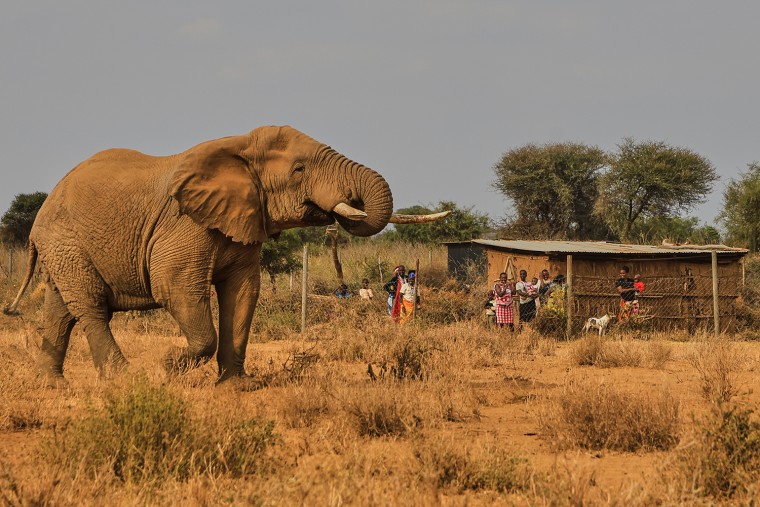
On a dusty road in Kimana, Kenya, the remains of an elephant lie abandoned. Nearby, scavengers have stripped another elephant down to its skull. These elephants are among 15 suspected victims of cyanide poisoning in Amboseli National Park. The elephants ate tomatoes from nearby farms, and investigations are ongoing into how cyanide entered this ecosystem where wildlife and agriculture coexist.
Debate Over Cyanide Source
Growers near Amboseli Park dispute claims that cyanide from their tomatoes killed the elephants. The incident highlights rising conflicts between human and wildlife activities in the area. Kenya has made strides in recovering its elephant population, which now exceeds 36,000, thanks to efforts to curb poaching and enhance protections.
Elvis Muchai, a long-term farmer near Amboseli, expressed skepticism about the cyanide poisoning reports. He mentioned that farmers have coexisted with elephants despite crop losses when elephants cross into farms during dry seasons.
“We are used to the animals eating from our farms,” Muchai said.
According to the Kenya Wildlife Service, preliminary laboratory tests found cyanide in the elephants, with postmortem examinations revealing tomatoes in their stomachs. Dr. Isaac Lekolool, head of veterinary services at Kenya’s wildlife agency, noted signs of paralysis and breathing difficulties in the elephants before death. Further tests aim to locate the cyanide source.
Impact of Human-Wildlife Conflict
Kimana, bordering Amboseli, is a major agricultural hub producing tomatoes, onions, and French beans for Nairobi. However, with farm expansions near the park, elephant deaths due to human-wildlife conflict run high, second only to poaching.
From 2000 to 2020, self-defense or retaliatory killings have led to over 1,160 elephant deaths, as noted in Kenya’s National Elephant Plan.
Despite these challenges, Duncan Juma of Kenya’s wildlife service denies that human-wildlife conflict is behind the elephant deaths, affirming local affection for the animals.
Call for Comprehensive Investigation
The International Fund for Animal Welfare (IFAW) emphasizes the need to address human-wildlife conflict comprehensively. IFAW calls for protection strategies that safeguard both wildlife and local livelihoods.
Ben Wandago, IFAW’s East Africa Director, stressed an urgent investigation into the suspected cyanide incident. He advocated for strict control of toxic substances to prevent future environmental entries.
Farmers remain doubtful about cyanide presence in agricultural products. Muchai stated he had not encountered cyanide among pesticides in the region, which are government-regulated.
“The chemical they are talking about, we’ve never seen it or heard of it here,” Muchai said.
The recent season saw elephants destroy half an acre of Muchai’s tomato crops, costing significant financial losses without compensation from authorities.
Another local farmer, Rymondy Mrosso, questioned why only elephants suffered effects if local pesticides were to blame. He pointed out that other animals, like goats and gazelles, did not show similar signs.
Leave a Reply