Horror films often act as allegories for larger societal issues. Movies like Get Out (2017) address racism, and Obsession (2025) tackles male entitlement. Yet, the ‘final girl’ trope, representing the last woman standing against the killer, seldom receives a redemption story. This gap shifts with Jane Schoenbrun’s Teenage Sex and Death at Camp Miasma.
Actress Hannah Einbinder expressed her attraction to the project. She emphasized the film’s genre ambiguity and the unique empowerment it offers through horror slasher tropes. Einbinder found the concept refreshing and unlike anything she had encountered before.
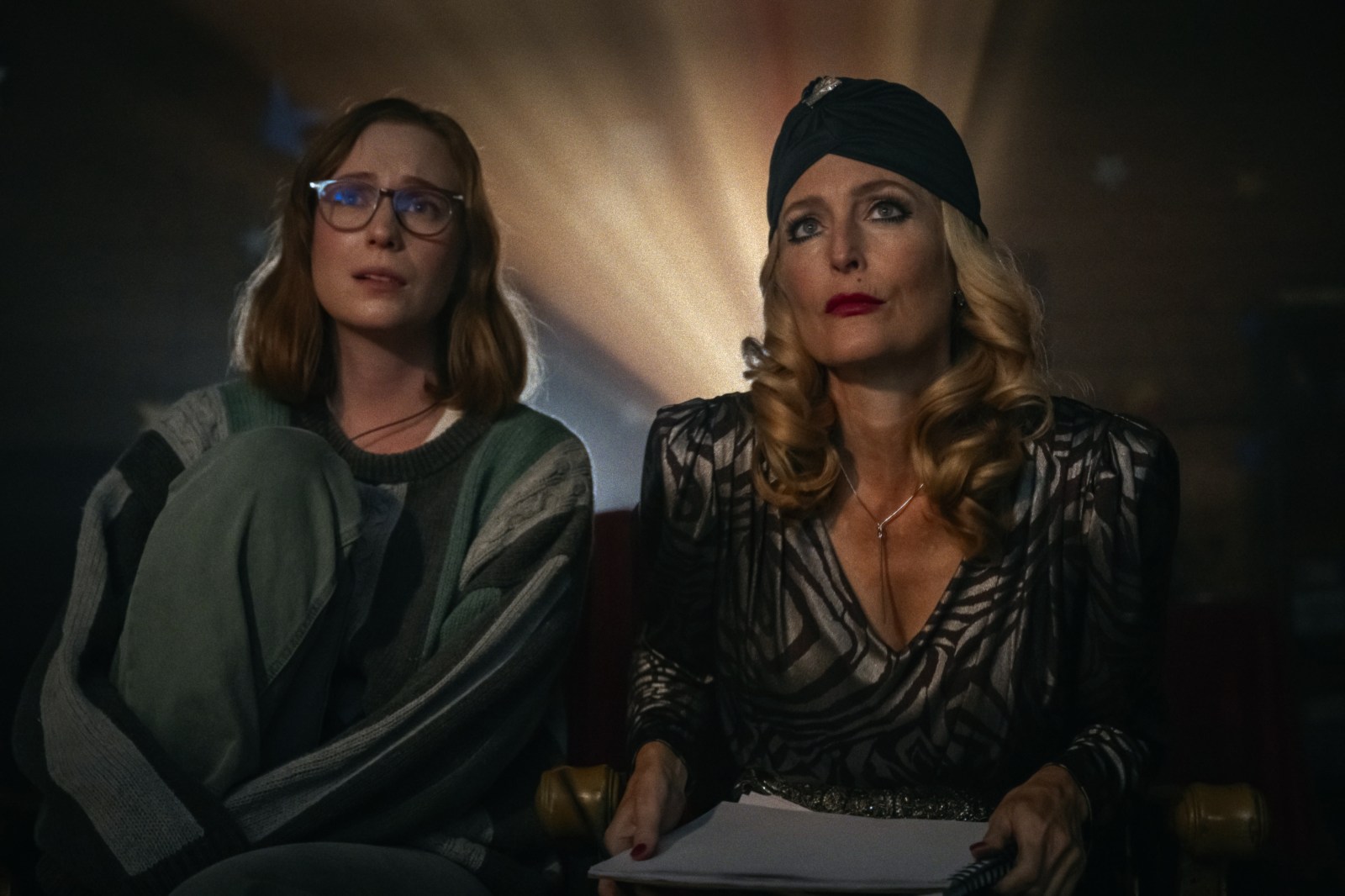
In the film, Einbinder portrays Kris, a director tasked with making a new installment of a well-known slasher franchise. Kris is determined to recast Billy Wilder, played by Gillian Anderson, the original movie’s final girl. Her goal is to reclaim a narrative historically driven by male perspectives. As Kris persuades Billy to join the film, a psychosexual exploration unfolds between them, promising to deliver one of the most unique cinematic experiences of the year.
“It’s one thing to read something on the page and to anticipate what the scene might be like to film,” Anderson told Newsweek. “And then there’s another thing, which is stepping onto a set that has been so perfectly production designed and created for the sole purpose of the viewing public, who you know every single square inch is going to be picked apart and discussed.”
Anderson described the film’s set as transformative, noting the meta aspect of its experience. For her, the film’s ability to resonate with diverse audiences is its strength. She sees it fostering a sense of unity and reducing judgment among different societal groups. This potential for global compassion is significant for Anderson.
While horror has long mirrored real-world problems, the narratives were typically male-dominated. Recent films like A Girl Walks Home Alone at Night (2014), The Babadook (2014), and The Substance (2024) have opened doors for varied perspectives. Camp Miasma contributes to this shift by intertwining horror genre references with a queer, female-led story.
Einbinder appreciated the personal significance of the material for Schoenbrun. She believed the film’s context made it more than a mere exercise.
Anderson’s character, Billy, mirrors Sunset Boulevard‘s Norma Desmond, highlighting industry challenges faced by aging actresses. Unlike Sunset Boulevard, Camp Miasma highlights potential rather than relic status. Einbinder compared this difference, recognizing the film’s modern psychoanalytical dialogue and reflection.
Gillian Anderson’s career exemplifies breaking from being typecast, as seen with her varied roles beyond X-Files. Her connection to her fans remains complex, maintaining both affection and distance.
Regarding favorite final girls, Einbinder named Carrie from Brian De Palma’s 1976 film as her pick. This choice ties back to Camp Miasma, aligning with the film’s themes. Carrie, envisioning her power and agency, aligns with the film’s reassertion of the final girl trope.
Leave a Reply