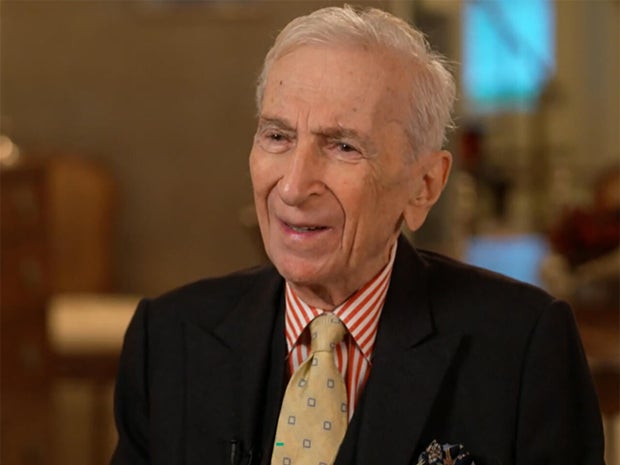
Gay Talese’s 1969 book, The Kingdom and the Power, offered an insightful look at the internal dynamics of The New York Times. It chronicled Talese’s journey from a copyboy to a notable reporter. The non-fiction book captured the intricacies of the newsroom like a vivid novel, marking Talese’s debut as a best-selling author. He spent six years crafting this piece. Talese acknowledged his methodical writing process, stating, “I’ve always been a slow writer.”
According to Talese, journalists often gravitate towards chaos and turmoil, neglecting the calm and ordinary aspects of life. In his words, “Gloom is their game, the spectacle their passion, normality their nemesis.” His work consistently aimed to paint a clear mental picture for readers, a vision he held while writing.
Gay Talese stands as a legendary figure in journalism, celebrated and sometimes controversial throughout a career spanning roughly 70 years. His professional and personal archives have been acquired by the New York Public Library.
The Early Days at The New York Times
Talese’s first published piece in The New York Times focused on the newspaper itself, particularly its iconic illuminated sign that displayed headlines in large letters. This sign was a staple of Times Square during the early 20th century. Few considered the work of those who maintained the sign, such as the electrician James J. Torpey, who got his name in the paper, though Talese did not.
“I wanted to be the lamplighter for those people who were in the dark,” Talese remarked, expressing his primary ambition: to illuminate unknown individuals and help ensure their stories were told.
Robert Boynton, a professor at the Arthur L. Carter Journalism Institute at New York University, described Talese as immensely curious. Talese’s curiosity led him to engage with diverse individuals, even pausing to interview a construction worker on his way to another destination.
Shaping a New Era in Journalism
Magazines in the mid-1960s became platforms for creative writers like Talese. Publications such as Esquire, under editor Harold Hayes, attracted authors like Norman Mailer, Tom Wolfe, and Talese himself. Hayes offered Talese a yearly contract to produce stories about his chosen subjects, notably Frank Sinatra.
Talese’s 1966 article, “Frank Sinatra Has a Cold,” became one of the most renowned magazine features. Although Sinatra wouldn’t grant an interview, Talese deftly composed the piece by interviewing over 100 people linked to Sinatra. His writing style became emblematic of the “New Journalism,” blending literary storytelling with factual reporting.
The piece echoed with lines like: “Sinatra with a cold is Picasso without paint, Ferrari without fuel…” This approach set Talese apart from the standard corporate writing of the time.
While Talese did not foresee the impact of the Sinatra article, he prided himself on various pieces. His work ranged from stories about figures like Alden Whitman, an obituary writer, to profiles of sports legends such as Joe DiMaggio, Floyd Patterson, and Joe Louis.
Talese describes his method as “the art of hanging around,” aiming to earn subjects’ trust by spending time in their world.
A Commitment to Immersive Storytelling
Encouraging students to be “Talesian,” Boynton emphasized the importance of thorough reporting, creativity, and dedication. Talese, for whom appearances mattered, even wore a suit while researching construction for his book “The Bridge”.
Researching his book “Thy Neighbor’s Wife,” Talese delved into nudist and pornographic environments, sometimes adopting their customs to gain authenticity. He explained, “You can’t be there with your press card,” showcasing his immersive journalism style.
Gay Talese has shared a long marriage with Nan Talese, a highly respected editor in publishing. Though writing “Thy Neighbor’s Wife” created personal challenges, Talese pursued the story with relentless ambition.
He has remained dedicated to documenting his marriage in his unfinished book, “A Non-Fiction Marriage.” Despite battling Parkinson’s disease at 94, Talese continues to strive for excellence in his work, hoping his best book lies ahead.
The Legacy of Gay Talese
Talese’s office in his New York brownstone basement houses his meticulous notes and photographs, free from distractions. Before his passing, Talese wishes for his complete works to represent his best efforts. As he reflected, “I will die with the satisfaction that I did my best at all times.”
His contributions to journalism, characterized by creativity, tenacity, and a commitment to storytelling, ensure that Gay Talese’s legacy will endure.
Leave a Reply