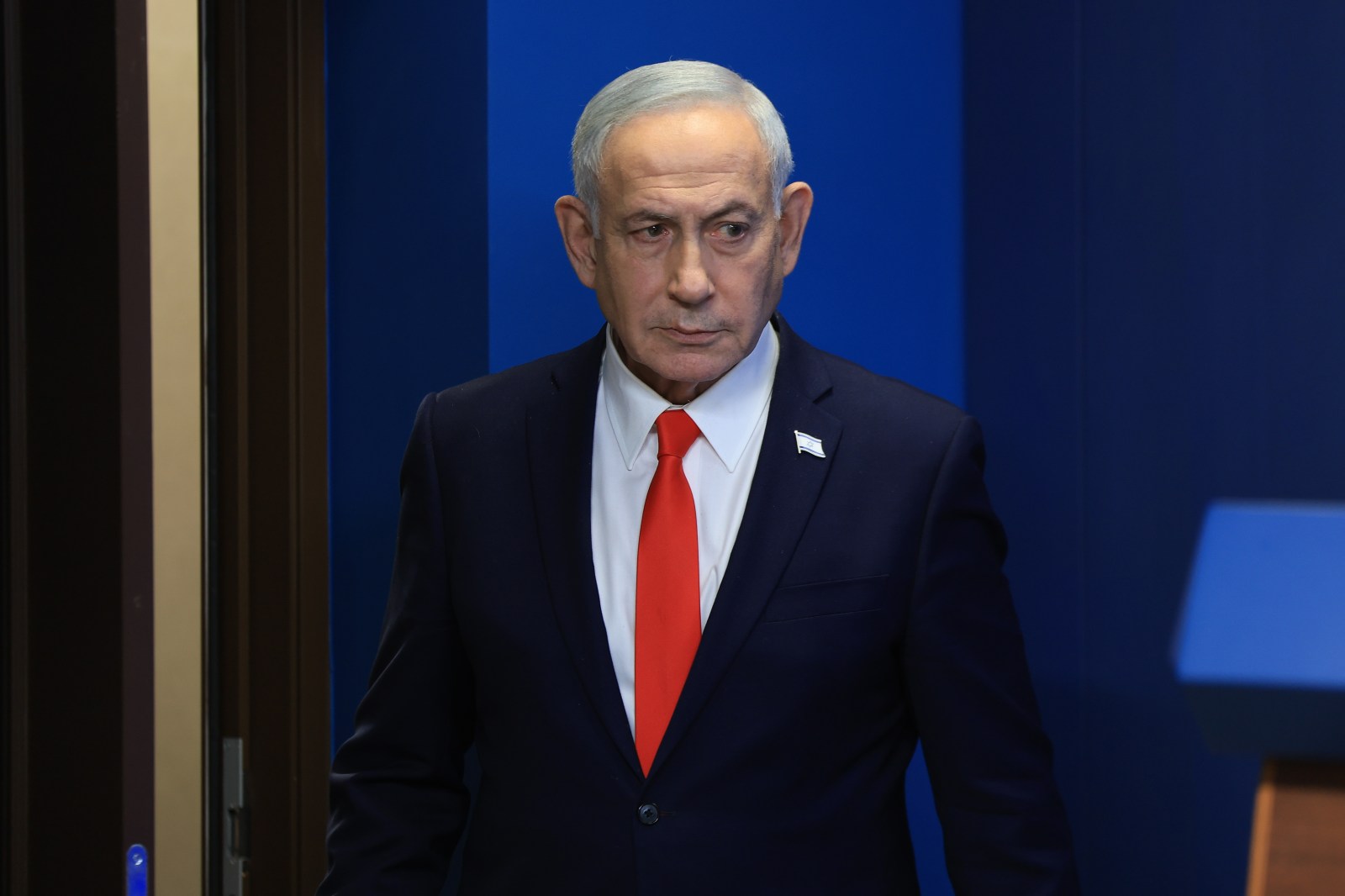
Israeli Prime Minister Benjamin Netanyahu has declined a 15-point plan for the future of Gaza proposed by the U.S. President’s Board of Peace. He emphasized that Israeli forces would not exit the territory until Hamas is fully disarmed. In a Cabinet meeting held on Sunday, Netanyahu expressed concerns over what he described as a merely symbolic disarmament process.
Netanyahu’s Position on the Proposal
Netanyahu objected to the proposal’s sequence, which involved Hamas’ disarmament tied to a step-by-step Israeli withdrawal and a transfer of Gaza’s administration to a U.S.-endorsed Palestinian committee. He reaffirmed his stance against establishing a Palestinian state and underscored Israel’s need to maintain the capability to address threats from Gaza.
During the Cabinet meeting, Netanyahu clarified Israel’s rejection of the proposal. He emphasized that no troop withdrawal would commence until Hamas relinquished its weapons arsenal. He underscored the need for complete disarmament which encompasses all types of weapons.
This perspective contradicts the plan’s mechanism, requiring Hamas’ weapons to be dismantled parallel to Israeli forces’ gradual withdrawal. Netanyahu stated that while discussions with Washington were ongoing, Israel wouldn’t always align with proposals from its ally, asserting the country’s ability to maintain its position on these issues.
Netanyahu indicated that Israeli operations in Gaza might persist until a resolution is found. He reiterated his opposition to Palestinian statehood, affirming that there would be no Palestinian state as long as he remains prime minister.
Details of the 15-Point Gaza Proposal
The proposal formed the second phase of a broader 20-point plan by Trump’s Board of Peace. It aimed to link Hamas’ disarmament with an Israeli withdrawal, governance transfer, and Gaza’s reconstruction. Under the plan, all military operations would cease and participants would fulfill their duties under the October 2025 ceasefire agreement.
Within 14 days of approval, officials would set up a timeline for execution. Hamas and other factions would hand over authority to the National Committee for the Administration of Gaza (NCAG), an interim technocratic body supported by the Board of Peace. NCAG would oversee public services, finances, and internal security, while Hamas would be restricted from influencing its operations.
The plan enforced the principle of “One Authority, One Law, One Weapon”. Police would be vetted, and their weapons controlled by NCAG. Gradual surrender of weapons facilities, depots, and tunnels would take place. Militia members would be barred from joining the new police force.
An International Verification Committee would assess compliance before advancing. An International Stabilization Force would monitor ceasefire and aid in training, separate Israeli troops, and protect aid deliveries.
Key to the proposal was a phased Israeli withdrawal linked to verified disarmament steps rather than a unilateral completion of obligations by either side. Gaza’s reconstruction would follow guidelines by the Board of Peace and the Palestinian committee, aiming for Palestinian self-determination and statehood. However, Netanyahu remains opposed to such an outcome.
While Hamas conditionally supported the proposal, contingent on Israel ceasing attacks and fulfilling its obligations, disagreements on which steps to prioritize—disarmament or withdrawal—halt progress.
Leave a Reply