The WNBA has seen a surge in popularity with stars like Caitlin Clark and Sophie Cunningham drawing fan attention. However, the league appears to be struggling with the very dynamics contributing to its growth. This issue was highlighted during a recent episode of The Riley Gaines Show, which covered key topics such as Clark’s remarkable performance, the Fever’s improvement, and a technical foul controversy involving Sophie Cunningham.
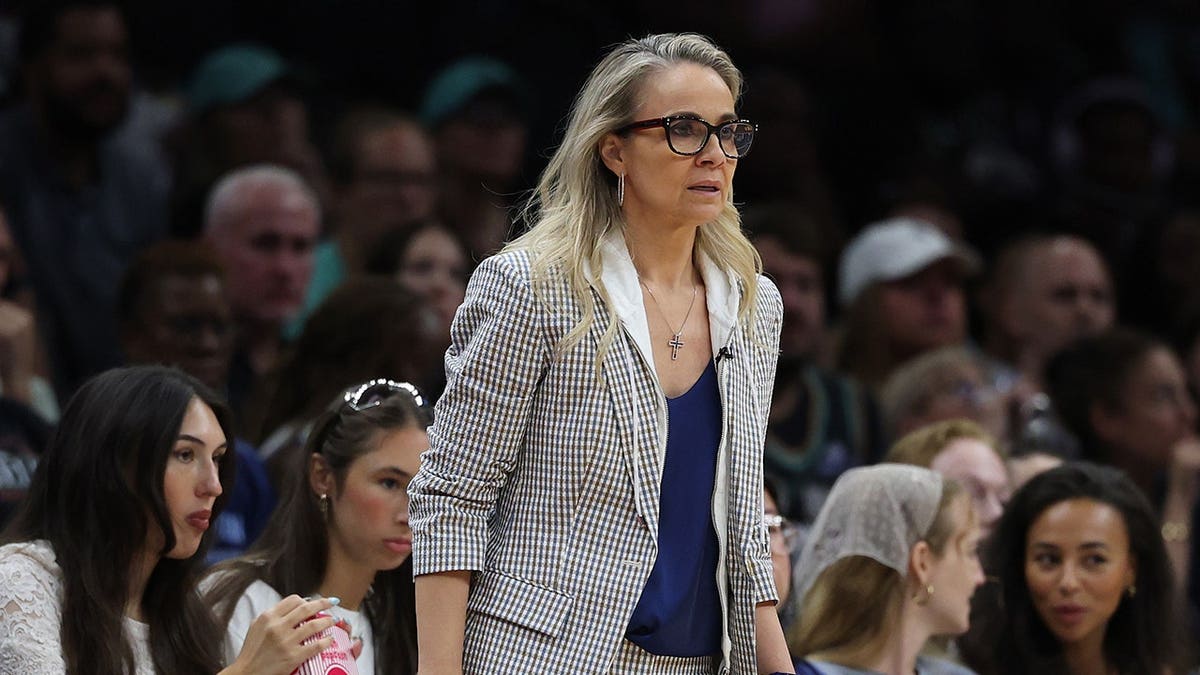
A noteworthy incident took place during a televised WNBA game between the Las Vegas Aces and New York Liberty. The game featured an unexpected lineup from Aces head coach Becky Hammon, who rested key players like A’ja Wilson, Chelsea Gray, and Jackie Young. Jewell Loyd, Dana Evans, and Brianna Turner stepped into starting roles instead, and the absent starters only supported from the bench throughout the match.
“The health and safety of players comes first,” Hammon stated after the game, defending her decision to rest the stars though the Aces suffered a significant defeat.
The rest strategy followed a challenging weekend for the Aces, who played the Minnesota Lynx the day before. Wilson, Young, and Gray completed heavy minutes during their first game, leading Hammon to prioritize their recovery over a prominent match against the Liberty.
The WNBA’s new collective bargaining agreement outlines efforts to ensure a minimum of 20 hours of rest between games for teams playing back-to-back. The Aces, playing with less than the minimum required rest, were on the road with demanding travel schedules leading up to the fixture against the Liberty.
The controversy underscores a larger issue of balancing player health with competitive sports schedules. The future holds an even tighter agenda as the WNBA extends its regular season to 50 games, increasing the need for effective load management.
Despite the scheduling challenges, the players’ health took center stage in Hammon’s decision. Some, like Liberty’s Jonquel Jones, understood the necessity even if it meant missing a major showdown. “They have to do what’s right for their team,” Jones remarked.
As the WNBA grows, stories like these may become increasingly common. Coaches and league officials will need to navigate the complexities of maintaining player well-being against the backdrop of expanding seasons and growing viewership.
Leave a Reply