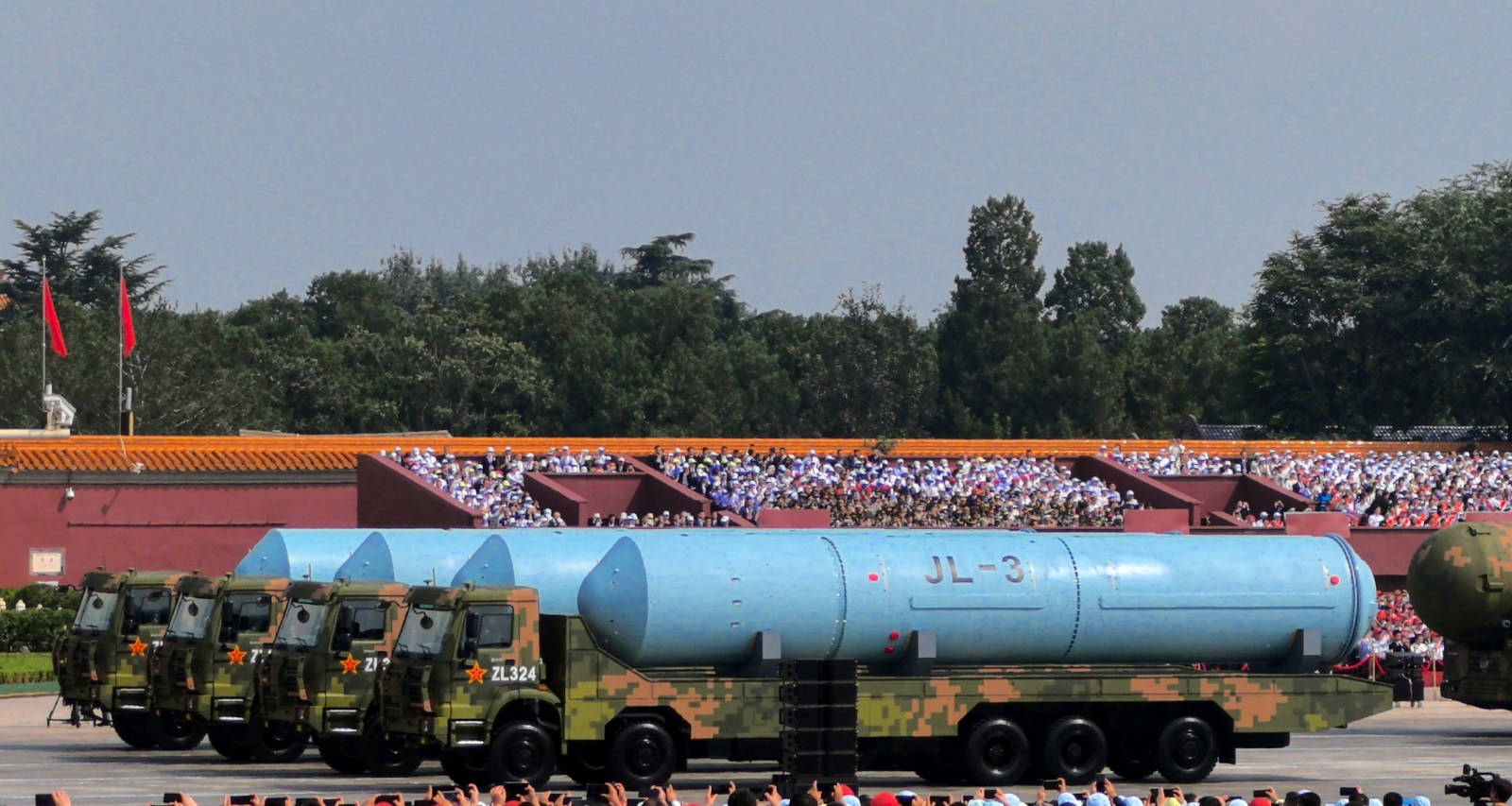
The United States, together with 40 other countries, has called for advance warnings of missile launches. This call follows China’s recent test of a nuclear-capable missile. The test involved a Julang-2 or -3 intercontinental ballistic missile (ICBM) launched from a submarine. Although the missile carried a dummy warhead, its flight over 4,500 miles across the Pacific caused alarm among regional nations.
The U.S., along with treaty allies like Japan and Australia, condemned the launch as a destabilizing act. They pointed out that China provided only two hours’ notice before the test. Other Pacific nations aligned with the U.S., such as the Marshall Islands and Palau, also protested against the launch.
“Recent missile testing activity in the Pacific area did not follow the standard practices adopted by most states to notify and deconflict ICBMs, submarine-launched ballistic missiles, and space launch vehicles,” stated the joint release. The statement emphasized that surprise tests of nuclear-capable missiles are “dangerous” and elevate the risk of miscalculation. It urged all countries, particularly those with nuclear weapons, to give at least 24-hour notice.
Beijing’s Response to Criticism
The U.S. State Department, represented by Victoria Nibarger, continued to criticize China at a disarmament conference in Geneva. In response, China accused the U.S. of “double standards.” Chinese Ambassador for Disarmament Affairs Li Chijiang claimed that China conducts its ICBM tests safely and responsibly.
Li highlighted that China has only conducted three ICBM test launches compared to the U.S.’s over 300. He questioned the U.S.’s position to criticize China in this regard. Additionally, experts on U.S. missile tests argue that American launches over the Pacific typically avoid crossing over island states, unlike the recent Chinese test.
Robert Underwood, former congressman and director of the Pacific Center for Island Security, stated, “Similar U.S. tests in the Pacific do not cross over island states traveling from the U.S. West Coast to the Marshall Islands.” He noted that the Chinese test’s route demonstrated China’s capability in nuclear deterrence and strategic counter-strikes.
Concerns Over China’s Nuclear Arsenal
U.S. officials have raised alarms over China’s expanding nuclear arsenal. According to the Stockholm International Peace Research Institute, China’s nuclear warheads could reach at least 600 by early 2025, up from around 350 in 2020. Meanwhile, China has declined U.S. invitations to join nuclear arms-limitation talks, arguing that its stockpile is minimal and lags far behind those of the U.S. and Russia.
Leave a Reply