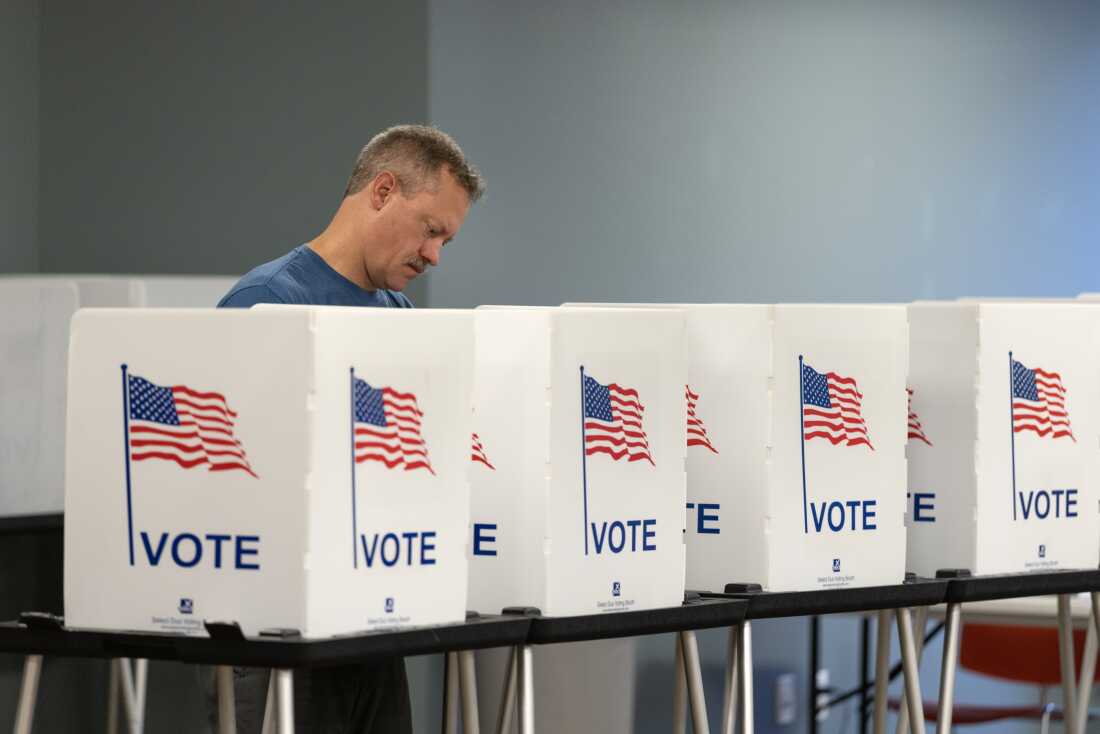
Residents of Madison, Wisconsin, cast their votes in the state’s primary election on August 11, 2026, highlighting internal conflicts within both major political parties. The primaries across several states have crucial implications for the upcoming November midterms.
Democratic primaries in Wisconsin, Minnesota, and Connecticut show a tendency towards opposing President Trump’s immigration policies and favoring younger, more progressive candidates. An example was a congressman with 14 terms being replaced by a candidate under 50 years old.
On the Republican side, Trump’s endorsements saw mixed success. His support helped candidates in South Carolina’s Senate primary and Wisconsin’s gubernatorial race, despite his approval ratings being at a historical low for his second presidency. However, a Trump-endorsed gubernatorial candidate in Minnesota struggled.
In South Carolina, Sen. Darline Graham, backed by Trump, advanced to a special Republican primary runoff for the U.S. Senate after competing against GOP heavyweights. She will face Rep. Ralph Norman, who also advanced, in an upcoming runoff.
In Wisconsin, Rep. Tom Tiffany won his nomination for opposing the certification of the 2020 presidential election and denying its legitimacy, with Trump’s endorsement and significant Republican support.
Rhett Marques, an Alabama state representative endorsed by Trump, won the Republican nomination for his congressional district. Meanwhile, in Minnesota, Trump’s candidate Mike Lindell lost the gubernatorial primary to Lisa Demuth amid controversy regarding residency and allegations of misconduct.
Democratic Immigration Policy Debate
In Minnesota, the Democratic Senate primary served as a test against Trump’s immigration policies. Lt. Gov. Peggy Flanagan defeated Rep. Angie Craig, signaling that Democratic voters are demanding stronger opposition to Trump’s immigration measures.
Throughout her campaign, Flanagan criticized Craig’s vote in favor of a Trump-backed immigration policy, the Laken Riley Act, and centered her ads on this issue. Despite Craig’s regrets and attempts to reposition herself, the result suggests a shift in the Democratic base’s priorities concerning immigration.
Progressive Democrats vs. Traditional Leadership
Progressive candidates continue to challenge established Democrats, as seen in the Minnesota Democratic Senate primary between Flanagan and Craig, and Wisconsin’s Democratic gubernatorial primary.
Francesca Hong, representing the progressive wing, lost a close gubernatorial race to David Crowley in Wisconsin. Likewise, Flanagan’s victory in the Minnesota primary highlights the progressive approach gaining traction despite not all candidates receiving endorsements from figures like Sen. Bernie Sanders.
In Michigan, Abdul El-Sayed, an epidemiologist, secured the Senate nomination, highlighting progressive wins across the Midwest.
Generational Dynamics Among Democrats
Generational change is evident within the Democratic Party as older incumbents are challenged by newer, younger candidates. In Connecticut, Luke Bronin, 47, defeated 78-year-old Rep. John Larson, indicating a voter preference for younger leadership.
This year, more than 80 candidates from younger generations are challenging older Democratic House members, a trend that continues as senior lawmakers, including Nancy Pelosi, prepare to leave Congress.
Leave a Reply