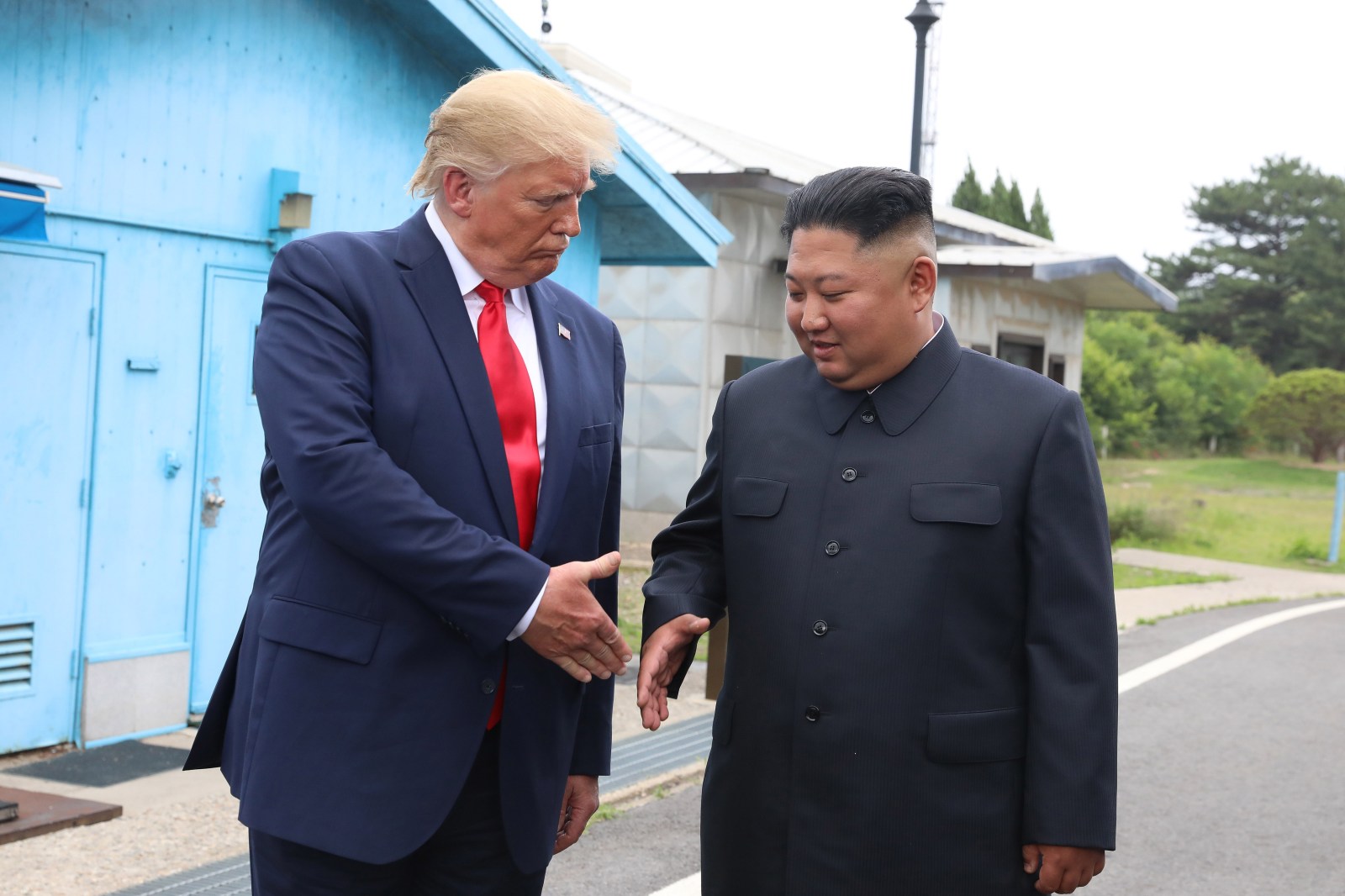
President Donald Trump’s possible move to cut funding for military exercises with South Korea could damage U.S. relations with key regional allies with minimal gain, according to South Korean experts. Trump announced on Truth Social his dissatisfaction with the ‘costly’ drills and instructed Secretary of War Pete Hegseth to reduce them significantly. Trump also cited his ‘very good relationship’ with North Korean leader Kim Jong Un and noted South Korea’s refusal to assist the U.S. in its denuclearization efforts in Iran.
A Concession to Kim?
This statement coincided with the start of the Ulchi Freedom Shield, a 10-day exercise by the American and South Korean militaries to prepare for potential conflict with North Korea. Pyongyang views these drills as aggressive provocations. North Korea continues to strengthen its position by advancing its intercontinental ballistic missile tests, expanding its nuclear infrastructure, and integrating its nuclear capabilities into its constitution.
The decision to reduce the drills could portray Washington as ‘fickle and unreliable’, stated Sean King, an Asia scholar at Park Strategies. Kim Jong Un and Chinese President Xi Jinping might see Trump’s actions as evidence of their ability to sway him away from U.S. allies using minimal effort.
Mixed Signals Across the Pacific
Critics often accuse Trump of favoring authoritarian leaders like Kim, Russian President Vladimir Putin, and Xi Jinping while undermining European allies. With the USS George Washington leaving the Western Pacific for the Middle East, the region temporarily lacks a U.S. aircraft carrier.
Despite reassurances from Elbridge Colby, the Pentagon’s top policy official, about America’s regional commitments, allies and adversaries may question the mixed messages from Washington. Kuyoun Chung, a political science professor, noted that allies might doubt if senior Pentagon officials can influence presidential decisions.
Kim’s Takeaway
In Pyongyang, Trump’s moves signal that pressure tactics work, South Korean analysts suggest. Kim Jong Un sees partial fulfillment of longstanding demands without major concessions, which might prompt him to wait for further U.S. concessions. Such a stance might lead to a potential fourth summit with fewer expectations for denuclearization.
Ban Kil Joo, from the Institute of Foreign Affairs and National Security, believes Trump aims to achieve diplomatic success to counter his Middle East failures. However, U.S. actions might embolden North Korea, along with Russia and China, to take greater risks, possibly threatening global security.
For comments, contact Newsweek editors: John Feng and Cristina Diciu.
Leave a Reply