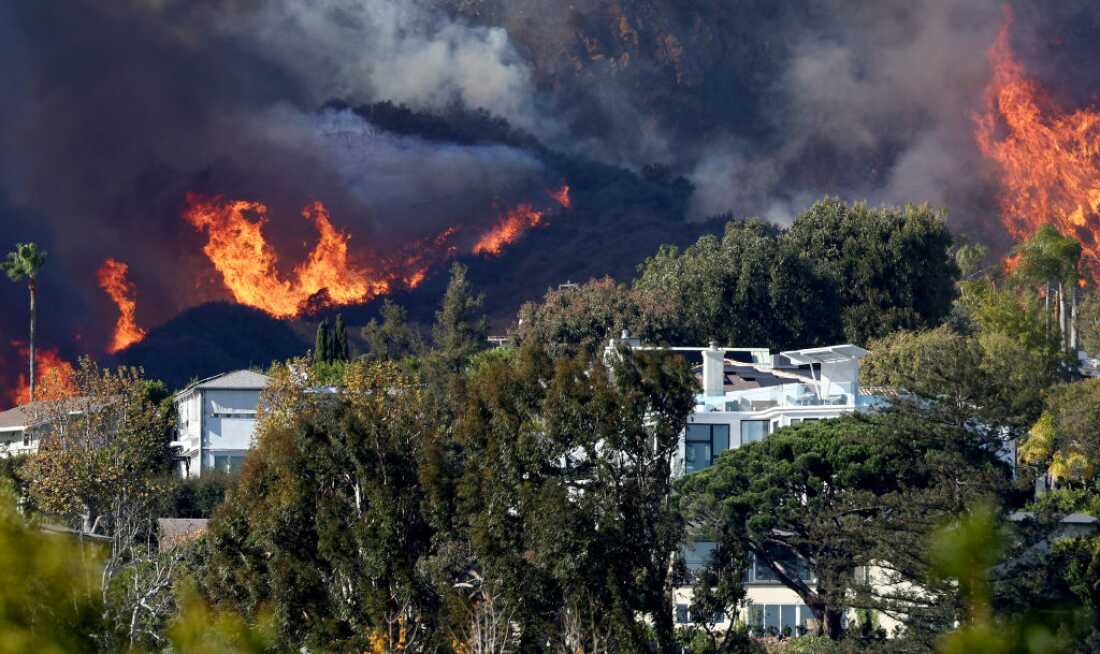
Wildfire experts have determined that homes surrounded by dense vegetation are more susceptible to fires. This is evident from incidents like the Palisades Fire in 2025. In response, California has implemented stringent regulations requiring homeowners to manage plants within five feet of any structure. This is to curb the spread of wildfires.
With severe wildfires affecting the Western U.S., California now has the toughest protective measures. These rules aim to safeguard communities from burning. Homeowners in fire-prone areas must limit plant growth within five feet of their houses. This preventative measure is endorsed by wildfire experts as an effective way to stop homes from igniting.
Mario Tama/Getty Images hide caption toggle caption Mario Tama/Getty Images
Research indicates that dry, dense vegetation around buildings can facilitate wildfire spread. High winds may carry burning embers far from the fire’s origin. When these embers meet vegetation, they ignite and spread flames to nearby homes. The California Board of Forestry and Fire Protection’s decision follows prolonged debates and delays.
Initially, the state considered banning all plants within five feet of a house except for well-maintained trees. Communities were concerned about losing greenery and added yard maintenance costs. California regulators compromised on what plants are allowed in the five-foot zone, or Zone Zero. Homeowners can keep lawns, flowers, and non-woody plants up to 18 inches tall unless they are directly under the house’s roofline.
Trees are permissible, but branches must stay five feet away from the structure. These rules are set for immediate implementation on new construction and phased in for existing properties. Nearly 2 million homes in high-risk areas will be affected. State officials stress these measures reflect the growing intensity of wildfires, partly due to climate change. Over 57,000 homes and buildings have been destroyed in California in the last decade.
“California’s faced an existential crisis that has affected our health and finances related to our ability to buy and sell homes, to insure homes and has put us in a precarious place,” stated Yana Valachovic from the University of California Cooperative Extension at the board’s hearing.
California’s debate mirrors tensions across Western U.S. as communities prepare for wildfires. Experts caution that fires starting in wildland areas can rapidly turn urban, decimating buildings previously considered safe. The 2025 Los Angeles fires and the destruction of over 800 homes in Spokane, Washington, illustrate this risk.
Concerns grow that wildfire regulations infringe on property rights, reduce urban wildlife habitats, and impose costly maintenance. “You are about to approve regulations costing millions of California homeowners tens of billions,” argued Dave Lefkowitz, president of the Mandeville Canyon Association.
Vegetation management rules were rejected in Oregon and Washington following public pushback and online misinformation. Community groups advocate waiting for more scientific research on wildfire spread.
Research shows that vegetation increases wildfire risk. Dry, windy conditions can ignite even green plants during extreme wildfires. Studies of past fires in California reveal that homes with vegetation predominantly within six feet of exterior walls faced higher risk. Managing vegetation forms “defensible space” for firefighters, allowing better access to protect structures.
California has led wildfire policy initiatives and influenced other states’ regulations. Houses are mandated to use fire-resistant construction materials. Others states have adopted similar codes. While survival is not guaranteed, research emphasizes focus on both building materials and vegetation for stronger protection.
Some homes have survived severe wildfires due to these measures. State regulators say comprehensive rules are essential since voluntary actions are insufficient. Community safety relies on all homeowners’ compliance because one home with dense vegetation can jeopardize the neighboring properties.
Insurance discounts are mandated for California homeowners who make fire-resistant adjustments. While the new rules offer homeowner flexibility, experts argue they need enhancement. Any flammable material near a house poses risks.
The rules will be enforced through inspections by local fire departments and state agencies. These annual checks involve educating homeowners about compliance.
Todd Lando from the Central Marin Fire Department commented, “A clean Zone Zero is a five-minute inspection with one question: Is anything combustible within five feet? Easy for the homeowner to understand and take action on.”
Lando notes the new rules require inspectors’ judgment, sparking debates that may affect compliance. Initial inspections aim to educate before enforcement. For existing homes, the new vegetation rules will not take effect before 2029.
Leave a Reply