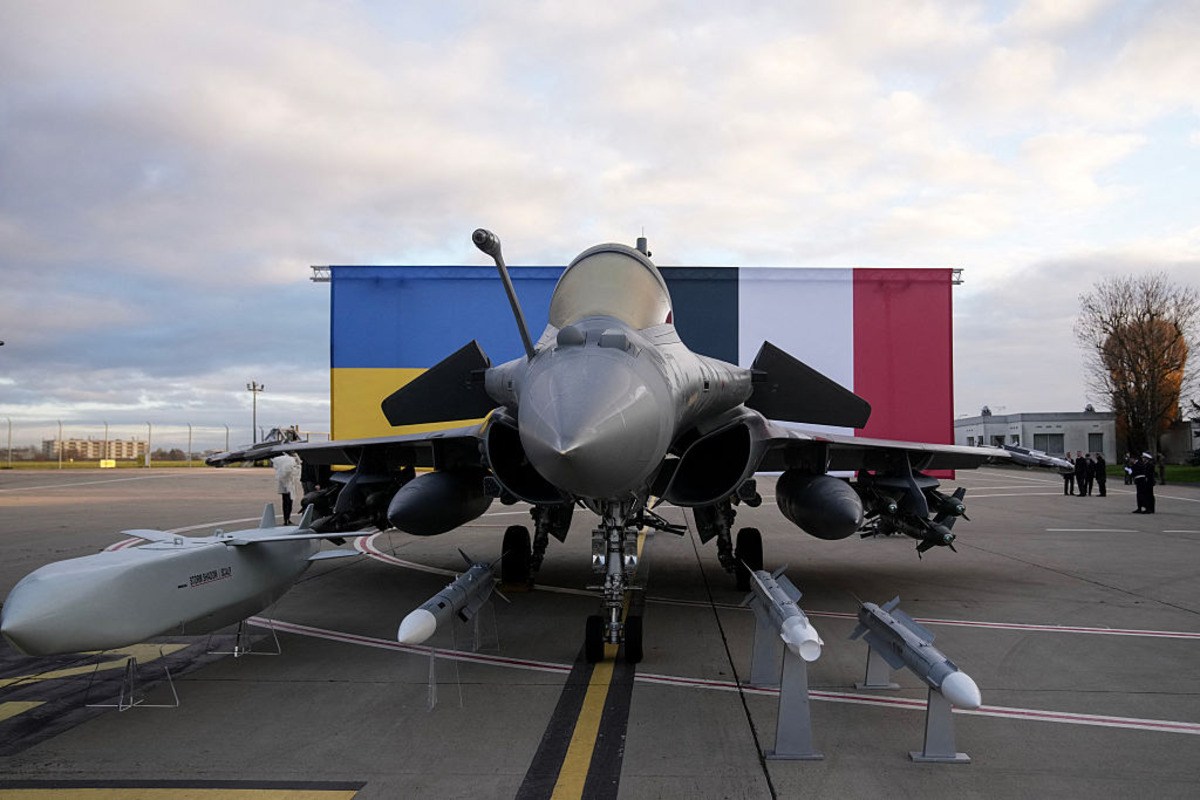
Ukraine is set to receive sensitive details on European-made long-range weaponry despite Russian criticism. This initiative aims to assist Kyiv in developing its own variant of the SCALP missile, utilizing technology from Britain and France. The office of British Prime Minister Andy Burnham announced London’s decision to allow MBDA, a leading European defense company, to share specific information on British-made components. This would support Ukraine in establishing production lines within the country.
In 2023, the United Kingdom provided Ukraine with Storm Shadow missiles, the British counterpart to SCALP, followed soon by France which supplied its own. The transfer of previously classified materials could potentially enhance Ukraine’s capacity to manufacture weapons capable of striking deep into Russian territory; however, Kyiv’s production of domestic SCALP missiles would likely require several years.
Recently, Ukraine has ramped up its long-range drone strikes on Russian targets, including commercial warehouses. This occurs amidst Russian missile and drone attacks on Ukrainian cities. Experts suggest these Russian attacks intend to exploit Ukraine’s limited air defense supplies, specifically interceptors like those in the U.S.-made Patriot system.
Global reserves of Western-manufactured weapons, used both for distant strikes and defending against complex attacks, have been depleted due to conflicts involving Ukraine and Iran. Advanced missile production involves lengthy timelines, and factories in Europe and the U.S. are beginning to scale their operations to meet increased weapon demands.
Russia condemned the decision, denouncing it as adding “fuel to the fire” and accusing the UK of wartime involvement. Prime Minister Burnham, visiting Kyiv during Ukraine’s independence celebration, reaffirmed British support for Ukraine amidst Russian threats.
Last month, U.S. President Donald Trump drew frustration from Kyiv by reversing his commitment to provide details enabling Ukraine to produce Patriot interceptor missiles. Trump remarked that sharing such technology poses risks, as recipients “can someday turn on you.” At a NATO summit in Turkey, Trump initially promised Ukrainian President Volodymyr Zelensky the license needed for constructing Patriots, a commitment Zelensky noted as a priority for Ukraine.
Understanding SCALP Missiles
The Anglo-French cruise missile SCALP is publicly known to have a range of around 155 miles, though analysts believe it can reach up to 250 miles. Weighing 1,300 kilograms, it is designed to strike “hardened” targets such as bunkers, which are more challenging to hit than the targets Ukraine’s current drones focus on, like Russian warehouses and oil refineries.
SCALP missiles can be deployed from various jets, including the French Rafale, Eurofighter Typhoon, or Mirage 2000. Ukraine’s Soviet-era Su-24s have launched SCALP missiles recently, and the nation has received Mirage jets from Paris. In September 2023, Ukraine utilized Storm Shadow missiles to hit a Russian submarine in Sevastopol, Crimea, and has targeted other Russian sites involved in weapon manufacturing.
France has developed a SCALP variant for deployment on ships and submarines.
Comparison with Russian Missiles
Russia’s Kh-69 is often considered comparable to SCALP and Storm Shadow missiles. The International Institute for Strategic Studies (IISS) noted in September 2023 the Kh-69 had similar characteristics to the Storm Shadow, though it was still in testing. Ukrainian media later reported first use of Kh-69 missiles in early 2024.
Manufactured by Russian aerospace firm Raduga, Kh-69 boasts a 290-kilometer (180-mile) range. Russian authorities confirmed Kh-69s were used against the Trypilska thermal power plant near Kyiv in April 2024. Often deployed in combination with other weapons, U.S. military sources indicate Ukrainian military updates frequently overlook differentiations between Kh-69 and its predecessor Kh-59 due to visual similarities.
Both SCALP and Kh-69 missiles travel subsonically, meaning below the speed of sound. Despite slower movement compared to supersonic or hypersonic missiles, both maintain low altitude to avoid radar detection, crucial for air defense systems aiming to intercept.
Kh-69 is about one-third smaller than Storm Shadow, with reduced warhead size and shorter range, according to William Alberque, a former NATO nuclear non-proliferation center head, now with Pacific Forum. Although Kh-69 is likely less accurate, neither missile suits moving targets. Alberque expressed preference for the range and precision of Storm Shadow.
For additional information, contact Newsweek editors John Fitzpatrick and Sam Wilson.
Leave a Reply