How Fiction Mirrors Reality
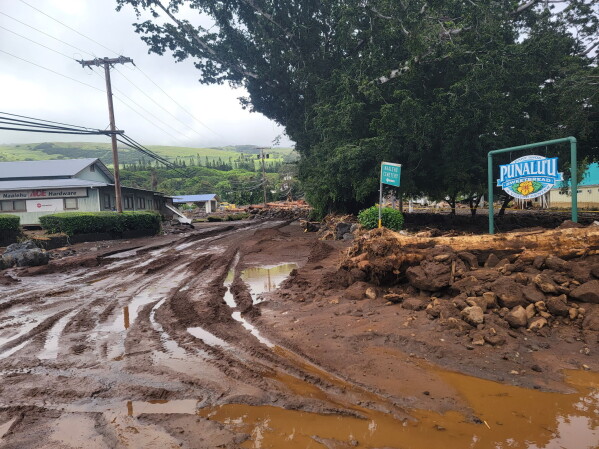
The opening scene of Kim Stanley Robinson’s novel, “The Ministry for the Future,” portrays a heat wave combined with a power grid failure in India, resulting in the deaths of 20 million people. This fictional catastrophe causes nations to unite in addressing climate change. Scientists have long cautioned that intense extreme weather events, such as heat waves, storms, floods, and droughts, are set to become more frequent. These events, once seen as fictional, are now considered as possible, if not inevitable.
Historical Warnings
The risks of extreme events have been recognized for over 150 years. In the 1850s, in Seneca Falls, New York, amateur scientist Eunice Newton Foote conducted experiments that demonstrated how carbon dioxide, when exposed to sunlight, heats up faster and cools slowly. Foote’s work identified carbon dioxide as a greenhouse gas, released during the burning of fossil fuels, which contributes to global temperature rises.
Today, the accumulation of greenhouse gases in the atmosphere is causing average global temperatures to rise by 2.59 degrees Fahrenheit compared to the early 1800s. This rise has led to more frequent extreme weather events.
Responsibility and Denial
The United States is the largest emitter of greenhouse gases, yet acknowledgment and action on climate change lag. Some political leaders have dismissed climate change and criticized policies aimed at addressing it. Despite this, at any given time, numerous extreme weather events occur globally, signaling a trend toward an age of extremes.
Countries like Australia and Pakistan have already faced significant disasters, such as the “Black Summer” wildfires and major flooding, respectively. Smaller, periodic disasters continue to impact communities worldwide.
The Challenge of Mitigation
Sarah Perkins-Kirkpatrick, an Australian National University climate scientist, acknowledges that continuous extreme weather events will persist, even if net-zero targets are achieved imminently. This is because carbon dioxide lingers in the atmosphere for centuries. The danger remains as emissions continue.
Global Unpreparedness
No country is fully prepared for a significant climate disaster, and risk factors are evolving. Now more than ever, climate models are improving, though predicting specific events remains challenging. The frequency and intensity of extreme weather continue to increase.
Swiss climatologist Sonia Seneviratne compares climate risks to smoking and lung cancer: the probability of extreme events rises with each fraction of a degree increase in global temperature.
Lessons on Preparedness
Earthquake preparedness in California demonstrates potential strategies for climate disaster readiness. Efforts by seismologist Lucy Jones helped cities develop initiatives to address risks, showing change is possible if risks are perceived as real.
Jones emphasizes the importance of belief in both risks and potential solutions. Without this belief, denial and inaction prevail.
The Influence of Media
Films focused on extreme weather often portray one of two outcomes: salvation or doom. Examples like “The Day After Tomorrow” and “Don’t Look Up” highlight different public perceptions and the potential aftermath of ignoring climate warnings.
Ultimately, science underscores the certainty of future severe climate impacts, though precise timing is unknown. The acceleration of climate impacts reflects underestimations in past projections.
Significant Tipping Points
Certain planetary systems are at risk, with tipping points becoming less theoretical. Coral reefs, affected by heat stress, and the Amazon rainforest, facing substantial degradation, exemplify this critical challenge.
The Earth’s trajectory raises alarming signals, necessitating discussions on the potential worst-case scenarios.
Tim Lenton, a climate science professor at the University of Exeter, stresses the importance of considering substantial shocks that lie ahead.
Leave a Reply