Introduction of the O’Hare Flyer
A group of business and transportation leaders has proposed a private train service, the O’Hare Flyer, to connect downtown Chicago with O’Hare International Airport. The journey would take approximately 15 minutes. However, several planning, financial, and regulatory challenges must be overcome for the project to proceed.
Project Details
The O’Hare Flyer aims to use existing freight railroad tracks for passenger transport between downtown and the airport. While leaders of the initiative have not revealed the ticket prices, they assure that it will be less expensive than taxi or rideshare services, but costlier than using the Chicago Transit Authority’s Blue Line. Trains are planned to depart every 15 minutes from 4 a.m. until 10 p.m.
Leadership and Funding
The initiative is spearheaded by Dave Lundy, CEO of strategic communications firm Aileron Communications, along with rail industry expert Mark Walbrun and former Illinois Tollway executive director Kristi Lafleur. The project is expected to be ready within five years with a budget of approximately $2.25 billion, fully funded privately, without government subsidies.
Benefits of the Express Train
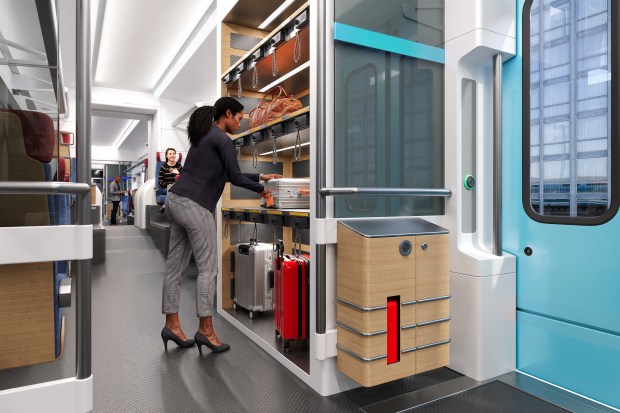
Proponents pitch the express train as offering speed and comfort over the 45-minute CTA Blue Line journey, which costs $2.50 to $5. “O’Hare is a world-class airport, or will be when Terminal 2 is completed,” Lundy remarked, highlighting the modernization at the airport. An artist’s rendering illustrates the plan for the O’Hare Flyer, a battery-powered train that will transport passengers quickly between downtown and the airport.
Previous Attempts and Support for the Proposal
This is not the first attempt to build an express train to O’Hare in Chicago. In 2018, a proposal involving Elon Musk’s The Boring Company did not come to fruition. Recently, Chicago Mayor Brandon Johnson supported the new proposal, stating it reflects private investors’ growing confidence in Chicago.
Challenges Ahead
The project must overcome several hurdles to become a reality. Agreements from various railroads are needed to facilitate track usage. While a letter of intent has been executed with CSX railroad, agreements with Union Pacific and Canadian National railroads are still pending. Federal regulatory approvals are required from agencies such as the Federal Railroad Administration and the Surface Transportation Board. Additionally, approval from Chicago’s City Council might be necessary.
Financial Aspects and Route Details
Lundy has not disclosed the total funds raised nor specific donors but mentioned that the first round of private funding is complete, with an $18 million second round underway. Revenue-sharing plans with the city are also under negotiation. Trains will depart from city-owned property underneath Canal Street, connecting to Union Pacific tracks and traveling through the city’s West Side and northwest suburbs to O’Hare’s Terminal 2.
Competition and Service Features
Concerns regarding fare revenue competition with CTA were addressed, with the Flyer team indicating that this service is tailored for air travelers, offering amenities like luggage racks and the option to check baggage to final destinations. Lundy stated, “Someone who chooses the Blue Line for $2.50 may not opt for our service due to the higher price.”
Leave a Reply