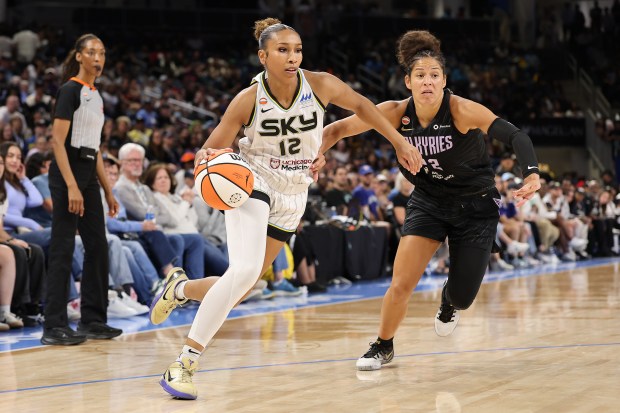
For the third consecutive season, the Chicago Sky will not participate in the WNBA playoffs. Their latest defeat against the Indiana Fever sealed their fate. This defeat marks the ninth consecutive loss to the Fever. Throughout the past week, the Sky made desperate attempts to remain in contention but ultimately faced elimination.
A single missed postseason sparked disappointment. Two consecutive misses led to frustration. Now, a third consecutive absence from the playoffs points to a pattern of oversight and lost chances under the new management of the Chicago Sky.
Although six final games remain — spaced out over five weeks due to the timing of the FIBA World Cup break — it’s an opportune moment to evaluate another underwhelming Sky season. General Manager Jeff Pagliocca aimed for victory, which drove the team’s approach to frequently overhaul the roster, sacrificing draft picks in the process. This aggressive stance reflects a genuine belief in the team’s potential to be a top competitor.
However, achieving immediate success proved difficult. The most significant investments turned into major disappointments this season. Azurá Stevens, a key signing, failed to deliver, averaging below 10 points and missing significant time due to injuries. Skylar Diggins played only 19 games before criticizing the team’s leadership and refraining from play due to a knee injury. Rickea Jackson, viewed as a trade acquisition success, suffered a knee injury after just four games.
Despite the losses, some positives emerged. Courtney Vandersloot returned from ACL surgery at age 37, providing five assists per game. Sydney Taylor contributed a standout rookie performance with buzzer-beaters and a 14.2 points per game average. Natasha Cloud occasionally sparked the team.
The roster was crafted with optimism. Pagliocca signed DiJonai Carrington while aware of her injury status. He similarly overlooked the health issues of Diggins, Stevens, and Vandersloot, setting the stage for challenges. The Sky lamented bad luck over injuries without acknowledging their preexisting conditions.
Beyond injuries, the team’s performance faltered. They lost 14 of their 23 games that were close contests. Their three-point shooting remained poor, and they struggled defensively and in rebounding. Coach Tyler Marsh, in his second year, faced challenges solidifying a cohesive team strategy. With a flawed roster, pinpointing issues in personnel or tactics is difficult.
After their loss to the Fever, Marsh expressed hope for growth through the season’s remainder, stating, “We’re not just playing for the right now. We’re playing for the future too.”
Whether this perspective aligns with the reality of the team remains uncertain. Most players are contracted through 2027, but the team’s ability to sustain a system is questionable. Kamilla Cardoso’s and Rickea Jackson’s contracts expire in 2027, while Diggins’ future availability is unclear. Vandersloot remains reliable, yet nearing the end of her career. Without a lottery pick in 2027, the Sky lacks depth for building or revamping efforts.
After three years of ongoing challenges, the Sky, Pagliocca, and Marsh face uncertainty. With limited goals left, ownership has the remainder of this season to consider whether a top-down reset is necessary.
Leave a Reply