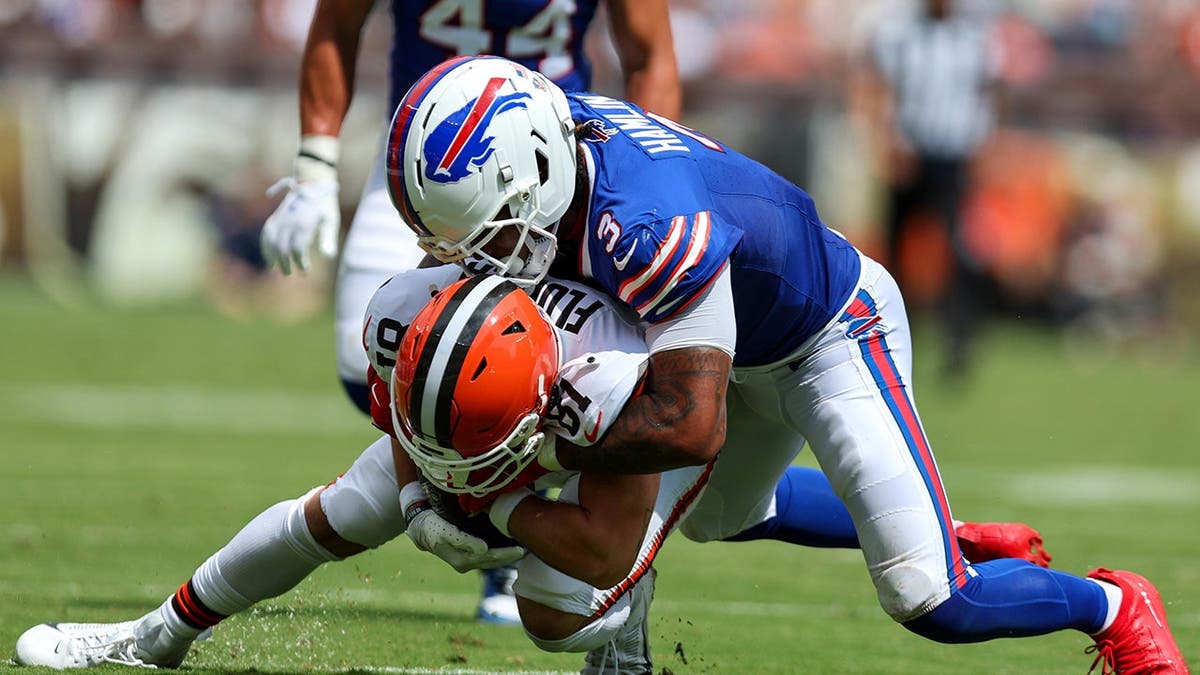
The NFL continues its effort to ensure safety for all players, especially concerning head injuries. The link between chronic traumatic encephalopathy (CTE) and former professional football players raises concerns about the impact on current and future players. A new study published in The BMJ offers troubling insights into the prevalence of CTE.
The research, conducted over six years, analyzed the brains of 878 former NFL players who died between 2016 and 2021. Of these, at least 215 had CTE in some stage, representing 24.5% of the players studied. This number is likely higher as the brains of 643 players were not examined.
Applying these results to today’s NFL, which consists of 1,696 active roster players across 32 teams, approximately 415 players might be diagnosed with CTE over their lifetimes. CTE diagnosis currently occurs post-mortem, as it requires an examination of the brain.
The symptoms of CTE include memory loss, mood swings, and erratic behavior, linked to repeated head blows and trauma.
While first identified in boxers, CTE is now associated with football players due to impacts sustained during play. The disease has been found in athletes from other sports, like hockey and rugby. It gained public attention when NFL players such as Junior Seau and Mike Webster were diagnosed after their deaths. Webster’s case, examined by Dr. Bennet Omalu, helped initiate a concussion crisis in the sport.
Dr. Julian Bailes, a leading neurosurgeon, advocates for action after seeing the study’s data. Having researched concussions and CTE for years, he stresses the need for proactive brain protection in football.
“We’ve made progress in concussion recognition and management, but the science highlights repetitive head impacts over diagnosed concussions,” Dr. Bailes explains. “New rules, training, equipment, and approaches should prioritize brain safety at every game level.”
While eliminating repeated head blows could prevent CTE, it would significantly alter football. The NFL aims to enhance player safety by reducing concussions and impacts, providing resources for physical and mental well-being.
The NFL Players Association agrees, urging action across the football ecosystem. The 2025 season saw a 30% rise in concussions compared to 2024, with 168 incidents documented and additional medical evaluations and timeouts.
Leave a Reply