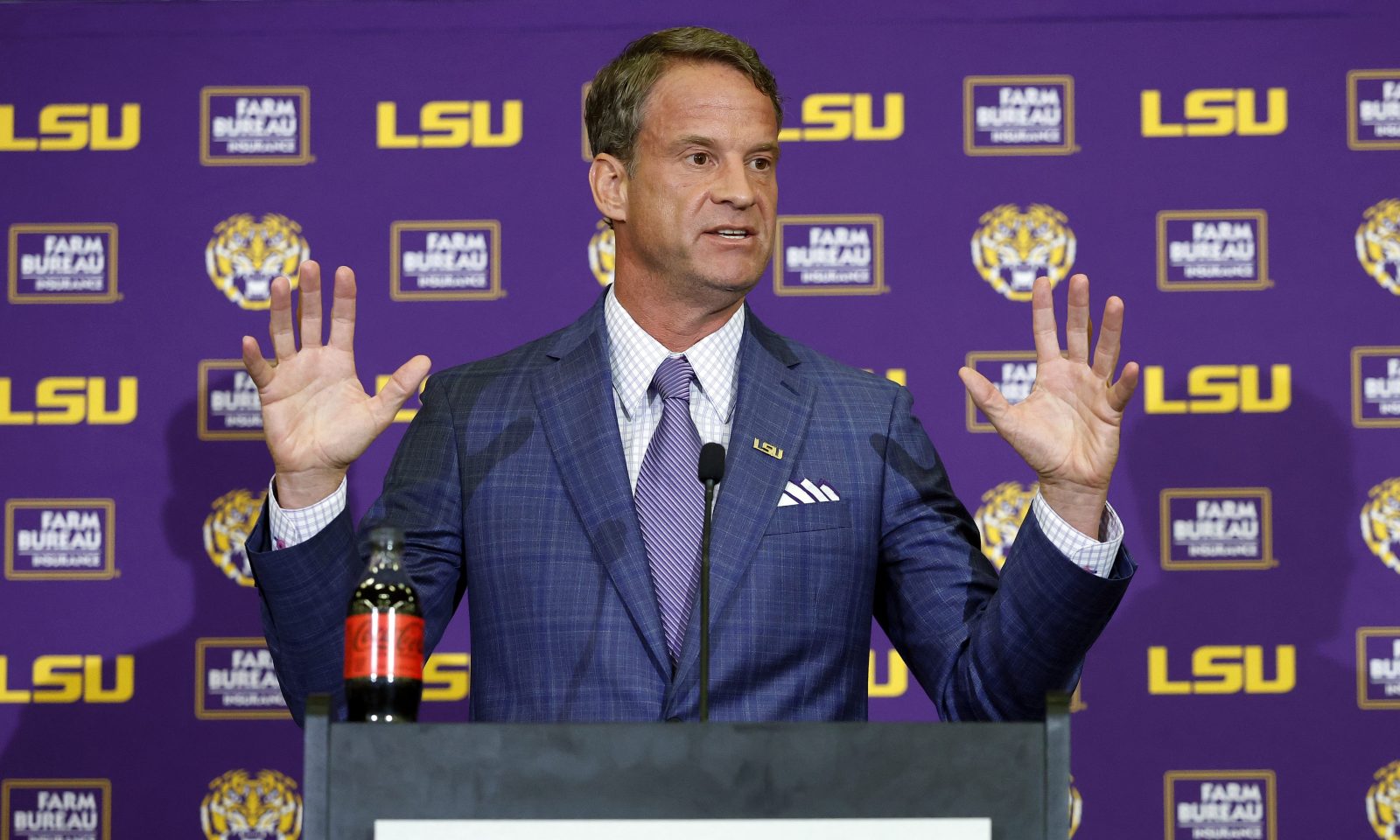
Lane Kiffin’s Dilemma
Lane Kiffin is facing a challenging situation as two of his former Ole Miss players, tight end Dae’Quan Wright and defensive lineman Zxavian Harris, attempt to continue their college football careers. Both players were released by the Cleveland Browns and New Orleans Saints, respectively, after a Louisiana judge granted a temporary restraining order allowing several NFL rookies to return for a fifth year of college eligibility.
SEC’s Position
The SEC is considering adopting a Big Ten rule that prohibits former NFL players from participating in its league. This potential rule change could prevent Wright and Harris from playing in the SEC. The league has emphasized the importance of maintaining a clear distinction between college and professional sports.
“College athletes, not former professional athletes, have been at the heart of the Southeastern Conference,” the league stated. “Individuals who choose to leave college athletics, sign professional playing contracts, and compete professionally should not then be permitted to return to college competition.”
The SEC believes allowing former professionals to return blurs the line between college and pro sports, disrupts competitive equity, and diminishes opportunities for high school and current college athletes.
Potential Consequences for LSU
If Kiffin defies the impending rule, LSU might face severe penalties. On3 reported that an SEC athletic director suggested LSU could be disqualified from the SEC season or face a $1 million fine for playing either player.
“Something has to be done,” the athletic director commented. “This is the worst I’ve seen.”
Lane Kiffin’s Frustration
Kiffin expressed his frustration during his appearance on the “Pat McAfee Show.” He voiced concerns about conferences disregarding court orders that permit players to return to college teams.
“All court orders have been followed,” Kiffin remarked. “I think you’re going to get in a really interesting situation of now, as a conference, you start to say, ‘Well, we’re not going to follow this court order that’s been issued.'”
Kiffin highlighted the inconsistency of choosing which injunctions to follow based on personal preferences.
“Doesn’t work like that,” Kiffin continued. “You can’t decide, ‘Hey, I like that injunction, I don’t like that one, that player I kind of like, and I like the way that they got him eligible, so we’re going to follow those rules, not these.’ It really doesn’t work that way.”
Leave a Reply