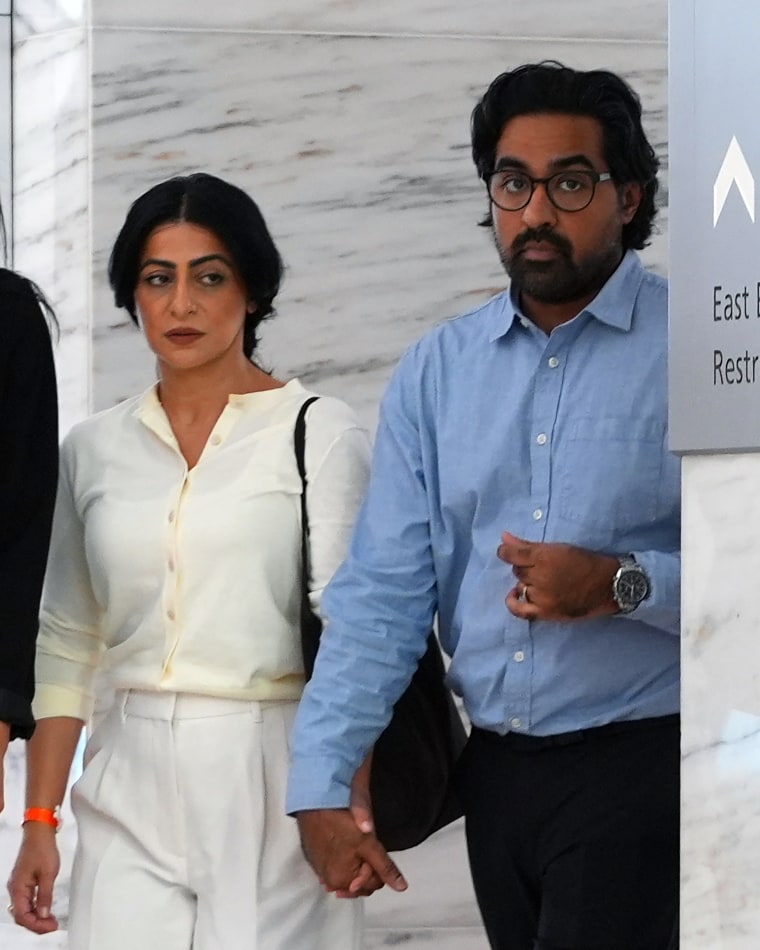
A legal battle is unfolding in Dallas as a California couple seeks parental rights over their newborn, born with a critical heart defect, in a case that has gained national attention. The couple, Nausheen Gilkar and Omar Ahmed, expressed their distress in a Texas court regarding attempts to strip them of parental rights after previously considering abortion. Gilkar tearfully stated, ‘He’s our child,’ while accusing their surrogate, McKenna West, of attempting to take the child from them.
This case highlights a contentious issue at the intersection of surrogacy and abortion, drawing attention from right-to-life groups and GOP supporters in favor of West, a nurse who traveled from Alaska to deliver the baby in Texas, a state where most abortions are banned. The couple named the child Rumi, while West refers to him as Gabriel, indicating a deep divide over the child’s control. West seeks sole conservatorship to make medical decisions for him.
West recounted her experience when urged by the couple to seek an abortion at 23 weeks pregnant. She declined, believing the child had a strong chance of survival despite a significant diagnosis. After the birth, the couple secured a restraining order to prevent West from interacting with the baby, and the court has yet to issue a final ruling on custody and conservatorship.
The couple reported that the child’s condition has deteriorated since birth. Court documents noted the newborn’s critical status, with indications of complications following a surgical procedure. The child suffers from hypoplastic left heart syndrome, a defect affecting around 1,000 births annually, based on CDC information. Without treatment, the condition can be fatal within weeks.
In court, Gilkar described the newborn’s struggles, mentioning a lack of blood flow to the left side of his heart and the need for medical interventions like blood transfusions. ‘He’s the most beautiful person I’ve never seen,’ she said, expressing deep love and concern.
During the proceedings, West’s attorney, Lee Budner, challenged the couple’s intentions, questioning whether they were committed to ensuring vital medical treatments for the child. He emphasized that West sought conservatorship because of the couple’s initial desire to terminate the pregnancy. On the stand, when pressed about her previous decision, Gilkar affirmed it without regret, while her response to a question on trust in a caregiver was noncommittal.
The couple further accused West of breaching the surrogacy contract established in August 2025. Gilkar explained she turned to surrogacy after multiple in vitro fertilization attempts and a necessary hysterectomy. West stayed in their Los Angeles home, and Gilkar supported West during the IVF process, an emotional experience she recounted.
While referencing California court documents that ruled West holds no legal or physical custody rights, Gilkar hopes for this position to be maintained. However, West seeks the judge’s disregard of this decision, vowing to advocate for the child in light of his medical condition. Surrogacy legalities vary by state, presenting interpretive challenges; thus, the case highlights complexities inherent in such disputes.
Leave a Reply