Operation Epic Fury and Its Aftermath
Nearly six months ago, the United States, alongside Israel, conducted strikes leading to the death of Iran’s former supreme leader, Ali Khamenei. This marked the beginning of Operation Epic Fury in February. In the months following, significant geopolitical shifts have taken place. Tehran took action by closing the Strait of Hormuz, a critical waterway. Meanwhile, Washington introduced Operation Economic Outcast aimed at crippling Iran’s economy, and several Middle Eastern nations formed an alliance resembling NATO for self-protection against future threats.
The Enigmatic Ayatollah
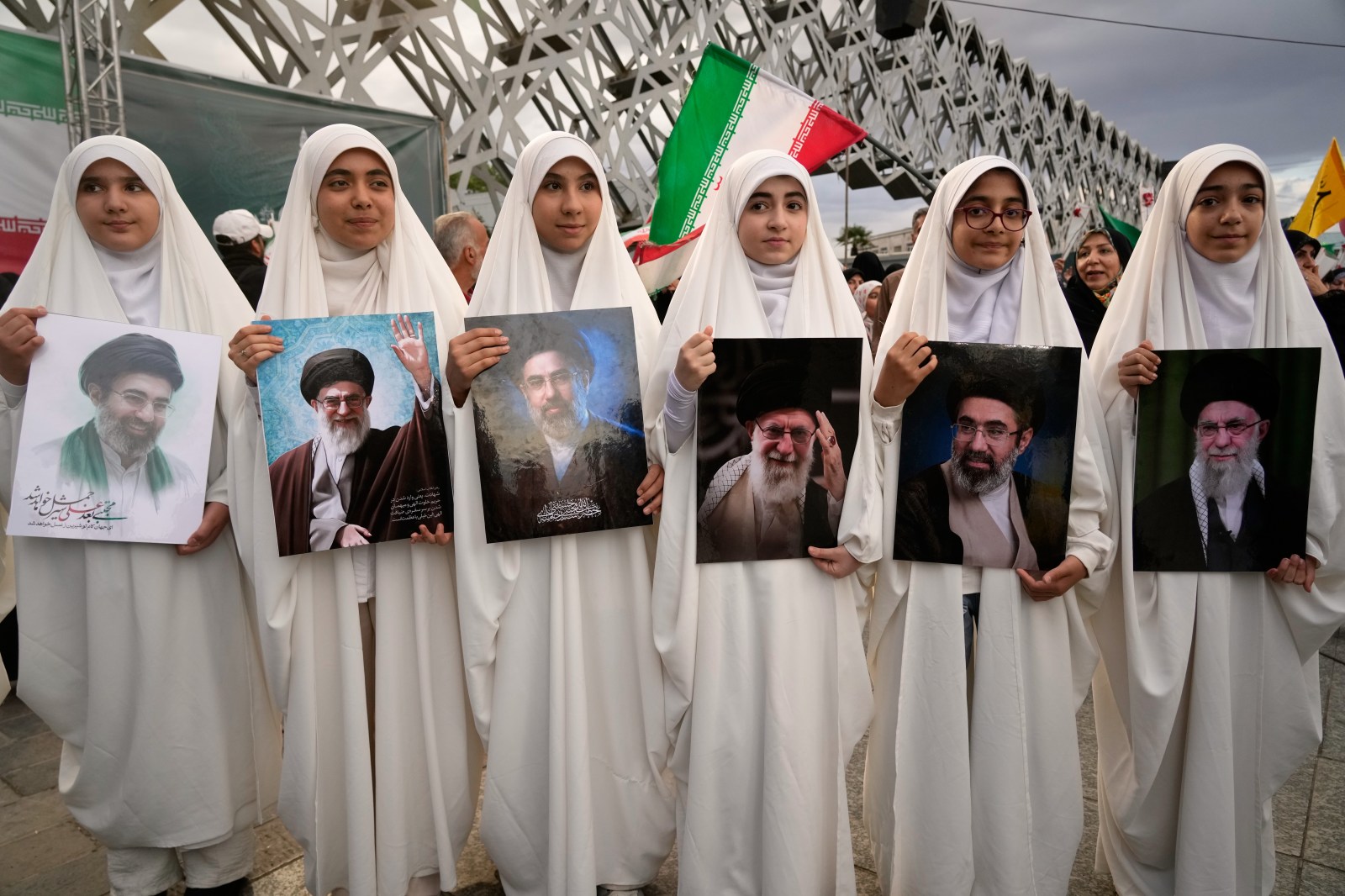
A notable constant in this changing landscape is the missing status of Iran’s new Ayatollah, Mojtaba Khamenei. U.S. President Donald Trump, speaking with Blaze Media’s Glenn Beck, expressed his doubts about Mojtaba’s death, though the Iranian regime continues functioning without his overt presence. Whether Mojtaba is dead or alive seems to matter less, as Iran operates under the assumption that leadership can persist regardless.
A Shadow of His Father
Mojtaba Khamenei, unlike his father Ali Khamenei, lacks political expertise and influence. Ali Khamenei, a staunch revolutionary, played a pivotal role from the Islamic Republic’s early days in 1979, steadily building Iran’s power base through his presidency and supreme leadership, starting in 1989. Mojtaba does not wield similar authority over the Islamic Revolutionary Guard Corps (IRGC) or other power structures.
Currently, a group of influential figures, including parliamentary speaker Mohammad Bagher Ghalibaf, Supreme National Security Council secretary Dr. Mohsen Rezaei, and IRGC commander-in-chief General Ahmad Vahidi, steer Iran’s public and wartime strategies. Mojtaba has minimal participation, reflected in sporadic statements via state channels, with no public appearances or speeches.
A New Power Structure
Khosro Isfahani from the National Union for Democracy in Iran views Mojtaba as ineffective, being utilized by the IRGC for symbolic purposes. His absence benefits the regime, shifting power from clerics to the Revolutionary Guards, who exercise actual control.
Middle East expert Andreas Krieg explains this power transition, noting competition among the IRGC, parliament, and other governmental bodies. The IRGC emerges as a dominant force, managing military and intelligence operations.
A Symbolic Figurehead
Mojtaba serves as a symbolic entity for Iran, particularly within its Shia Muslim population. According to political analyst Peiman Salehi, Shia Islam teaches that leadership can be spiritual and not necessarily physical, aligning with Mojtaba’s current role.
This symbolism aids Tehran’s leaders in rallying public support and legitimizing policies amid challenges arising from Operation Economic Outcast. Mojtaba’s absence provides strategic governance flexibility, while his name offers a facade of continuity.
For intelligence agencies, whether Mojtaba is alive may hold relevance, yet in Tehran’s power dynamics, his existence appears to be a secondary concern. Iran continues to navigate its path under shifting leadership frameworks.
Leave a Reply