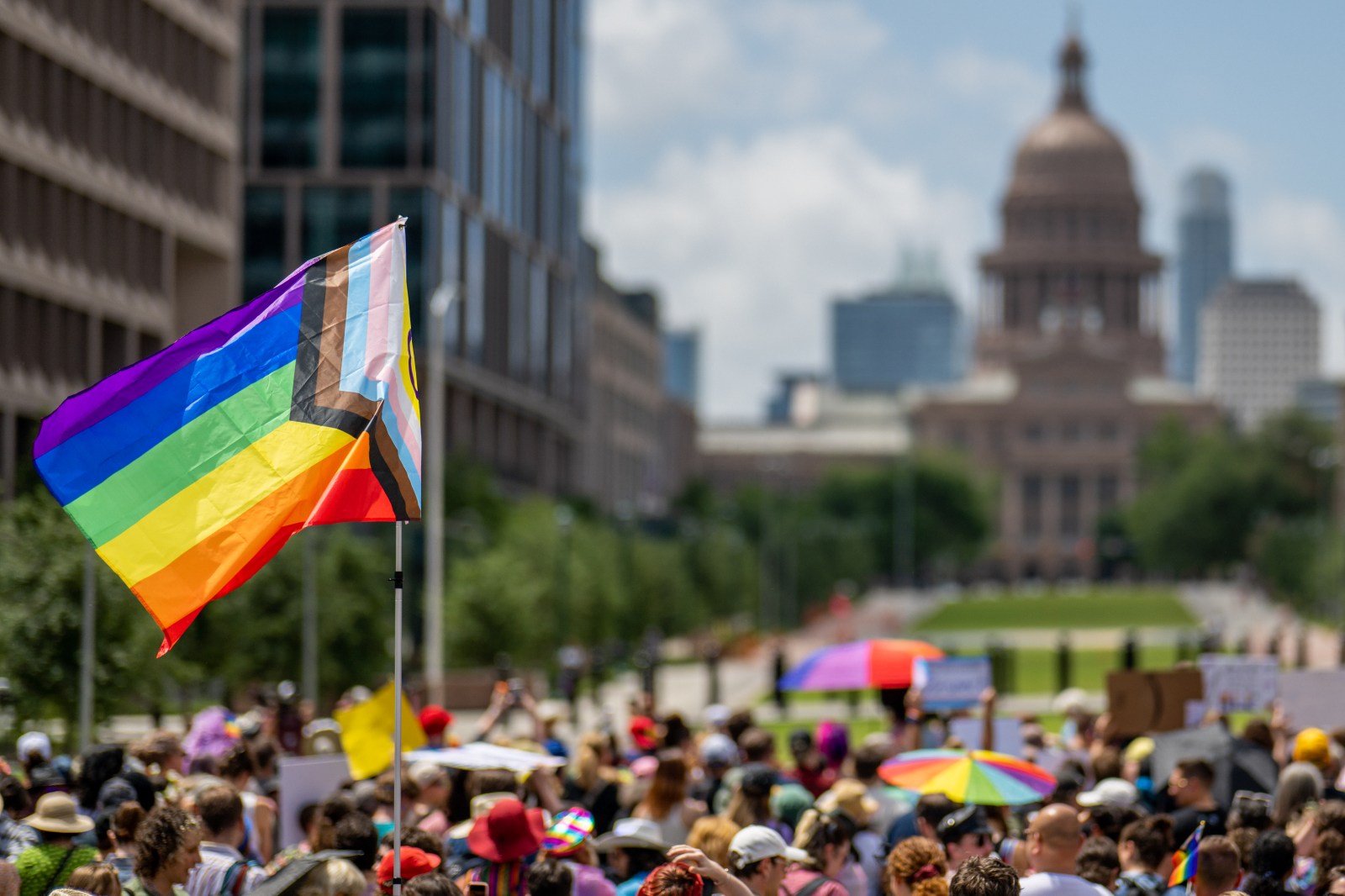
A federal judge has once more invalidated Texas’ law aimed at restricting certain drag performances, representing a continued challenge to initiatives by Republican-led states to regulate drag shows and other LGBTQ-related activities. On Tuesday, U.S. District Judge David Hittner declared Texas Senate Bill 12 unconstitutional, reaffirming a stance he first took in 2023. The law, which targeted what it defined as “sexually oriented performances” including drag shows, was heavily promoted by its supporters.
Judge Hittner advised those offended by such performances to simply refrain from attending, stating, “Finally, for those who find such activities as described in this case offensive, the solution is relatively simple … just don’t go.” Texas Attorney General Ken Paxton has committed to appealing this ruling, and Newsweek reached out to his office for commentary on Wednesday morning.
The ruling emerges amid a prolonged national debate over drag performances, transgender rights, and LGBTQ visibility. While numerous Republican-led states have imposed laws to limit drag shows, Democratic-controlled states and civil rights groups defend these performances as constitutionally protected expression.
“Efforts to restrict drag are part of a much larger, coordinated campaign over recent years attacking LGBTQ people across virtually every aspect of life,” Logan Casey, director of political research at the Movement Advancement Project (MAP), explained to Newsweek.
This latest Texas ruling joins similar decisions in Montana, Florida, and Tennessee, where courts have found these laws to be unconstitutional restrictions on free speech.
State-Level Legal Battles
Texas is not isolated in its approach. According to the Movement Advancement Project, six states have enacted laws that either directly restrict drag performances or have broader regulations that could affect them. Tennessee and Montana specifically passed laws against drag shows, while Arkansas, Florida, North Dakota, and Texas have broader adult-oriented performance laws that could potentially be applied to drag events. Legal disputes continue over these measures.
Law proponents argue that the laws aim to safeguard children from exposure to sexually explicit content in public spaces. However, critics claim the measures are designed to target LGBTQ communities and infringe upon artistic expression protected by the First Amendment.
The Texas ruling highlighted concerns shared by other courts that certain laws are excessively broad, risking the inclusion of a wide array of protected speech and performances.
“Legislators appear to have recognized this fundamental flaw, at least for now,” Casey noted.
Drag restrictions emerged only in 2023 in states such as Texas, Montana, Florida, and Tennessee. These laws faced immediate legal challenges, resulting in court orders blocking their enforcement within months.
While some Republican legislators push for restrictions, Democratic counterparts have increasingly embraced protective measures for LGBTQ communities. Blue states have strengthened protections for LGBTQ residents, framing drag performances within the context of free expression rather than public decency.
Evolving Public Perception on LGBTQ Issues
Legal challenges unfold amidst shifting public opinion. Gallup reports indicate enduring majority support for legal same-sex marriage at 65 percent, though this reflects a decrease from a recent peak of 71 percent in 2022 and 2023.
Furthermore, 62 percent of Americans deem gay and lesbian relationships morally acceptable, marking the lowest approval level since 2016.
Attitudes toward transgender matters have grown less favorable. Only 38 percent agree with gender transition as morally acceptable, a drop from 46 percent since Gallup’s 2021 survey.
The study attributes many attitude shifts to Republicans, while Democrats exhibit steadier views. Support for same-sex marriage among Republicans has notably declined from its recent high, whereas Democratic backing remains substantially positive.
Surging LGBTQ Population
Meanwhile, the proportion of Americans identifying as LGBTQ has risen, with PRRI data revealing that about 10 percent of Americans now identify as LGBTQ, more than double the share from a decade ago. This figure reaches approximately 20 percent among adults aged 18-29.
This demographic shift has created a political paradox. Despite heightened visibility and acceptance of same-sex marriage, conservative activism concerning transgender issues, school policy, and drag performances has shaped significant social discussions in recent years.
Polling indicates consistent support for numerous LGBTQ protections, nonetheless, the increased visibility has correlated with notable voter backlash. For Republicans, the subject of drag performances engages broader discourses on parental rights, education, and children’s exposure to sexual content.
Conversely, Democrats and LGBTQ advocates view the matter as testing the boundaries of free speech and equal treatment under the law.
Contested Legal Grounds
As legislation proceeds, courts appear poised as the primary battlefield shaping these laws’ futures. Challenges frequently invoke the First Amendment, asserting drag as an artistic expression akin to theater, music, and dance.
In Texas, Judge Hittner reaffirmed Senate Bill 12’s failure under constitutional scrutiny. Similar legal challenges confront other state laws, resulting in a growing national patchwork of court decisions.
While some states uphold restrictions, others have encountered judicial barriers. Many states have abstained from legislating restrictions altogether. As appeals continue, the Texas case emerges as a crucial test in evaluating the ability of state governments to regulate drag performances while respecting constitutional protections for free expression.
Leave a Reply