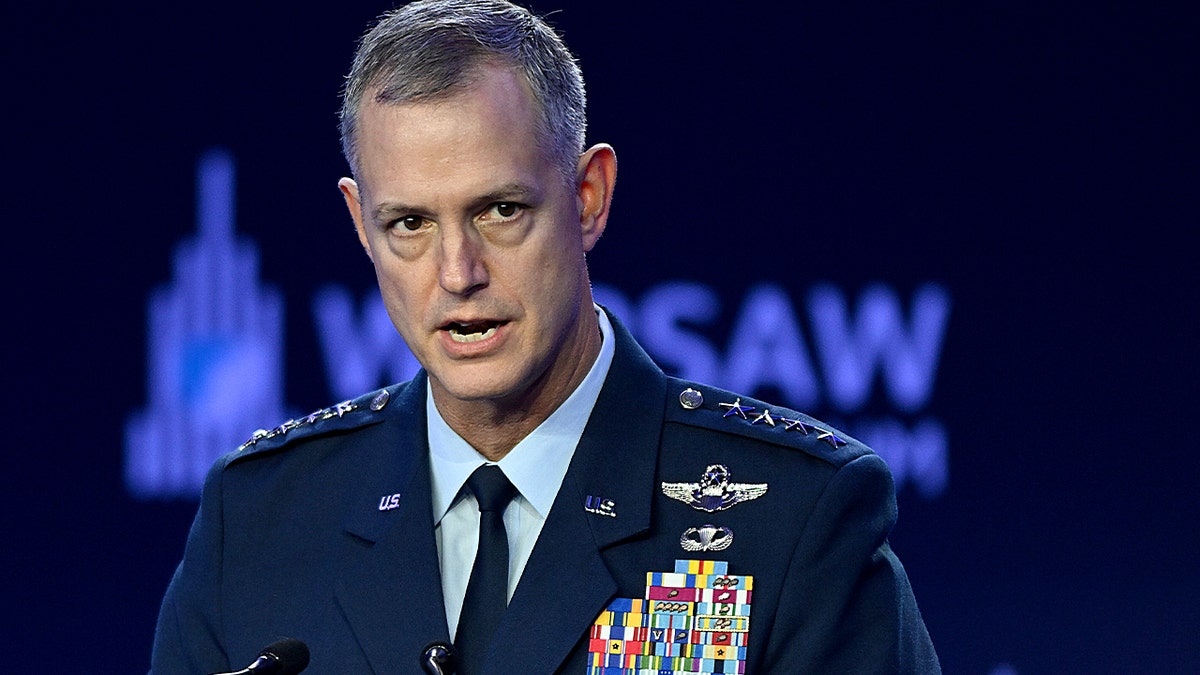
NATO’s chief military leader issued a stern warning on Monday, asserting the alliance’s readiness to dismantle any elements supporting an attack on its territory. U.S. Air Force Gen. Alexus Grynkewich emphasized that NATO would disrupt the enemy’s war capabilities to prevent any prospective Russian aggression. Speaking at the Warsaw Security Forum in Poland, Grynkewich highlighted NATO’s strategy to neutralize threats through decisive action.
“Should the adversary pursue an attack, we will dismantle engaged warfighting systems,” Grynkewich stated. He pointed out that NATO’s response would target not just the attacking forces, but also any supporting elements.
During the panel “Theory of Victory: How Do We Achieve Military Success Against Russia in Deterrence and Defence?” Grynkewich detailed a tactic of “blocking, blunting, and breaking” enemy forces, reaffirming NATO’s commitment to defend its 32 members. “If attacked, we will respond,” he declared. “We will halt the assault and ensure any attack proves ineffective.” This declaration comes amid escalating tensions between Russia and Western nations, highlighted by incidents such as drone flights and alleged sabotage activities linked to Moscow.
Grynkewich underscored NATO’s preparedness in Poland, proclaiming a unified and robust alliance. Despite being defensive, NATO is vigilant and ready to retaliate decisively against any aggressions on its members.
“We are stronger than ever united in our shared vision of a balanced and prepared alliance,” he remarked.
European officials accuse Russia of executing hybrid warfare, incorporating sabotage and cyberattacks with provocative military actions near NATO borders. Recent incidents, like Russian drones entering Polish airspace, prompted responses from Poland and allied nations. NATO’s Operation Eastern Sentry aims to fortify its eastern defenses as a countermeasure.
Romania and Estonia have also reported violations of their airspace by Russian drones and military planes. These developments follow a tense weekend, with Russia launching strikes against Ukrainian energy infrastructure, echoing ongoing hostilities despite diplomatic efforts.
The situation is further complicated by a reported agreement between presidents Donald Trump and Vladimir Putin to increase Russian diesel supplies, including eased U.S. sanctions on Russian energy exports. However, Ukrainian President Zelenskyy accused Russia of continuing aggressive actions, minimizing hopes for a ceasefire.
Recent nuclear threats from Russia have added to the strained scenario. Russia warned NATO of potential nuclear weapon use if the alliance attempts to encircle the Kaliningrad region. Moscow accuses NATO of endangering global peace with its actions, cautioning they could prompt direct armed conflict.
NATO leaders, during a summit in The Hague, pledged to bolster defense spending amid these threats, aiming to increase military and infrastructure protections. Secretary-General Mark Rutte dismissed Moscow’s warnings, emphasizing NATO’s commitment to defense and urging an end to Russian hostilities.
Grynkewich did not mention Russia explicitly in his Warsaw address, though his remarks appeared directed at Moscow. NATO’s strategic framework identifies Russia as a foremost threat. “Our approach is simple: block the initial attack, blunt it if it persists, and break enemy forces if necessary,” he stated.
NATO’s ongoing military drills and readiness enhancements aim to counter potential threats. Grynkewich assured the alliance’s preparedness to protect its members, whilst acknowledging challenges such as defense spending disparities and hybrid attack concerns.
He also expressed readiness to address hybrid attack issues if requested by NATO nations. The Warsaw Security Forum assembled European leaders to discuss measures against ongoing Russian military engagement in Ukraine and the risks along NATO’s borders.
Emma Bussey, a breaking news writer at Fox News Digital, contributed to this coverage. Her previous roles include positions at The Telegraph, focusing on various news desks.
Leave a Reply