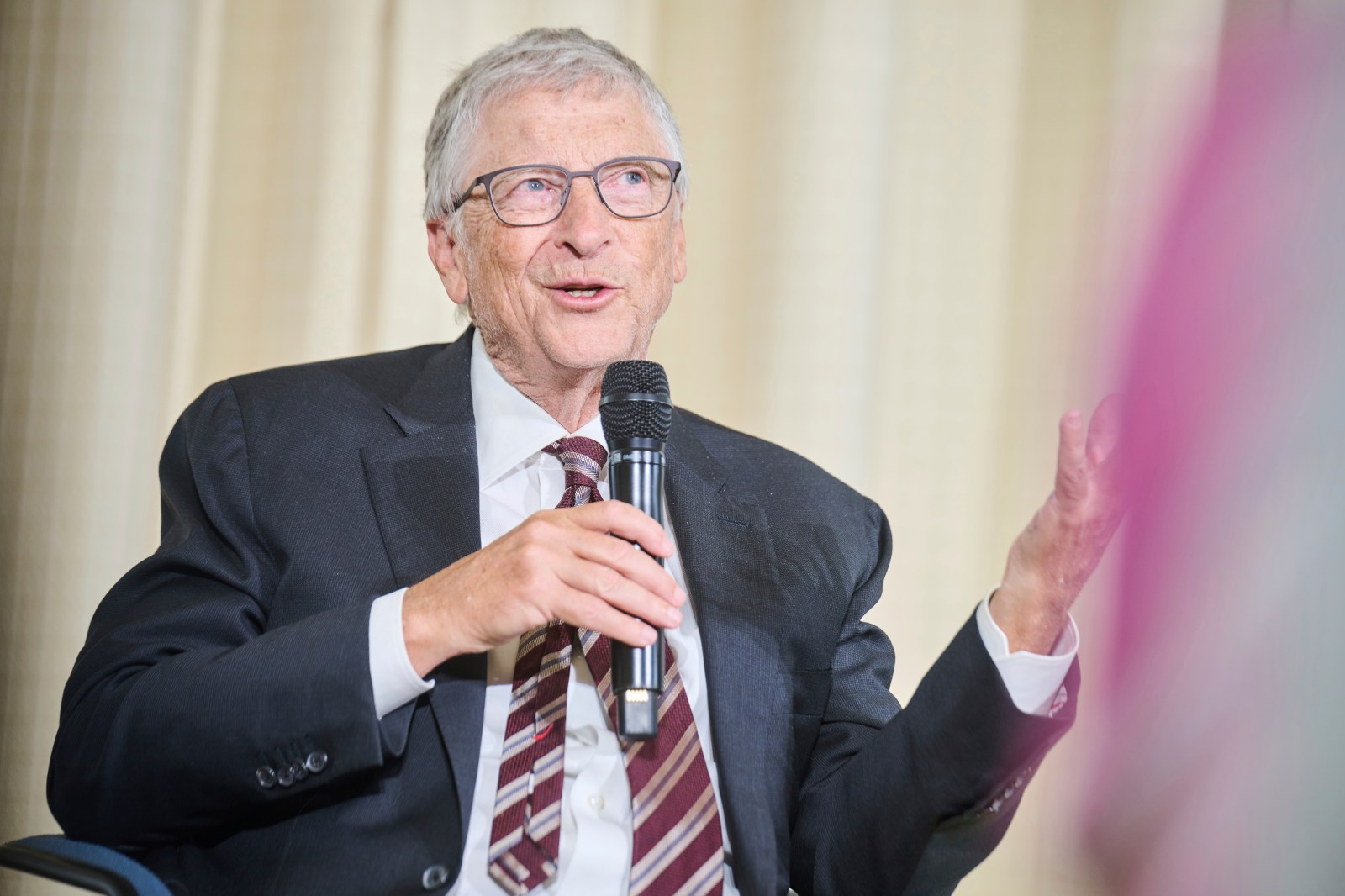
Bill Gates, co-founder of Microsoft, has raised concerns over the rapid advancement of artificial intelligence (AI) and the absence of meaningful safeguards. In a conversation with Anderson Cooper on CNN, Gates emphasized the importance of public involvement in discussions about AI’s future. He highlighted both substantial benefits and potential risks associated with AI, urging for open dialogue on these issues.
Gates stressed the dangers of cyberattacks, bioterrorism, and more extensive social and psychological consequences. He noted his surprise at the lack of stringent safeguards. Gates argued that restricting data centers is ineffective since companies can simply move them elsewhere.
He stated, “We have to get everybody’s voice in this. These are a set of democratic tradeoffs that have to be made.” Gates’ comments came shortly after he published a comprehensive essay warning about a “turbulent” phase of AI. He criticized leaders for inadequate preparation for upcoming disruptions, especially as AI starts handling work in various fields such as law, customer service, and medicine.
While Gates has not called for halting AI development, he expressed support for a credible global agreement to slow down its progress. Nevertheless, he acknowledged the unlikely possibility of such an agreement due to economic and geopolitical competition.
Three Major Risks Outlined by Gates
Gates identified three principal risks linked to AI. First, he warned about job displacement, affecting both white- and blue-collar sectors. This impact concerns entry-level and mid-level positions, potentially affecting young workers. Gates stated this effect is unprecedented compared to past technological advances.
Second, he noted that AI could enable more harmful activities such as cyberattacks, fraud, and disinformation. The final risk focused on AI’s potential to impair children’s development and human relationships, particularly through AI companions.
Suggested Measures to Address AI Risks
To mitigate these risks, Gates proposed that governments act promptly to regulate AI’s growth. This includes establishing new entities to monitor risks, especially concerning national security, cybersecurity, or public safety. He also recommended taxing AI-related technologies and using the funds for worker retraining and a more robust social safety net.
Gates further suggested reserving roles where human judgment and care are essential for humans. Oren Etzioni, a computer science professor and founding CEO of the Allen Institute for Artificial Intelligence, mostly agrees with Gates’ risk assessment. However, he questions some solutions, particularly Gates’ proposal to tax AI tokens. Instead, Etzioni emphasizes adapting existing institutions to address AI risks.
Gates concluded by calling AI “a thousand times bigger” than nuclear technology, underscoring the dual nature of its potential. “I still think it’s within our grasp to shape this in a net positive way,” Gates mentioned, comparing the technology to nuclear energy and weapons.
Leave a Reply