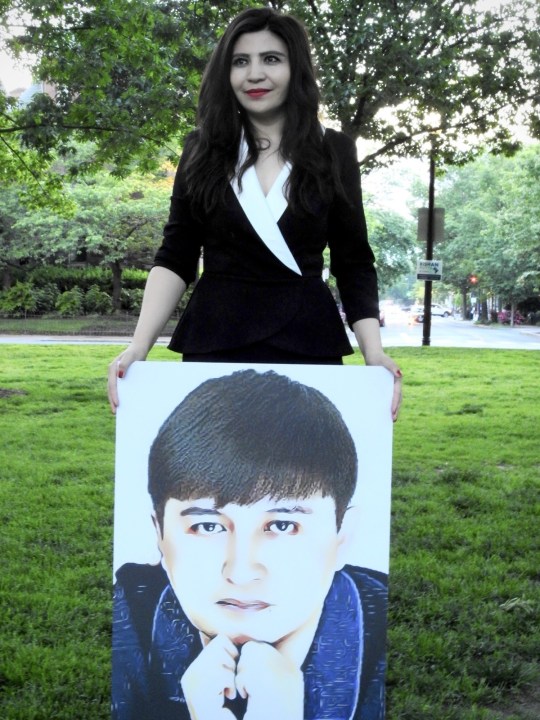
Grace Jin Drexel spent seven months advocating for her father’s release from a Chinese prison. Her efforts took a pivotal turn in May. A friend suggested Drexel’s phone must be busy. President Trump had announced plans to discuss Ezra Jin’s case with Chinese President Xi Jinping. Jin, leader of China’s Zion Church, had been arrested in October.
In a Washington interview with The Hill, Drexel recalled the moment. Holding her son, named Ezra after his grandfather, Drexel felt renewed hope. She later thanked Trump on Fox News, believing her appearance bolstered the effort to release her father. Jin gained freedom in July, following Trump’s discussion with Xi.
The strategy for appealing to Trump seemed clear. Personally raise an issue with him. Reinforce it on Fox News. Show him the tangible results. Ahead of a planned summit between Trump and Xi in September, Drexel pushed for the advocacy of remaining Zion Church leaders detained in China on religious grounds.
Drexel said, “If not me, who will ask? Many are still detained in China.”
A White House official confirmed Trump’s concern for Americans detained abroad and his commitment to religious freedom. However, both leaders seek improved relations between their nations. Key issues include trade policy and international conflicts.
Despite challenges, Drexel expressed gratitude for U.S. efforts, reflecting on the successful advocacy for Pastor Jin’s release. Trump also addressed Youlin Chen’s detention. The U.S. had labeled Chen “wrongfully detained,” but hoped behind-the-scenes efforts would suffice. When Trump’s visit ended without Chen’s release, a public campaign launched in July.
Xi’s unyielding stance seemed clear. In June, academic Min Zin faced arrest in China, prompting a wrongful detention label from the U.S. Despite this, families of detainees saw value in Trump’s involvement. Rayhan Asat, advocating for her brother Ekpar, emphasized that high-level advocacy works.
Outspoken critics face risks from transnational repression. This forms part of China’s global reach. Asat met with U.S. officials, underscoring the importance of diplomatic pressure. She remained optimistic about her brother’s release.
Many detained Chinese have American citizen family members. Dr. Gulshan Abbas has been imprisoned since 2018. Her sister, Rushan Abbas, drew attention to their plight. Harassment and surveillance are common experiences.
Drexel left her job as a national security staffer to advocate full-time. She described the struggle against China’s state apparatus. Sarah Makin, a former National Security Council director, noted Trump’s positive relationship with Xi. This rapport aids efforts for detainees’ release.
Makin stressed the need for continuous pressure on Trump’s advisors. Advocacy groups must convey the impact of China’s actions on Americans. Potential U.S. actions to pressure China include raising travel advisories and considering China as a State Sponsor of Wrongful Detention.
Eric Lebson of Global Reach highlighted the lasting impact of wrongful detention labels. He expressed optimism that resolving these cases could foster goodwill between nations. Diplomatic exchanges and focused advocacy hold potential for progress.
Leave a Reply