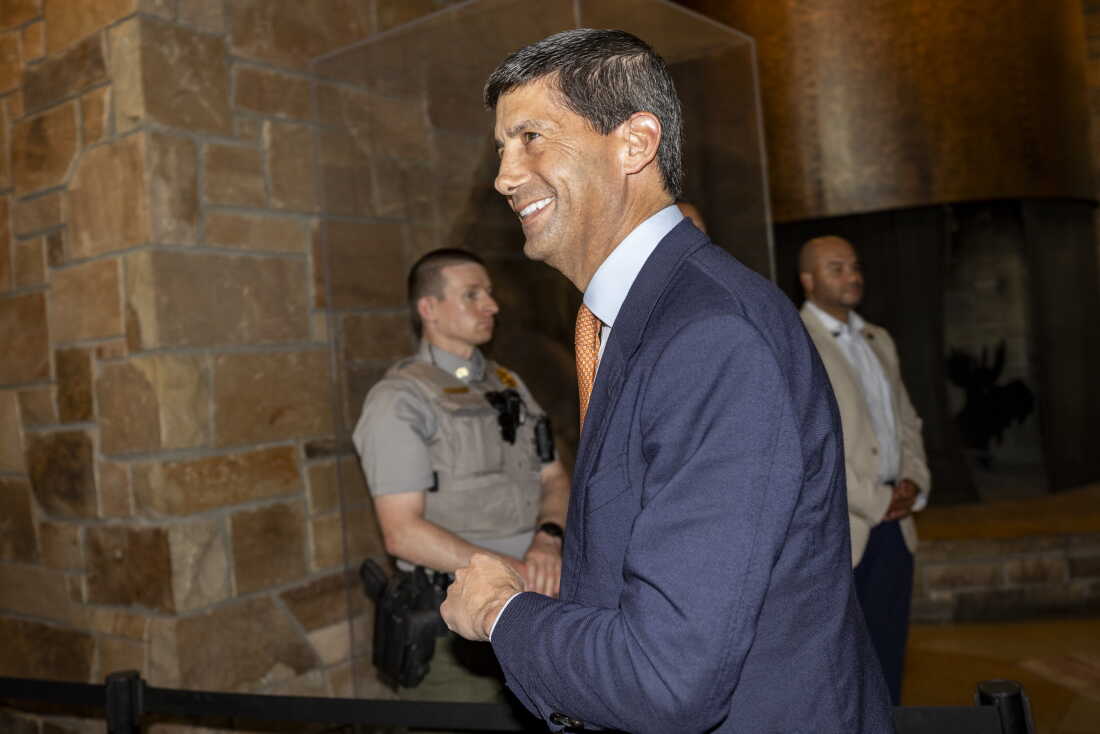
Federal Reserve Chairman Kevin Warsh recently addressed economists and central bankers at Jackson Lake Lodge in Wyoming. Warsh maintained discretion regarding future interest rate directions but hinted that rising inflation might necessitate rate hikes soon.
Warsh discussed the stability of the labor market, strong investment, and resilient consumer spending. Despite these positive points, he acknowledged the concern over rapid price increases. The consumer price index rose 3.4% for the twelve months ending in July, while the Fed’s preferred inflation measure marked a 3.7% increase over the same period.
None of these measures are perfect,
Warsh stated, acknowledging their shortcomings. He emphasized that inflation exceeds the Fed’s 2% target rate and insisted the focus should remain on stabilizing prices.
Warsh’s comments led markets to predict the possibility of an interest rate increase soon. Before his speech, investors estimated a one-in-three chance of a September rate hike; this probability climbed to above 50% following the speech.
Promises of a ‘Quieter Fed’
Warsh previously disappointed investors by failing to outline a precise plan for restoring price stability. He continues to withhold details on possible future interest rate adjustments, arguing that overly specific guidance can restrict the Fed and influence market perceptions.
A quieter Fed, more purposeful in its communications, is better able to meet its objectives,
Warsh stated at the gathering in Jackson. He stressed the importance of accountability, echoing Chuck Yeager’s sentiment, At the moment of truth, there are either reasons or results.
Warsh’s Thoughts on AI
Warsh also addressed artificial intelligence’s economic prospects. He referred to AI as a hinge point in history and expressed optimism that AI developments could enhance production and reduce costs. Despite this positivity, Warsh recognized concerns about potential disparities in the benefits of AI and its implications on the workforce.
Investment in AI data centers is presently impacting inflation by inflating construction and memory chip costs. Warsh has established a task force to advise the Fed on AI, although he clarified that current policy decisions will remain unaffected by its recommendations.
Their recommendations will come later and have no bearing on decisions we make in the current policy conjuncture,
Warsh explained, adding that these efforts should better equip the Fed to tackle future policy challenges.
Leave a Reply