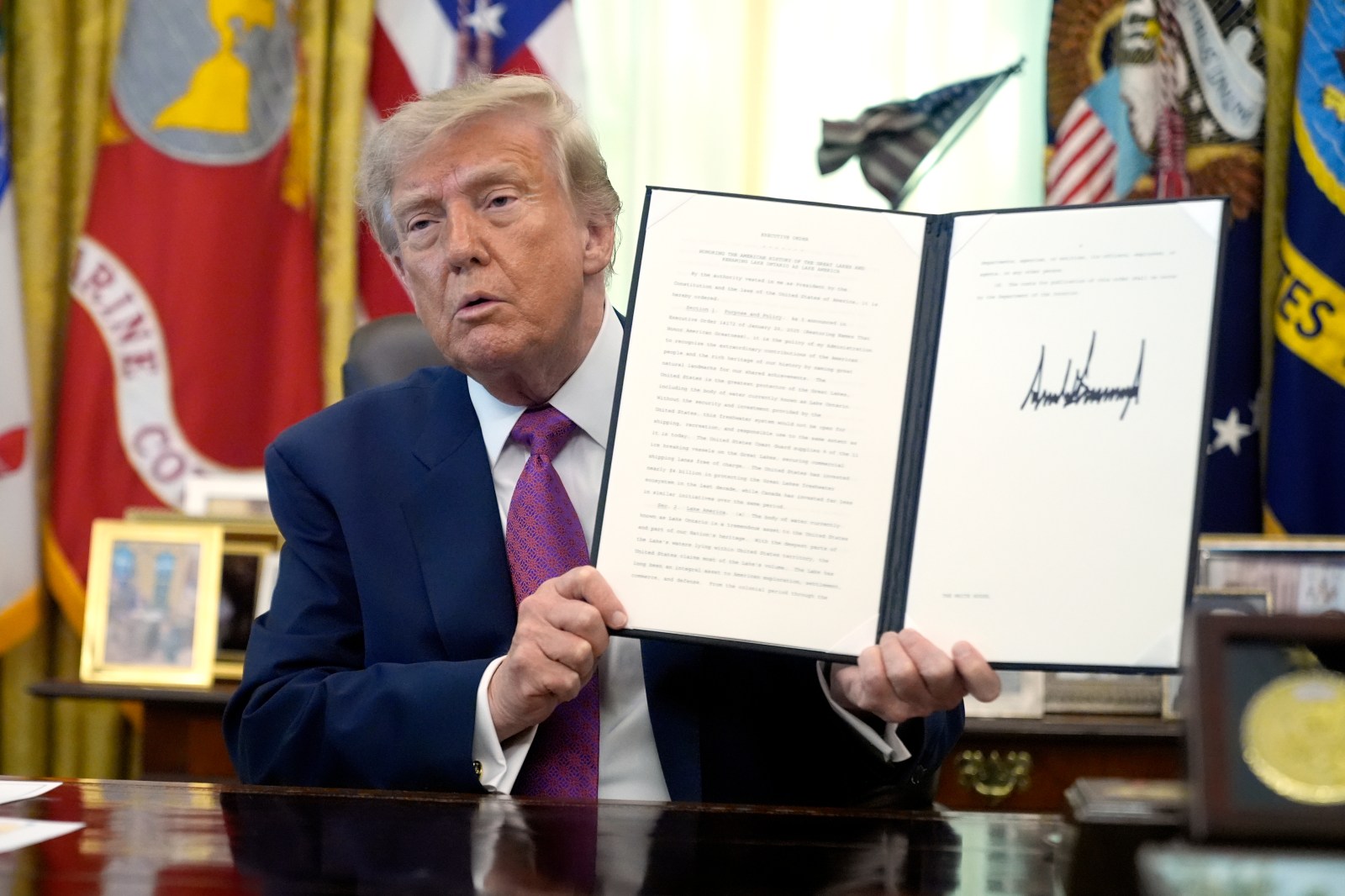
Democrats are actively pursuing competitive Senate and gubernatorial contests in several states that saw strong support for President Donald Trump in the 2024 presidential election. These efforts in Alaska, Iowa, Kansas, Ohio, and Texas have raised questions about how Republican leaders, who currently control both the House and Senate, will fare in the 2026 midterm elections. The key issue is whether Democrats can take advantage of growing political challenges faced by Republicans.
Trump’s Declining Approval
Costas Panagopoulos, a political science professor at Northeastern University, noted the importance of presidential approval and economic conditions in predicting congressional race outcomes in midterms. Trump’s declining ratings have made contests in these traditionally Republican states more competitive than anticipated. As of late August, Trump’s approval rating sat at 35%, with a disapproval rating of 59%, according to a Civiqs online poll involving 126,377 responses.
Comparative data from a YouGov poll shows similar discontent, with Trump’s net approval at -26. In stark contrast, during a comparable period in his first term, Trump’s net approval stood at -9. Other aggregators like RealClearPolitics list his approval at 40% and disapproval at 57%.
Polling data from Strength in Numbers/Verasight indicates that Trump’s approval ratings are underwater across 12 key issues, reflecting growing dissatisfaction among voters. Alex Patton of Ozean Media suggests multiple factors are contributing to this trend, including economic issues and overall public sentiment toward the President.
2024 Election Context
Trump’s victory over Vice President Kamala Harris in the 2024 election was marked by a substantial lead in the Electoral College and the national popular vote. He carried 31 states, winning several key states by significant margins.
The Republican Party regained control of the Senate in 2024 and maintained their presence in the House of Representatives. They started 2025 with a majority in governorships across the country. However, this political momentum is now in question as they approach the 2026 midterms.
Analyzing the 2026 Midterms
Experts cite a trend of losses during midterms for the party in control of the White House, but stress that Trump’s ratings should not be the sole focus. Various factors, including candidate quality and local issues, are also shaping the landscape.
Some observers note that despite Trump’s historically low approval numbers, Democrats could capitalize on these opportunities. Doug Gordon, a Democratic strategist, emphasizes the combination of Trump’s unpopularity and economic dissatisfaction as key factors that could enable Democrats to compete in states typically challenging for them.
Alaska’s Political Scene
In Alaska, Trump’s strong showing in 2024 is met with Democrats maintaining competitiveness in statewide races, partially supported by the state’s ranked-choice voting system. They haven’t elected a Democratic governor since 2002 or a U.S. senator since 2015.
Alaska Senate Race
The Alaska Senate race presents an opportunity for Democrats with Mary Peltola challenging Republican Senator Dan Sullivan. Polls indicate a tight competition, with Peltola slightly leading in some surveys.
Ohio: A Key Target
Ohio remains a focal point for Democrats, providing their strongest pickup opportunity. Trump’s previous success in the state contrasts with its more recent competitiveness in statewide elections.
Ohio Senate and Governor’s Races
Sherrod Brown seeks to reclaim a Senate seat in a contest with Jon Husted. Meanwhile, Democrat Amy Acton challenges for governorship against Republican Vivek Ramaswamy. Polls anticipate close races, reflecting opportunities for Democratic gains.
Texas Senate Battle
Texas has sustained a long-standing Republican preference but now appears to hold potential for a Democratic breakthrough. Incumbent Ken Paxton’s controversies have left the door open for Democrat James Talarico in the Senate race.
Iowa’s Competitive Races
The Iowa Senate race sees Republican Ashley Hinson against Democrat Josh Turek. The governor’s race features Democrat Rob Sand against Republican Zach Lahn.
Iowa’s political dynamics showcase both local and national influences, with polling indicating competitive races.
Kansas Governor’s Contest
Kansas, typically Republican, presents a surprising opportunity for Democrats with Cindy Holscher challenging Ty Masterson for governorship. Limited polling suggests a competitive race, offering potential for a Democratic breakthrough.
Leave a Reply