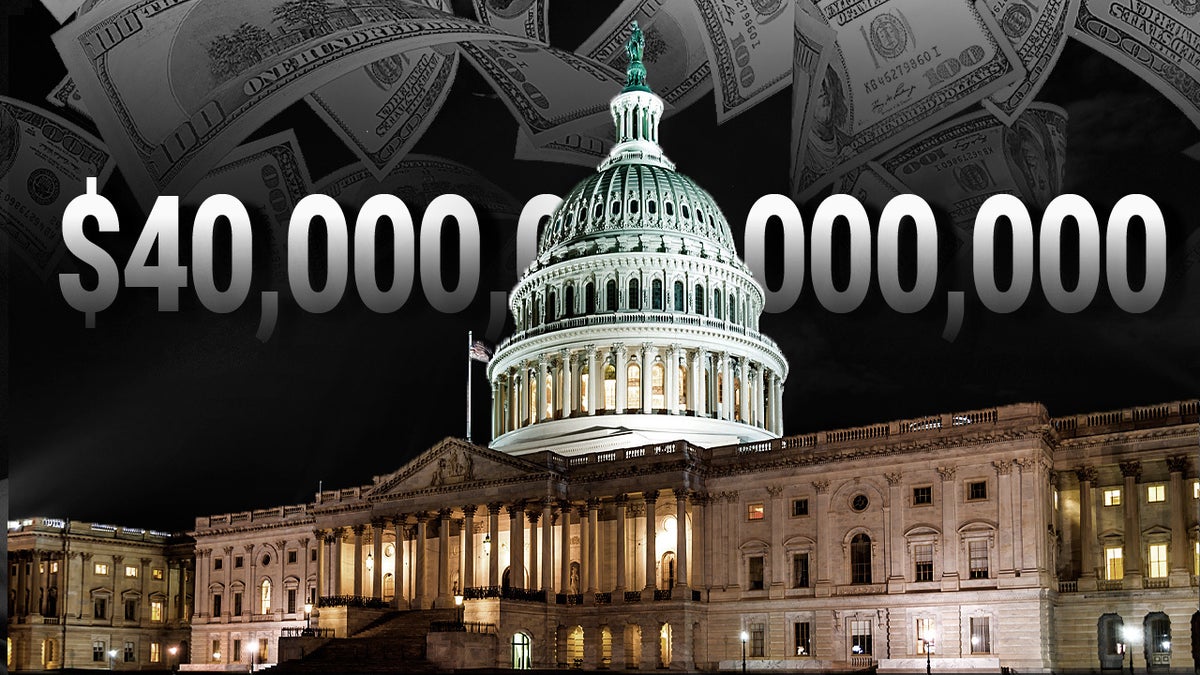
America’s national debt has reached a record high of over $40 trillion, translating to nearly $300,000 per household. This growing debt is a concern for every American, yet political promises of quick fixes have muted the public’s sense of urgency. As the country crosses this significant threshold, it is critical to examine why such a high debt poses a severe threat and what realistic solutions exist.
Debt-to-GDP Ratio Concerns
The debt-to-GDP ratio is a vital indicator. Currently, the U.S. public debt exceeds 124% of GDP, placing America among countries like Sudan, Venezuela, and some developed economies like Japan, Greece, and Italy. A rising debt-to-GDP ratio indicates a decreasing ability to service obligations without extensive borrowing. It also suggests potential economic problems like slower growth, increased inflation, and interest rates.
Even debt held by the public, over $32 trillion, nears 100% of GDP. The Congressional Budget Office projects it will reach 120% by 2036.
Economic Implications
High national debt leads to negative economic outcomes. One effect is the crowding-out phenomenon, where government borrowing to pay debt reduces available market funds. This increases interest rates and limits capital for private investment, hindering business expansion and job creation. For every deficit dollar, private investment decreases by 33 cents. An additional $1 trillion in debt reduces the U.S. capital stock of productive assets by 0.7-0.8%.
The effects of national debt are gradual but harmful. Unlike immediate economic shocks, debt compounds over time, making future generations bear the burden.
Theoretical Risks and Real-World Damage
Some politicians downplay the debt’s dangers, suggesting limitless spending is possible through Modern Monetary Theory (MMT). Proponents argue the U.S. can handle crises by printing money, disregarding the crowding-out effect and currency value erosion. Treating the dollar as unlimited could lead to runaway inflation and lost fiscal credibility.
Strategies for Change
Prudent economic policy requires addressing deficit spending and national debt. Net interest costs have surpassed $1 trillion annually and will likely exceed $2 trillion within a decade, consuming more federal revenue. The solution involves eliminating federal deficits and balancing the budget. A $1.8 trillion deficit is recorded for 2025. The government must run a surplus and start repaying debts.
Restraining spending growth, especially in entitlement programs, and unleashing private sector productivity are crucial. While incremental reforms offer marginal help, structural changes are necessary for sustainable budgeting.
Lawmakers from both parties contributed to the $40 trillion debt, making bipartisan action essential. Inaction will lead to higher interest payments, reduced private investment, and less fiscal flexibility in crises, leaving future generations with heavier tax or inflation burdens.
The urgency is clear: Act now to secure America’s economic future.
Michael Bicksel is a former member of the Heritage Foundation’s Young Leaders Program. Nicole Huyer is a senior research associate in The Heritage Foundation’s Thomas A. Roe Institute for Economic Policy Studies.
Leave a Reply