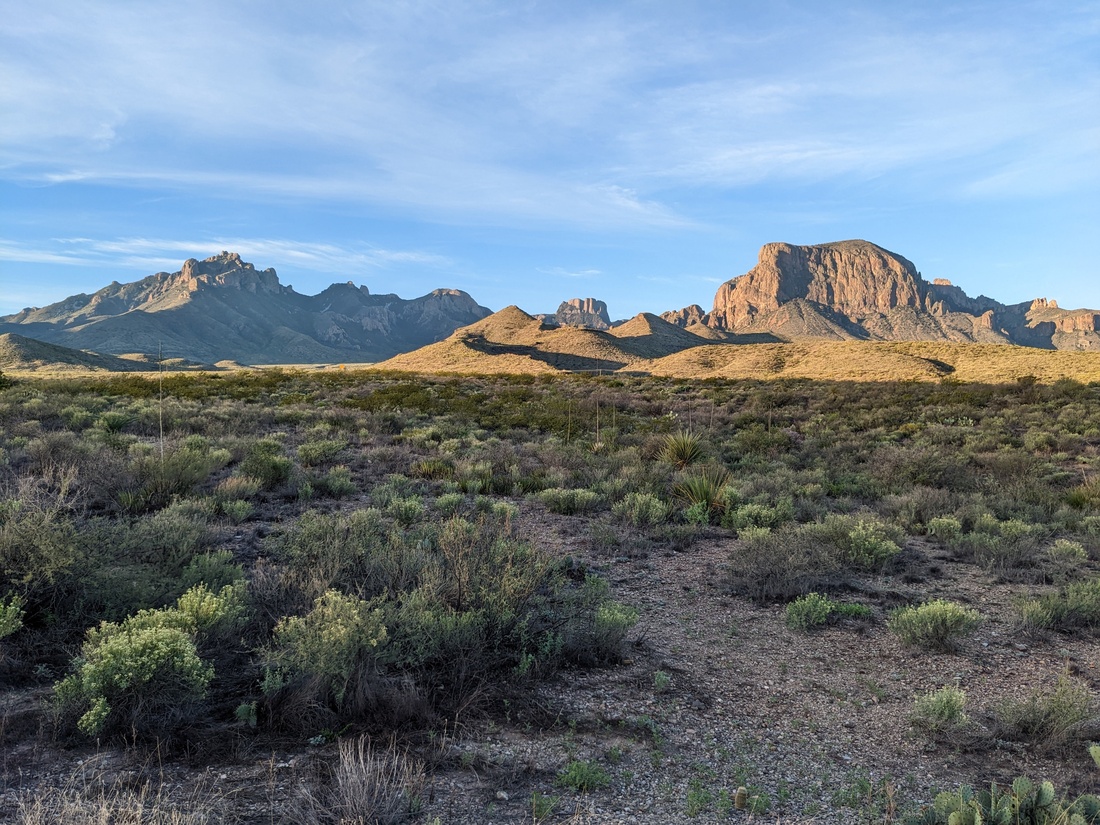
Big Bend National Park features a variety of habitats, including desert, mountains, and river environments. The park’s center, the Chisos Mountains, supports cooler forest ecosystems. Here, pinyon pines, junipers, and the endangered Guadalupe fescue thrive.
The Chisos Mountains rise roughly 6,000 feet above the Chihuahuan Desert. They form “sky islands”—wet and cool oases separate from the surrounding desert. These unique habitats face distinct threats. Within Big Bend close to the Texas-Mexico border, Guadalupe fescue exists in isolated patches. This isolation likely protected it from extinction.
As climate change warms the globe, species in these “sky island” habitats face pressure to ascend to higher elevations. However, there eventually is no more elevation for them to climb, leading to potential extinction. Carolyn Whiting, the Park Botanist at Big Bend, has monitored the Guadalupe fescue closely over the years. She highlights the uniqueness of Big Bend and underscores the importance of preserving smaller species.
The Guadalupe fescue, located exclusively in Big Bend, was categorized as an endangered species in 2017.
Listen to more episodes exploring research in public lands across the United States. Connect with us on Twitter via @NPRShortWave. For additional communication, email us at [email protected].
This episode’s production credits include Rebecca Ramirez, editing by Gabriel Spitzer, and factual verification by Rebecca, Brit Hanson, and Gisele Grayson. Natasha Branch managed the audio engineering.
Leave a Reply