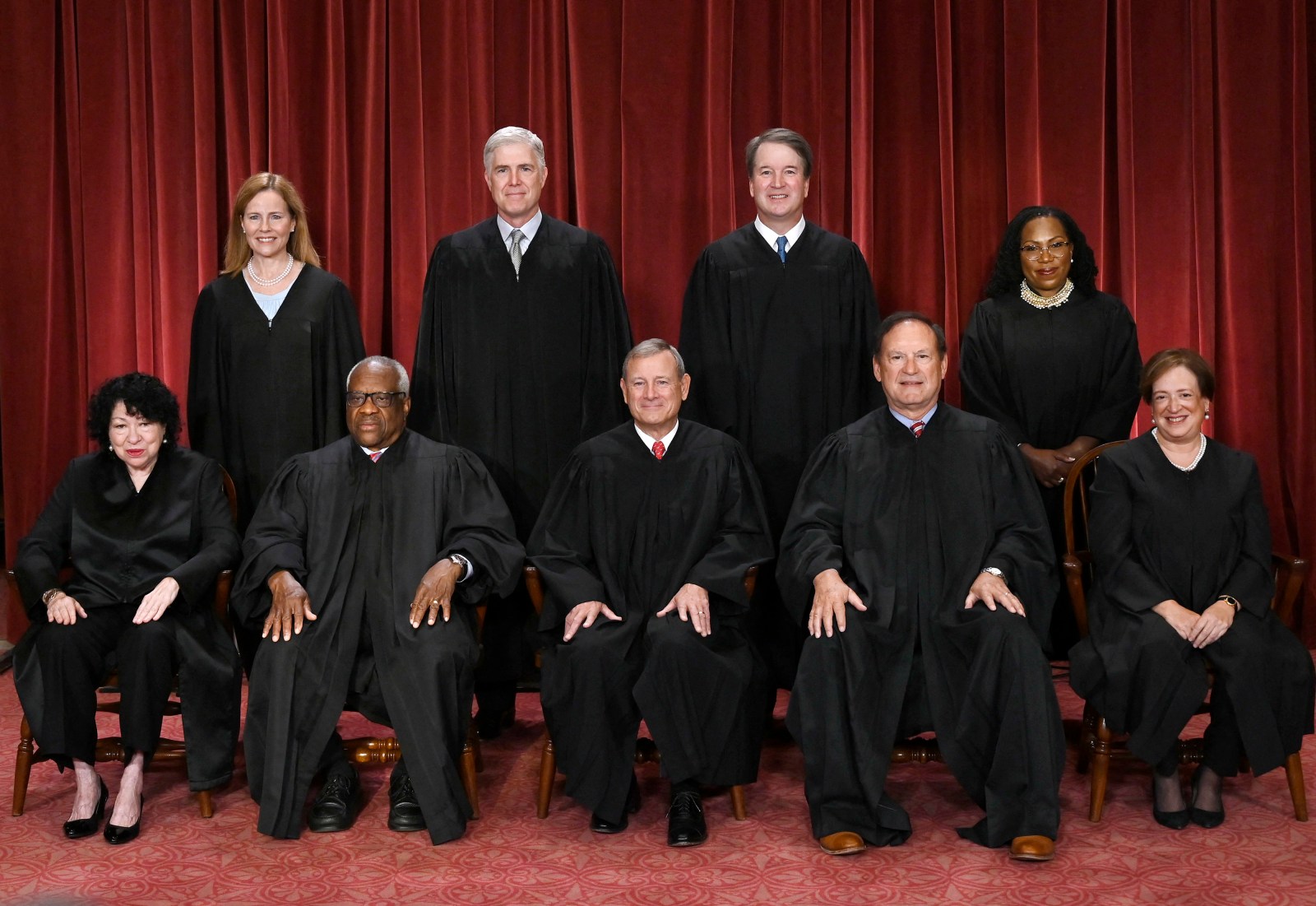
The House of Representatives recently voted on a proposed constitutional amendment designed to permanently set the U.S. Supreme Court’s size at nine justices. This decision required lawmakers from both parties to state their position on a contentious judicial issue.
Known as the “Keep Nine Amendment,” the measure sought to embed the current size of the Supreme Court in the U.S. Constitution, removing it from the realm of ordinary federal law. Republicans aimed to challenge Democrats amid ongoing proposals to enlarge the court. Every Republican supported the amendment, yet it failed to achieve the two-thirds majority necessary for passage. Only Representative Don Davis, a Democrat from North Carolina, sided with Republicans.
Republicans argued the amendment was crucial to prevent attempts to expand or “pack” the Supreme Court with additional seats. They believed fixing the number at nine would shield the court from political pressures, preserving an institutional structure over 150 years old. Conversely, Democrats maintained that actions by Republicans and former President Donald Trump had led to a “profoundly partisan and lopsided” court, as noted by Representative Jamie Raskin.
The House required a two-thirds majority to pass the amendment, garnering 212 votes in favor, which fell short of the 290 needed.
Historical Context of Nine Justices
The Constitution establishes the Supreme Court but leaves the number of justices unspecified. Congress has historically set the court’s size through legislation, and it has varied from five to ten justices. The Judiciary Act of 1869 set the current configuration of one chief justice and eight associate justices. This nine-member structure has become the norm, offering stability for generations. Supporters of the amendment argue that altering the number of seats could invite political retribution when government control changes.
Under existing laws, Congress can still change the court’s size through new legislation, which is why some proponents see constitutional protection as necessary.
Democratic Calls for Expansion
The call to expand the Supreme Court has gained momentum in recent years, especially after significant rulings and the establishment of a 6-3 conservative majority. Advocates believe adding justices could help alleviate concerns about partisanship and bolster public trust. Expansion is among several reform proposals discussed by Democrats and legal experts. Other suggestions include creating an ethics code, imposing term limits on justices, and revising recusal policies.
Critics warn that court expansion could lead to a cycle where the party in power expands the bench to obtain favorable rulings, potentially compromising judicial independence. Pennsylvania Democrat Representative Mary Gay Scanlon remarked that the proposed amendment would threaten the system of checks and balances.
Path to Constitutional Amendment
To amend the Constitution, two-thirds of both the House and Senate must approve the proposal before it is sent to the states for ratification. Currently, 38 out of 50 states must ratify the amendment for it to become constitutional law. Given these challenging requirements, few amendments have succeeded historically.
While the future of the amendment faces considerable challenges, the vote held symbolic significance by putting Democrats on the record regarding the Supreme Court’s size as midterm elections approach.
Leave a Reply