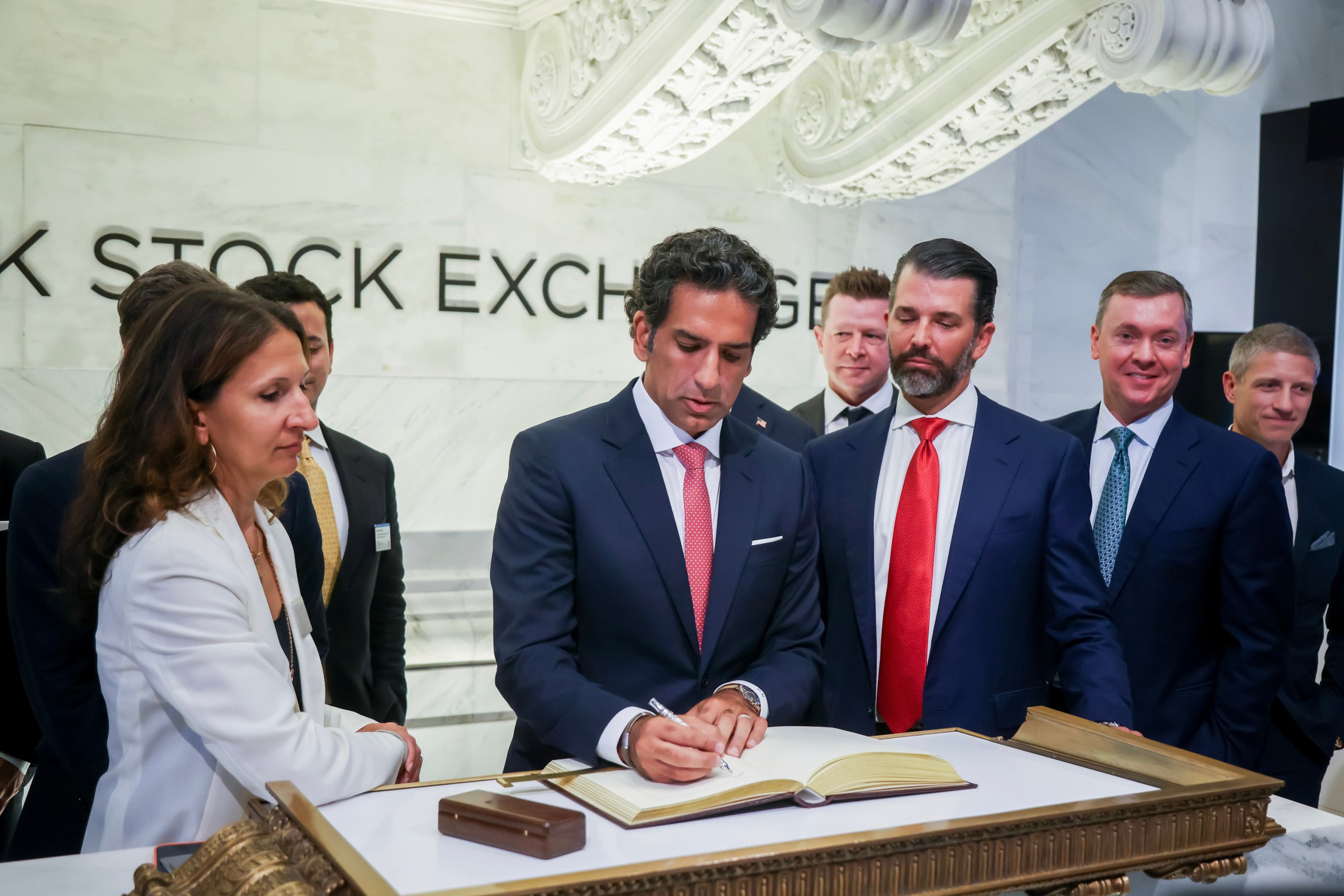
The Pentagon is evaluating a $15 billion loan to Hadrian Automation, a California-based startup with financial connections to Donald Trump Jr. This would be one of the largest government loans in U.S. history and would support a defense contractor with limited experience.
Hadrian Automation has drawn substantial private investment, claiming it can develop AI-driven factories to produce precision components more efficiently for defense and aerospace sectors. The loan, if approved, would nearly double the company’s estimated value.
1789 Capital, a venture capital firm associated with Trump Jr., has invested in Hadrian since his involvement began in 2024. Although 1789 Capital holds a minority stake, the precise amount remains undisclosed. The potential loan size is significantly larger than past Pentagon deals. Documents suggest it would fund automated factories aimed at bolstering production of munitions, drones, and more.
The U.S. military faces shortages of certain munitions amid conflicts in Ukraine and Iran. However, the new factories’ exact focus remains unclear.
A former Defense Department official expressed concerns of interdependence between Hadrian and the government, potentially risking taxpayer money.
The proposed loan comes as Democrats prepare to lead both legislative chambers. They plan to review contracts linked to the Trump administration, seeking patterns of financial benefit to the Trump family. Since Donald Trump’s second term began, firms involving his sons have secured billions in federal backing.
A previous Pentagon deal involved $620 million awarded to Vulcan Elements, another company with Trump Jr.’s firm’s investment. 1789 Capital founder Omeed Malik, alongside Trump Jr., emphasized American industrial revival in statements.
Pentagon officials denied any preferential treatment influences funding decisions. They portrayed discussions on Hadrian’s loan as preliminary and refuted the supposed $15 billion deal size, highlighting larger agreements awaiting announcement.
A 1789 Capital statement highlighted its focus on revitalizing U.S. industrial capacity. Trump Jr.’s lawyer affirmed his non-involvement in Hadrian’s contract considerations, maintaining he does not engage in policies benefiting his business interests.
Hadrian’s investor community includes significant Silicon Valley players, such as Andreessen Horowitz. Hadrian also collaborates with major defense contractors, hiring talent from companies like SpaceX and Raytheon.
Hadrian’s founder, Chris Power, emigrated to the U.S. in 2020, establishing the company with limited funds. He identified automation as a solution to the retirement of skilled aerospace workers. Power’s strategic approach attracted substantial investments for technology development.
Recent reports suggest Hadrian’s operational efficiency remains unassessed. Its factories in Arizona and Alabama are in various stages of operation, promising to address naval manufacturing challenges.
The Office of Strategic Capital, created under Biden, aims to reduce reliance on overseas production but has shifted to supporting private sectors, drawing concerns within the Pentagon. Some fear large loans, such as the Hadrian proposal, could exceed its intended function, subjecting it to Congressional scrutiny.
Despite historical assurances from Trump Jr., associations between his investments and federal contracts fuel ongoing discussions about potential conflicts. The Vulcan Elements case exemplifies past rapid Pentagon loan processing aligned with Trump Jr.’s interests.
Leave a Reply