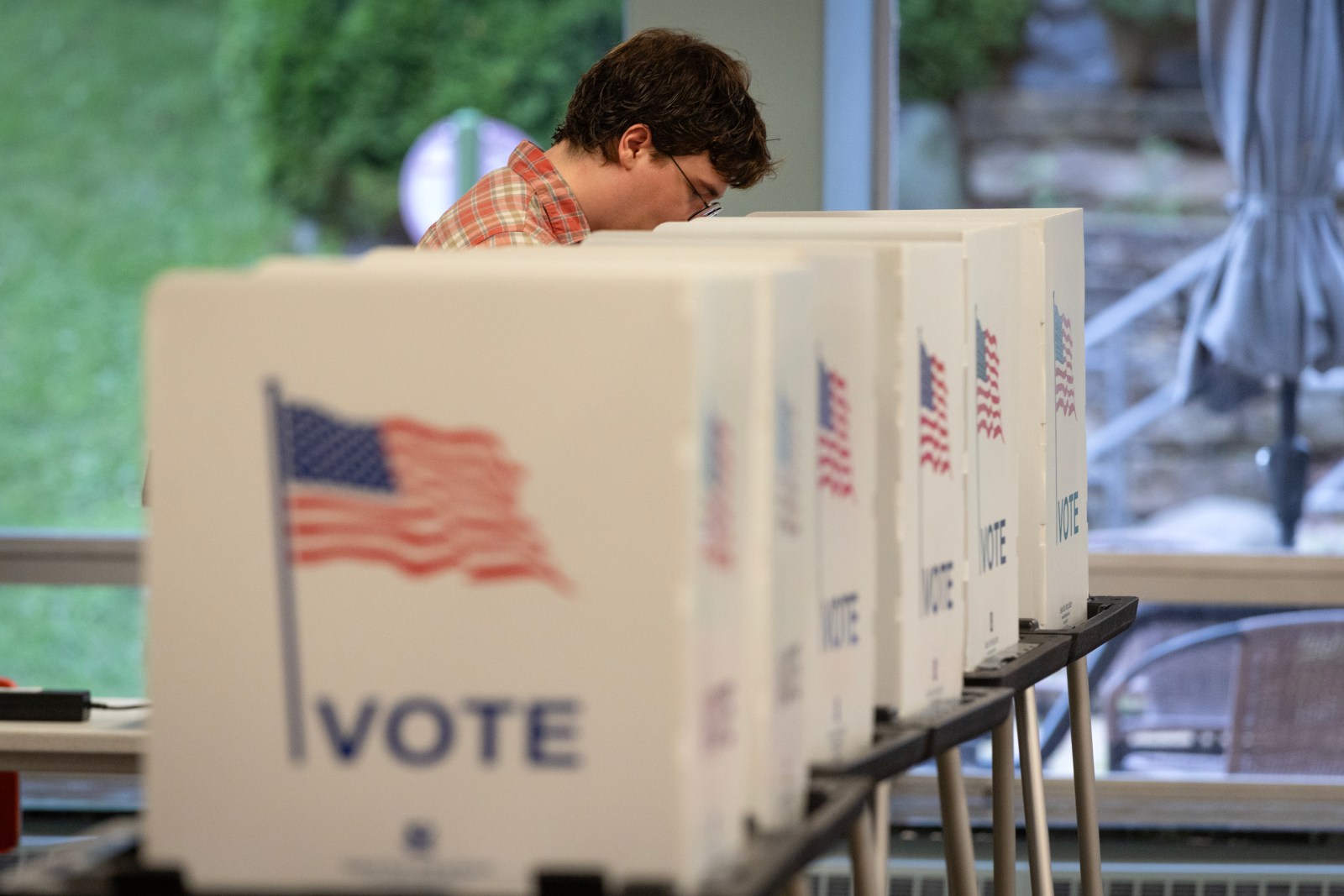
The Department of Homeland Security (DHS) is allocating several federal agents to examine voter rolls nationwide for ineligible immigrant voters before the midterm elections. Internal documents and testimonies from DHS personnel, as reported by The New York Times, indicate the plan involves comparing state voter rolls with federal databases to detect potential voter fraud. The specifics of how officials would handle any findings remain unclear. A former official noted the operation seemed designed to “intimidate people from exercising their right to vote.” Part of the project involves checking individuals’ details on state election websites.
Charles H Stewart III, director of the MIT Election Data and Science Lab, expressed concerns to Newsweek about the DHS’s approach. He highlighted it as evidence of the federal government not employing sophisticated techniques in its investigations.
President Donald Trump and members of his administration have frequently asserted that substantial numbers of immigrants, both legal and illegal, participate in federal elections. Despite such claims, there is significant evidence showing these incidents are infrequent and have minimal impact.
While government officials argue it’s essential to ensure fair and secure elections, critics emphasize diverting agents from crucial criminal investigations is a misallocation of resources. “Pulling federal agents off essential investigations into human trafficking and terrorism to pursue voter fraud is a poor use of government resources,” stated Tim Harper, project lead for elections and democracy at the Center for Democracy and Technology.
Using the machinery of federal law enforcement to chase a fictional threat while creating a very real one is an unacceptable tradeoff.
Data examining noncitizen voting reveal two opposing views: documented cases do exist, but many studies have proved them rare. The Brennan Center for Justice, which has extensively analyzed election fraud claims, describes noncitizen voting as “vanishingly rare.” In their 2024 report, the Brennan Center indicated 23.5 million votes across 42 jurisdictions in the 2016 election yielded only 30 suspected noncitizen cases.
The Heritage Foundation, a conservative group, reported 23 noncitizen voting incidents from 2003 to 2022. However, the Trump administration argues these figures underestimate the issue’s scale. Federal agencies have increasingly used government databases to verify voter rolls and citizenship, with tens of thousands of records flagged for further review. Civil rights groups caution naturalized citizens might be mistakenly identified as noncitizens due to outdated records.
ProPublica reported that despite intense efforts, the administration’s focus on noncitizen voting has resulted in few prosecutions or convictions. Recent cases demonstrate the complexities involved:
- New Jersey Registration Error: A software error led to about 6,600 non-citizens being registered to vote. An investigation found fewer than 400 of those voted.
- Kansas Mayor’s Guilty Plea: Joe Ceballos, the ex-Mayor of Coldwater, pleaded guilty to voting offenses due to an honest misunderstanding about his eligibility.
- Massachusetts Identity Misuse Case: A man reportedly registered someone else to vote and cast a ballot in their name without permission, highlighting misuse rather than misunderstanding.
- Pennsylvania Voter Fraud Case: Mauritian national Mahady Sacko was charged with voting unlawfully in several elections since 2008.
Federal officials have also pursued cases in Texas and Michigan. In Michigan, some suspected noncitizen voting cases were assessed following the 2024 elections, though they represented only a small fraction of all votes.
Controversy Over Federal Enforcement:
Supporters of the DHS’s approach contend that even minimal illegal votes can damage the public’s trust in the electoral process. The administration has pursued policies to strengthen citizenship verification, directing agencies to aid states in identifying potentially ineligible voters. Yet, opponents caution that these efforts risk surpassing legitimate cases. Critics fear federal-level checks might wrongly identify naturalized citizens, leading to erroneous voter purges.
The DHS is currently prioritizing these investigations in anticipation of the 2026 midterms. The core of this ongoing debate hinges not on whether these violations occur, but on whether they warrant expansive federal action.
Leave a Reply