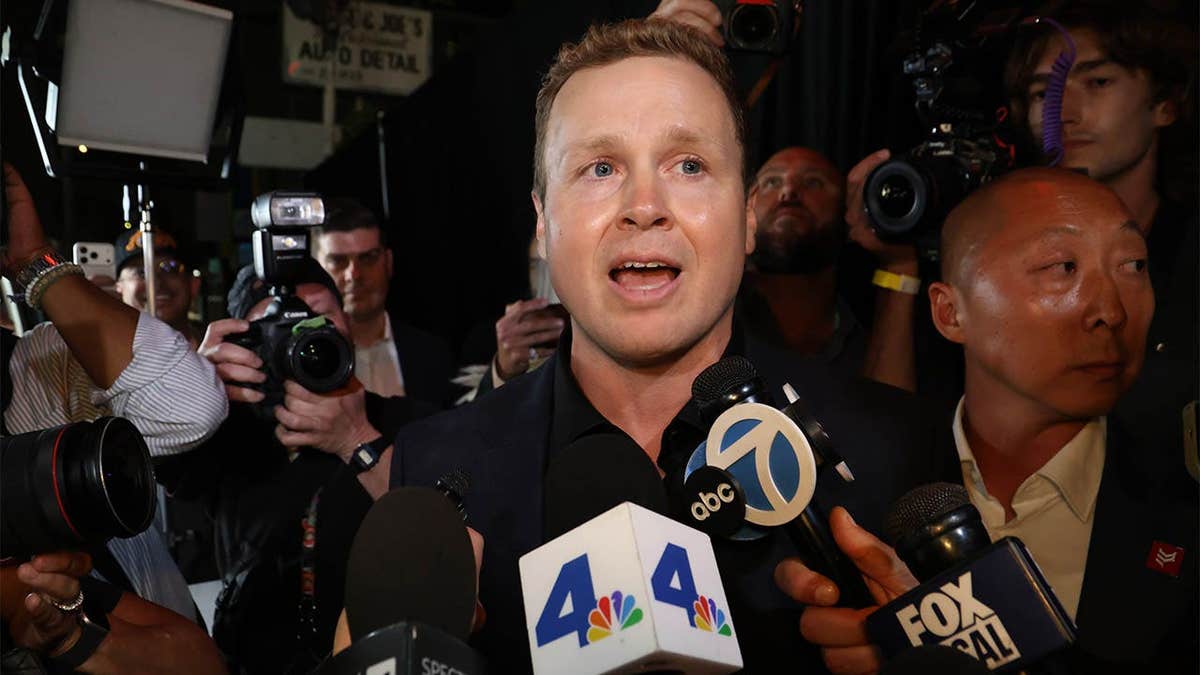
Former reality TV star and California politician Spencer Pratt responded strongly after actor Ryan Reynolds criticized nostalgia for the 1980s. Reynolds faced backlash for describing the 1980s as “brutal” and “a f—ing mess” during the promotion of his Cold-War era movie “Mayday” in New York. This sparked criticism as many questioned his negative portrayal of the decade.
Reynolds stated in an interview with Variety, “When you get far enough away from a time period that’s quite distinct, there’s always a lovely feeling associated with it, almost like you pave over all the trauma with puppy dogs and ice cream. The 80s was a brutal, brutal time for people. It was a f—ing mess and people forget that.”
Pratt countered by stating the 1980s were a time of cultural sanity compared to today’s world, with clearly defined ideals of good and evil. In his view, movies from that era portrayed villains clearly, unlike modern narratives that often redeem negative characters.
Spencer Pratt’s comments were shared on X, likening Reynolds to the “anti-hero generation,” which contrasts with the “hero generation” represented by characters like Tom Cruise in “Top Gun.” Pratt mentioned that modern pop culture often empathizes with anti-heroes.
Christian Toto, a film critic, discussed Pratt’s response, noting how today’s films often celebrate complex villains or anti-heroes. He questioned if such portrayals have affected societal views. Toto noted examples like “Bullet Train,” “John Wick,” and indie films where villains are shown as sympathetic figures.
“Consider how many recent movies have given us hit men with hearts of gold,” Toto remarked. “Pratt’s take suggests a sobering reality about modern culture’s fascination with anti-heroes.”
Toto acknowledged the complexities of the 1980s, mentioning the era’s crises alongside pop culture classics. He highlighted the simpler lifestyle of that time which contrasts with current cultural debates.
Theo Wold, a former White House deputy assistant, added a political perspective. He felt the 1980s were a period of greater social cohesion and individual freedoms. Wold speculated Reynolds’ Canadian upbringing may have influenced his perspective.
Wold criticized Reynolds for possibly misconstruing historical events while describing the 1980s. He noted specific figures and events that marked the decade’s challenges.
Leave a Reply