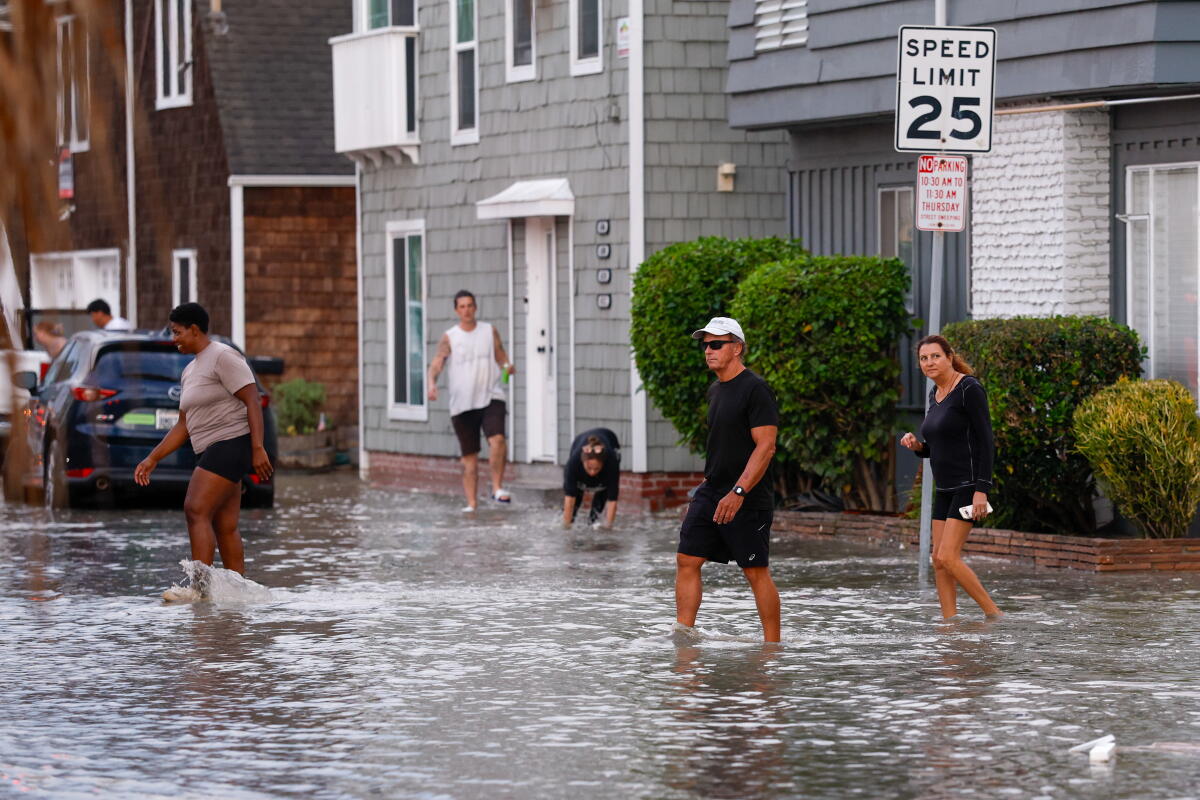
Southern California is preparing for an intense weather pattern following a dramatic weekend of coastal flooding, heavy rainfall, and dangerous surf conditions caused by the remnants of Tropical Storm Marie. Forecasters predict a significant increase in temperature by Tuesday, with heat rising 10 to 20 degrees above normal. Coastal regions will experience this heat, while areas like Downtown Los Angeles and Long Beach might see highs of 96 to 98 degrees. Further inland and valley communities could exceed 105 degrees.
Nighttime relief will be limited, as temperatures in the Los Angeles Basin will likely remain in the mid-70s on Tuesday evening. Wednesday is expected to be even hotter. Meteorologist David Gomberg of the National Weather Service in Los Angeles-Oxnard highlighted that the lingering moisture from Marie will exacerbate heat discomfort and stress.
“The still-lingering moisture from Marie, combined with the heat, will add to the heat discomfort and create added heat stress,” said David Gomberg.
Gomberg advised residents to stay hydrated, utilize air conditioning, and check on vulnerable individuals. Coastal areas are still under high surf and coastal flooding advisories, lasting until 11 p.m. Tuesday. Officials urge caution as rip currents and large surf persist, posing risks to boats, jetties, and swimmers.
The surf presents significant danger, with waves appearing moderate before suddenly intensifying. Gomberg emphasized the threat of strong rip currents, using the term “potentially life-threatening rip currents” to describe the conditions.
Over the weekend, Zuma Beach in Malibu experienced waves up to 12 feet high. Emergency teams responded to beach closures and coastal flooding, with south-facing beaches like Long Beach and Malibu facing severe impacts due to high swells and tropical storm-driven waves.
Dramatic footage from Long Beach captured massive waves damaging the shoreline and boardwalk. Sand berms built as precautions were washed away, leading to power shortages, flooded garages, and sand-clogged drains.
“There’s power shortages going on, so some people are getting shocked in there, so we’re having to turn off all the power. There’s tiles being ripped off the floor, furniture being moved.” – Long Beach resident Cole Hill
This week’s flooding is notable due to the convergence of powerful waves and unusually high tides, influenced by warm ocean water that has expanded. Record-breaking heat in the ocean and the brewing “super” El Niño contribute to these elevated tides.
Typically, high tides range from 4 to 6.5 feet. Sunday’s tide reached 6.7 feet, with forecasts of 7 feet on Monday evening and 7.2 feet on Tuesday. Slight differences in water levels can significantly affect coastal water intrusion.
Rainfall compounded drainage problems over the weekend, as parts of Los Angeles County recorded over 1.25 inches of rain on Sunday. Public health officials urge avoiding ocean swimming through Wednesday due to potential bacteria spikes from runoff.
Los Angeles County’s topography directs rainwater to the ocean, picking up debris and contaminants along the way. A key recommendation is to wait 72 hours post-rain before ocean swimming, with some scientists suggesting five days near river or outfall proximity.
Leave a Reply